Binder-Coutaud, a crew…
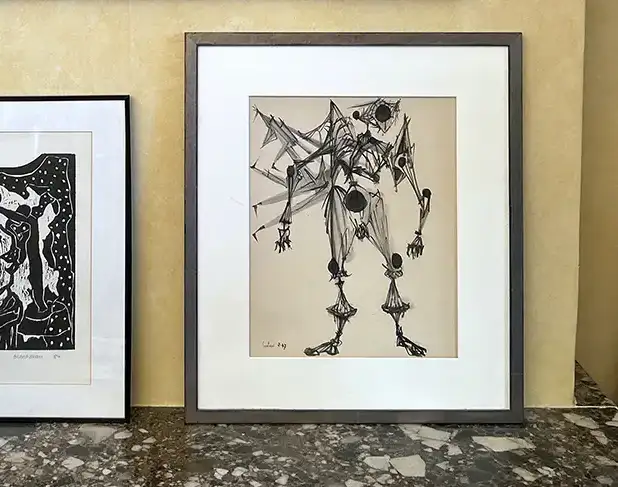
Scanreigh meets Jean and Maryvonne Binder in 2004, when they are organising, with the Musée des Beaux-Arts de Nîmes, a large Lucien Coutaud exhibition. For reasons of availability, it is held in the very classy exhibition rooms of an 18th-century hôtel particulier, the same one that houses the École des Beaux-Arts de Nîmes, which Scanreigh joined in 2003. The artist on show is a complete unknown to Scanreigh. Born in 1904, died in 1977, Lucien Coutaud, of the post-Surrealist orbit, is ardently championed by the Binder couple. Not only do they collect the artist on a grand scale, but they are the authors of thorough documentation that stands comparison with that of museum and auction-house professionals. They are also behind numerous exhibitions and publications on the artist, to the point of having become the unanimously recognised experts on Coutaud. Faced with such commitment, one could only try to understand. It was by living alongside Coutaud’s paintings (many of them!) in the Binders’ flat in Chalon-sur-Saône and by talking with them that Scanreigh and I learned to look at this work. Without that we would probably never have pushed open the door of the Paris gallery Les Yeux Fertiles, which in 2011 was showing his very remarkable tapestries, one example of which we had seen in the Chalon flat. A fine drawing by Coutaud from 1947 (a gift) has reigned ever since over the mantelpiece in our sitting room.
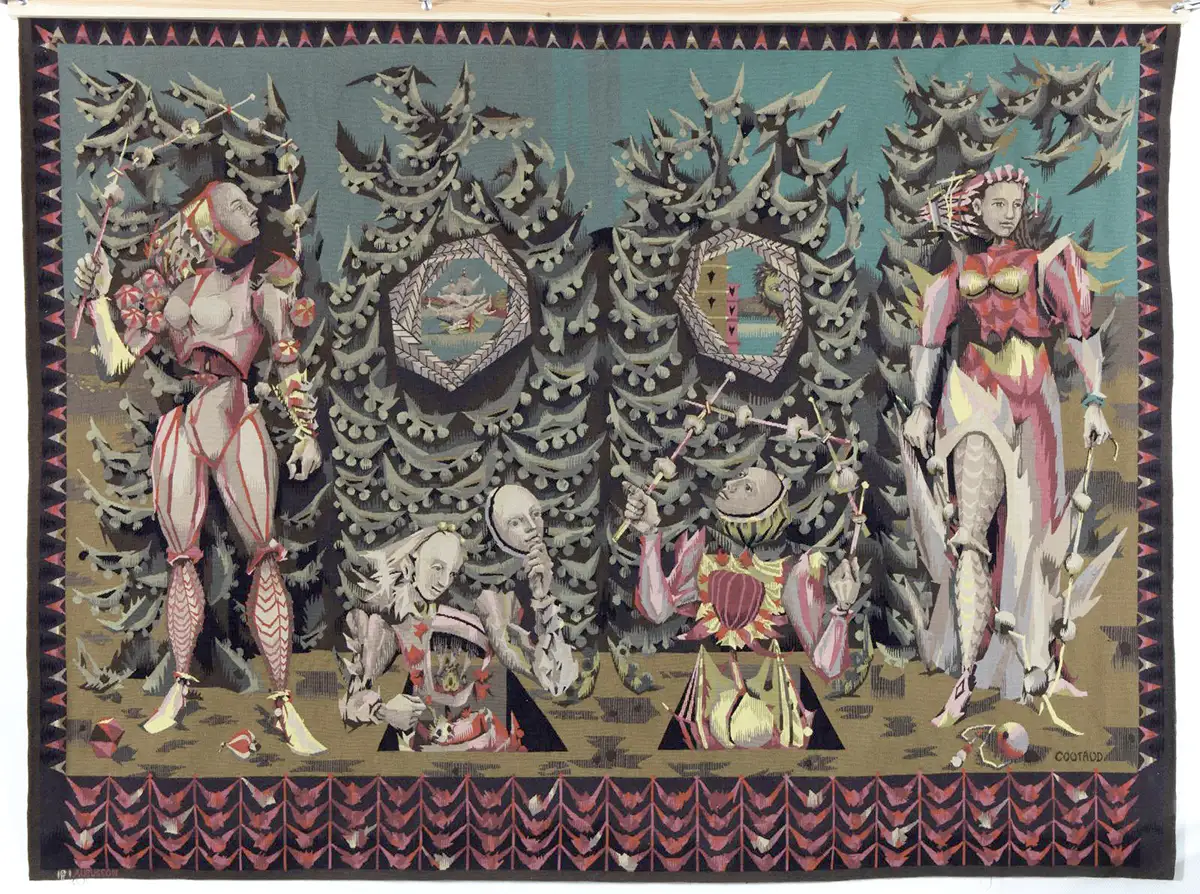
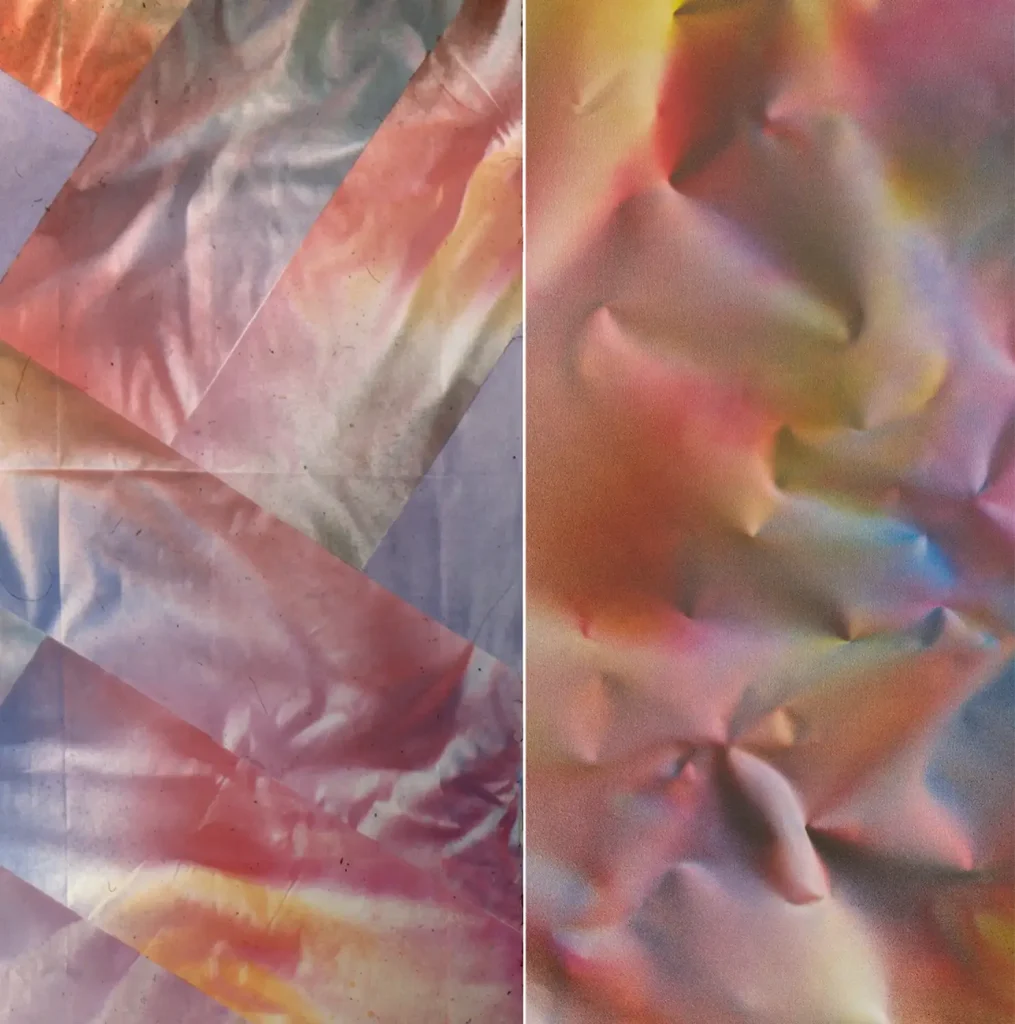
Passe-Temps II, woven tapestry, coloured wool, 198 × 246 cm.
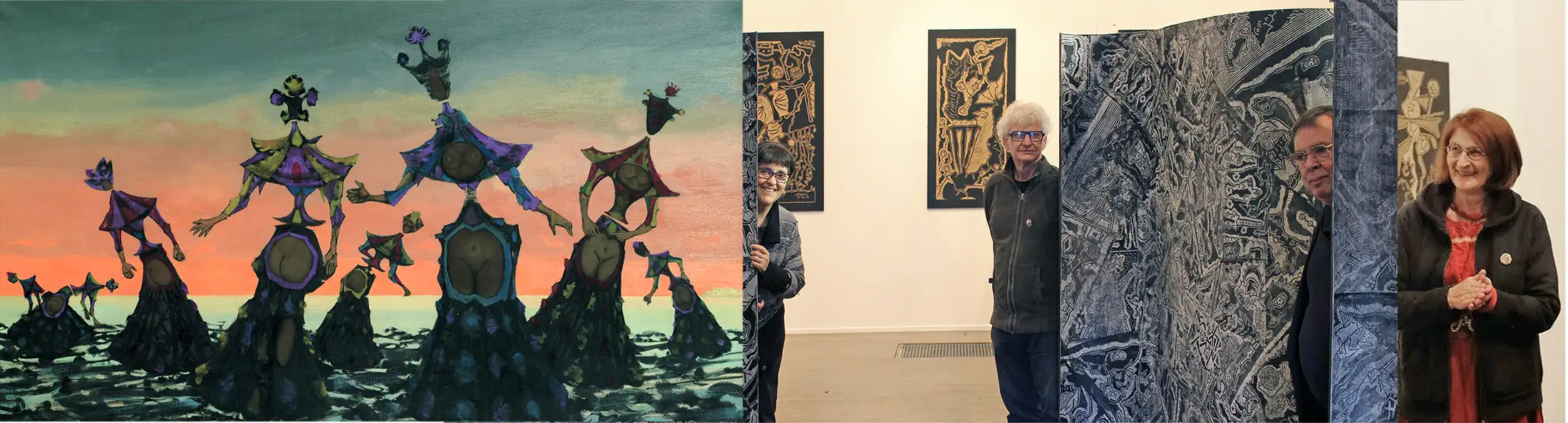
That’s not all: it is thanks to Jean and Maryvonne Binder that Scanreigh entered the programme of the Chapelle du Carmel in Chalon-sur-Saône, the couple being in charge of organising exhibitions there two or three times a year. It was by lending a hand to a fellow artist who was exhibiting in the Chapelle that Scanreigh found himself invited in turn to show his work there. In 2006 came the exhibition “Légendaires”, playing the contrast to the full by setting a wall of very large paintings on tarpaulin against a long wall lined with small drawings. The exhibition was accompanied by a catalogue focused on drawing. The timing could not have been better: printmaking, which Scanreigh had practised for twenty years as an ascetic discipline, had given way to drawing, which he now practises in the same spirit.
Things did not stop there. In 2013 came the exhibition “Stations du noir”; the Chapelle took on the tones of a sanctuary again, with carved woodblocks that looked like Stations of the Cross. Elsewhere, drawings on black Canson, and in the centre of the space an installation of large paintings on folding screens.
Our relationship with Jean and Maryvonne Binder grew closer over the years through get-togethers over a good meal in Paris, Nîmes or Chalon, always with the common thread of an interest in collections, archives and printed works.
During the Covid episode, the idea came up, half as a joke, of proposing to Jean that he apply to Scanreigh his Lucien Coutaud method (or Félix Labisse method, another version of his interest in post-war Surrealism): a meticulous, exhaustive, monumental biography of the kind he knows how to make. (How many projects lockdown set sprouting!) Maryvonne suggests starting with une vie en images with a “simple” preface by Jean. You can judge for yourself what “simple” can sometimes mean!
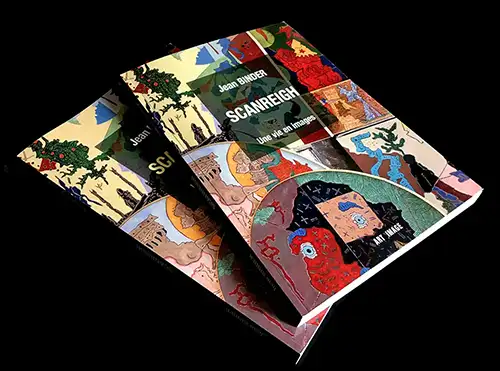
With the book on track, the challenge for us was to find visuals for each section of two to three pages per year, from 1972 to 2023. Easier for the “digital” years than for the periods when film, less easy and more expensive, did not always make it possible to capture important moments. But we pulled it off. The biography in pictures is ready for a third Scanreigh exhibition, this time in the Halle Ronde in Givry, a proud-looking former grain hall near Chalon, which shows very large canvases to advantage along a circuit bathed in light.