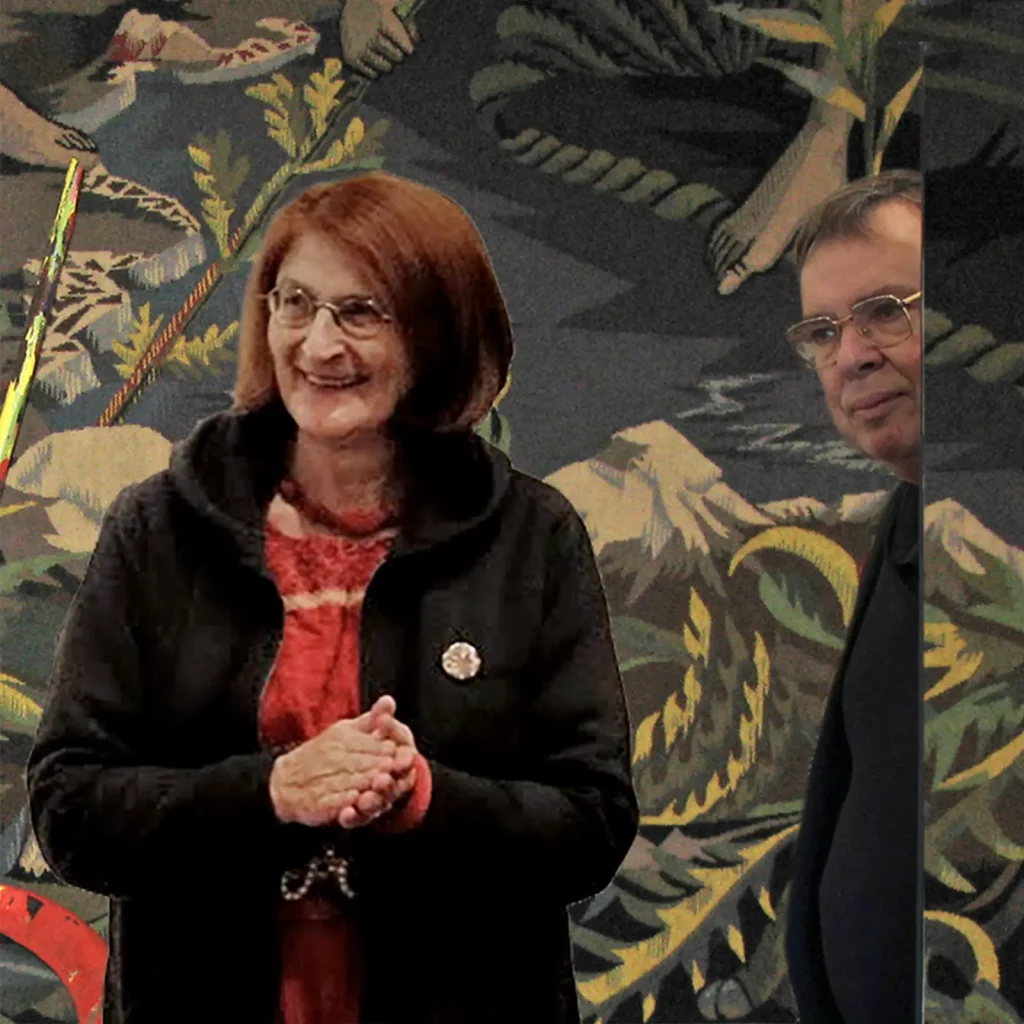
With Philippe Favier

On rue Balaÿ in Saint-Étienne, the Semin/Monfort flat and ours are a few doors apart. Didier Semin is Bernard Ceysson’s assistant at the museum. Scanreigh has been teaching at the Beaux-Arts since the start of the 1978 school year. He is barely older than his students. Bonds form, a few students “drop by the house”. One day Philippe Favier is there, showing his little ballpoint drawings. If memory serves, they were tanks and planes and little cars falling into the void, all blue, all tiny. “Yes, of course, you must keep going!” Favier wins everyone over. They all encourage him, the friends who came with him, Scanreigh the teacher and me his wife, Didier Semin, the curator’s assistant. Bernard Ceysson will very soon hear about this student who goes in for the minuscule, against the grain of the large formats of the time. Favier sticks his little cabbages, his little parasols, his flights of birds straight onto the wall. Bernard Ceysson will lose no time in giving the student Favier an exhibition at the museum in 1981, under the very noses of the teachers at the school, all of them artists secretly waiting to enjoy the same privilege, the Saint-Étienne museum being in those years the museum that promoted contemporary art with the most authority.
And then today… the infinite sadness of learning of the road accident that took Philippe Favier on 7 March. He, such a homebody, who had not managed to submit to the residency at the Villa Médicis, well deserved though it was. Giving up that Roman Grail: unthinkable! As a student, though, he had been willing to go on the school trip to Venice in 1979. This photo is proof of it.
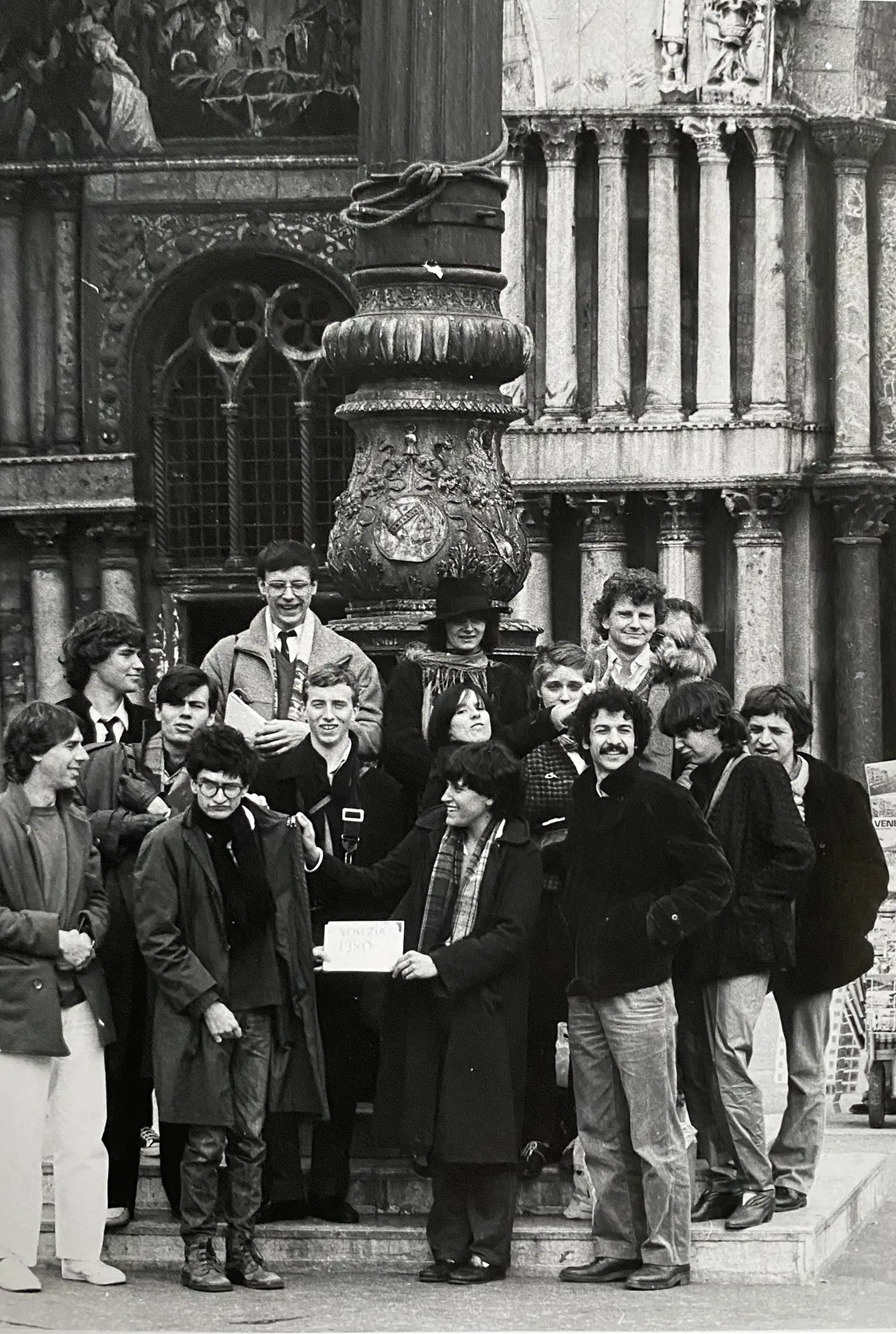
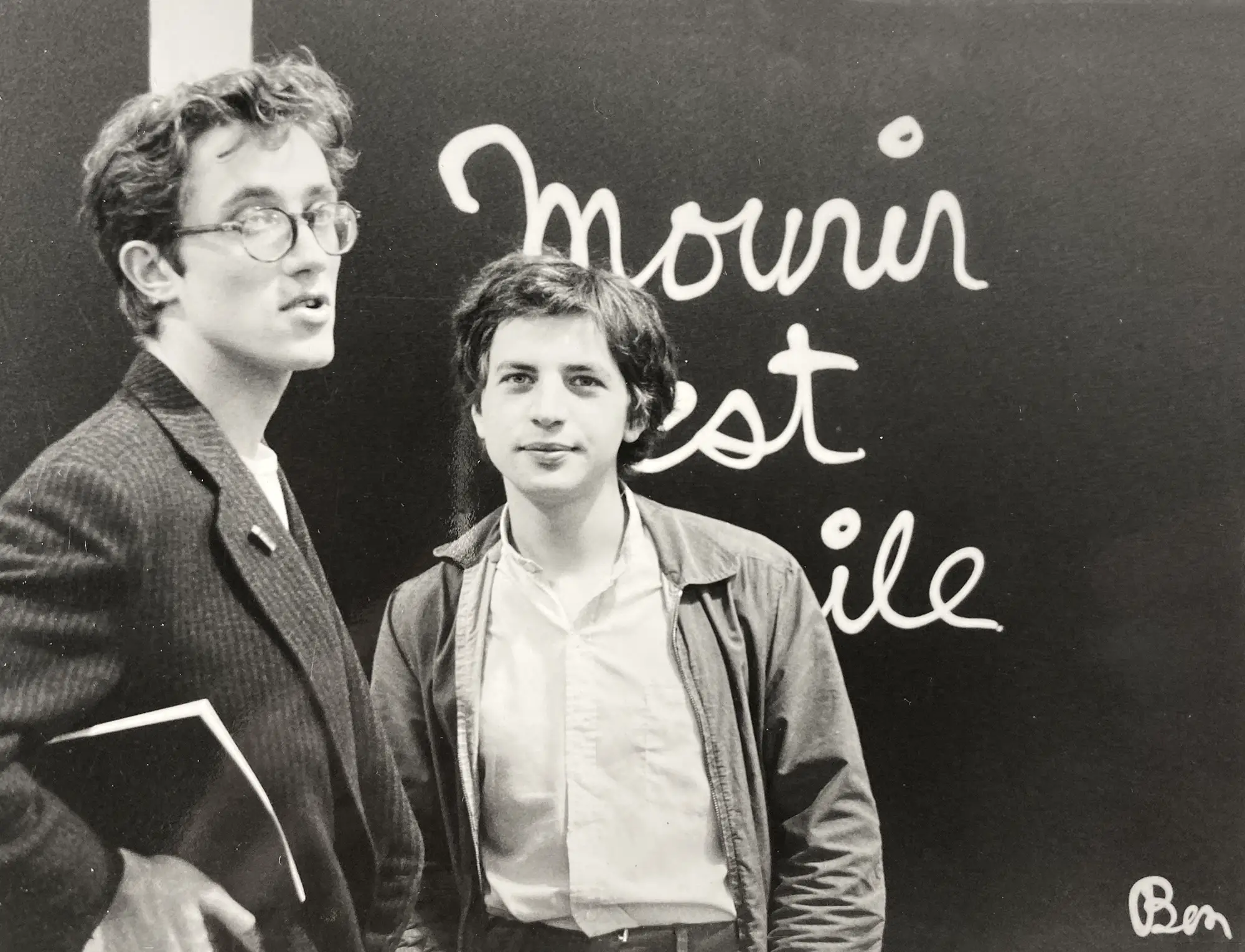
Philippe Favier is at the far right of the picture, trying to slip out of the ritual of the group portrait on a trip. In front on the left is Jacques Barry, in accompanying-teacher mode and white trousers; next to him, the dark-haired one with glasses is Philippe Ducat, a future talented graphic designer, who cut his teeth on Favier’s first museum catalogue in 1981. The smiling one with the moustache is Philippe Louisgrand, the other accompanying teacher, along with Scanreigh, who is poking his head out at the top right. That year, 1981, was also the year of a Ben exhibition at the Saint-Étienne museum… with this snapshot of Philippe Favier together with Denis Laget, taken in the exhibition. You will understand why I hesitated to publish it…
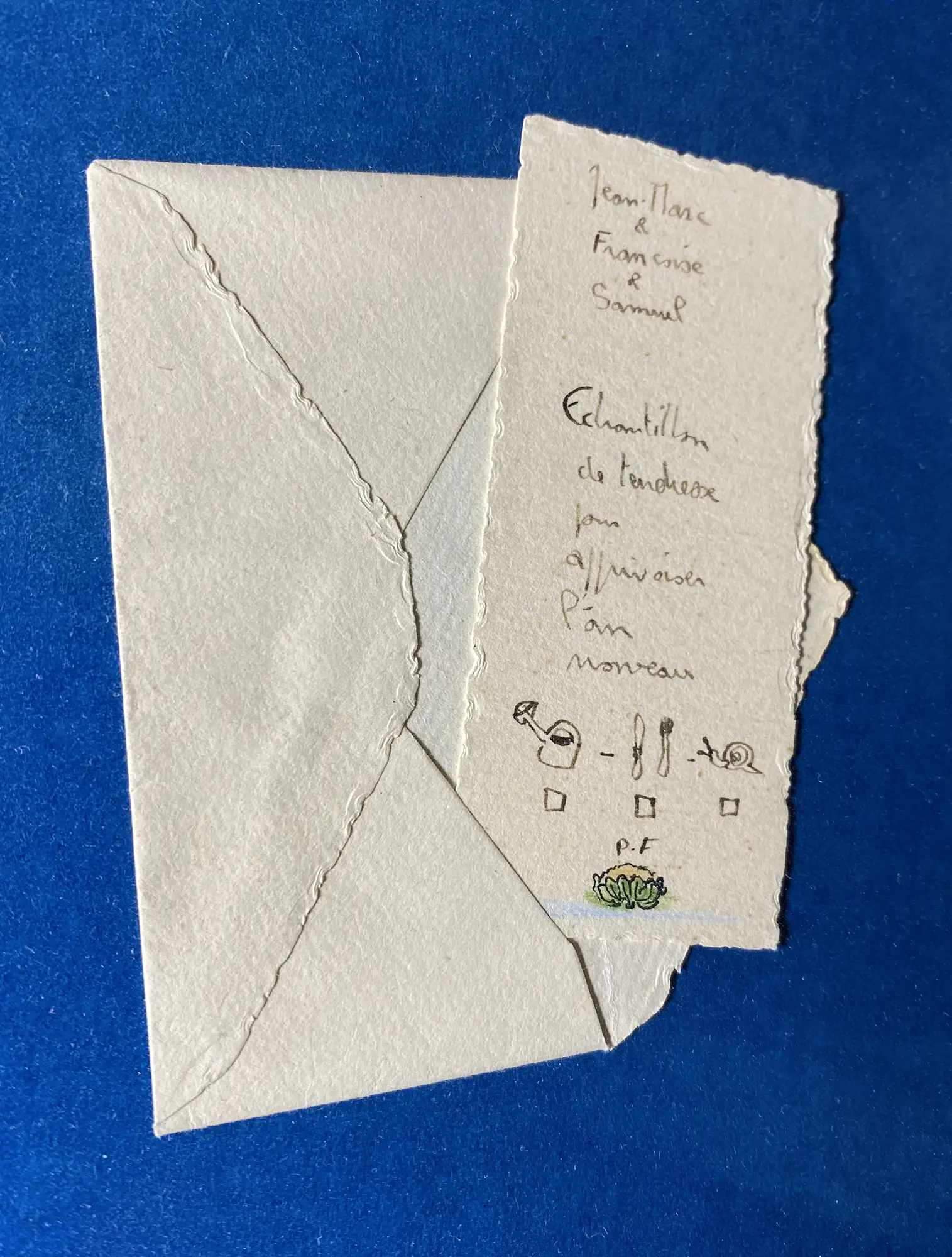
Now and then we would run into Philippe Favier, always with pleasure; the last time was at the Villa Balthazar in Valence in 2020, for the exhibition “Rinascimento” (Scanreigh, Sophie Dupré, Jean-Marc Saulnier). He had popped over briefly, as a neighbour. Out of kindness, the mischievous eye, true to himself, friendly and delicate. As for delicacy, I am bringing out these miniature New Year greetings from I no longer know which year.
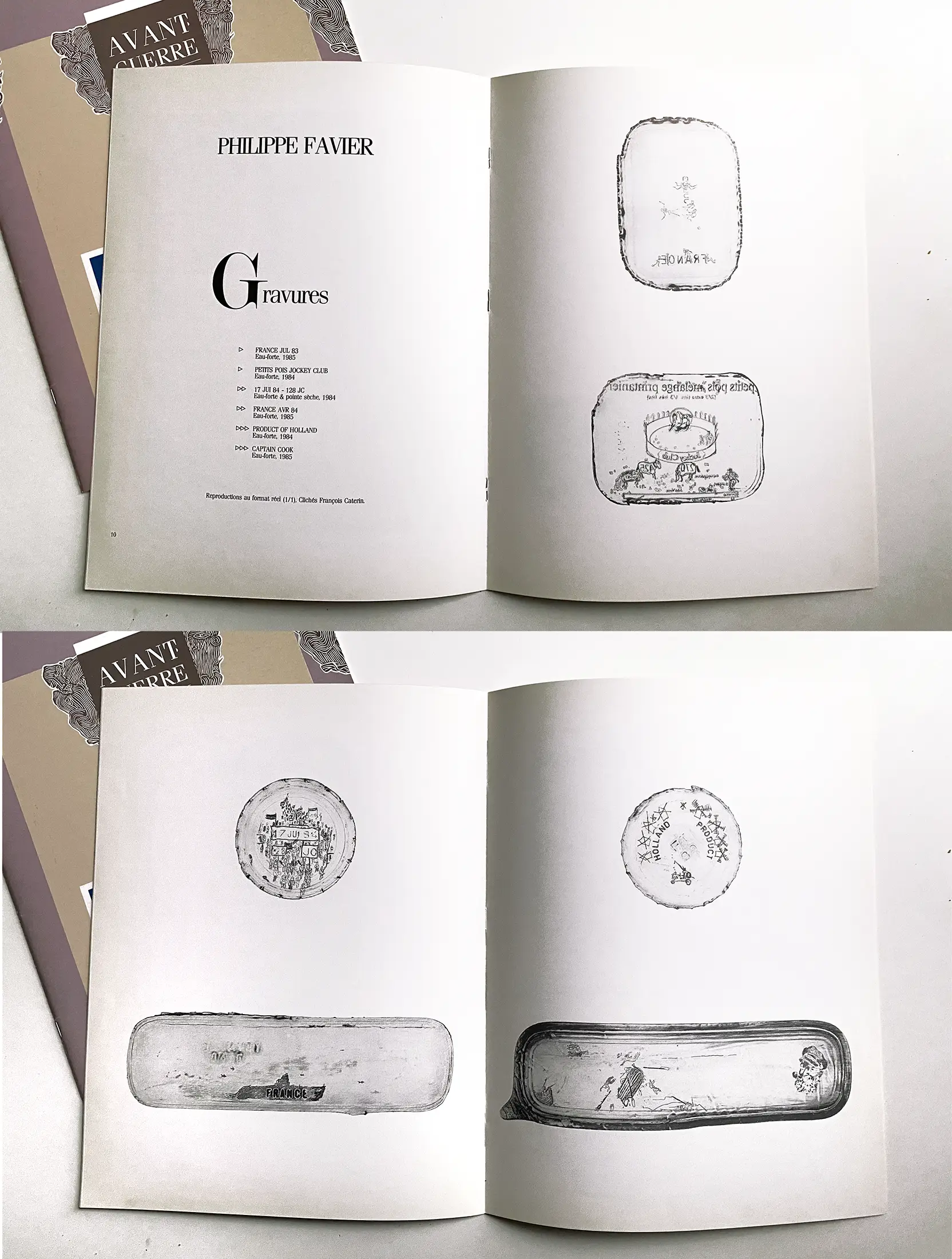
Between Scanreigh and Philippe Favier there was a fine teacher/student rapport, played out around printmaking. For both of them it was an exciting field of experiment. Scanreigh was the first (clandestine) printer-publisher of Favier’s first etchings, on the presses of the école des Beaux-arts. When Philippe had the brilliant idea of incising the metal of tin cans, we published the series in our magazine Avant-guerre, which I have already talked about here.
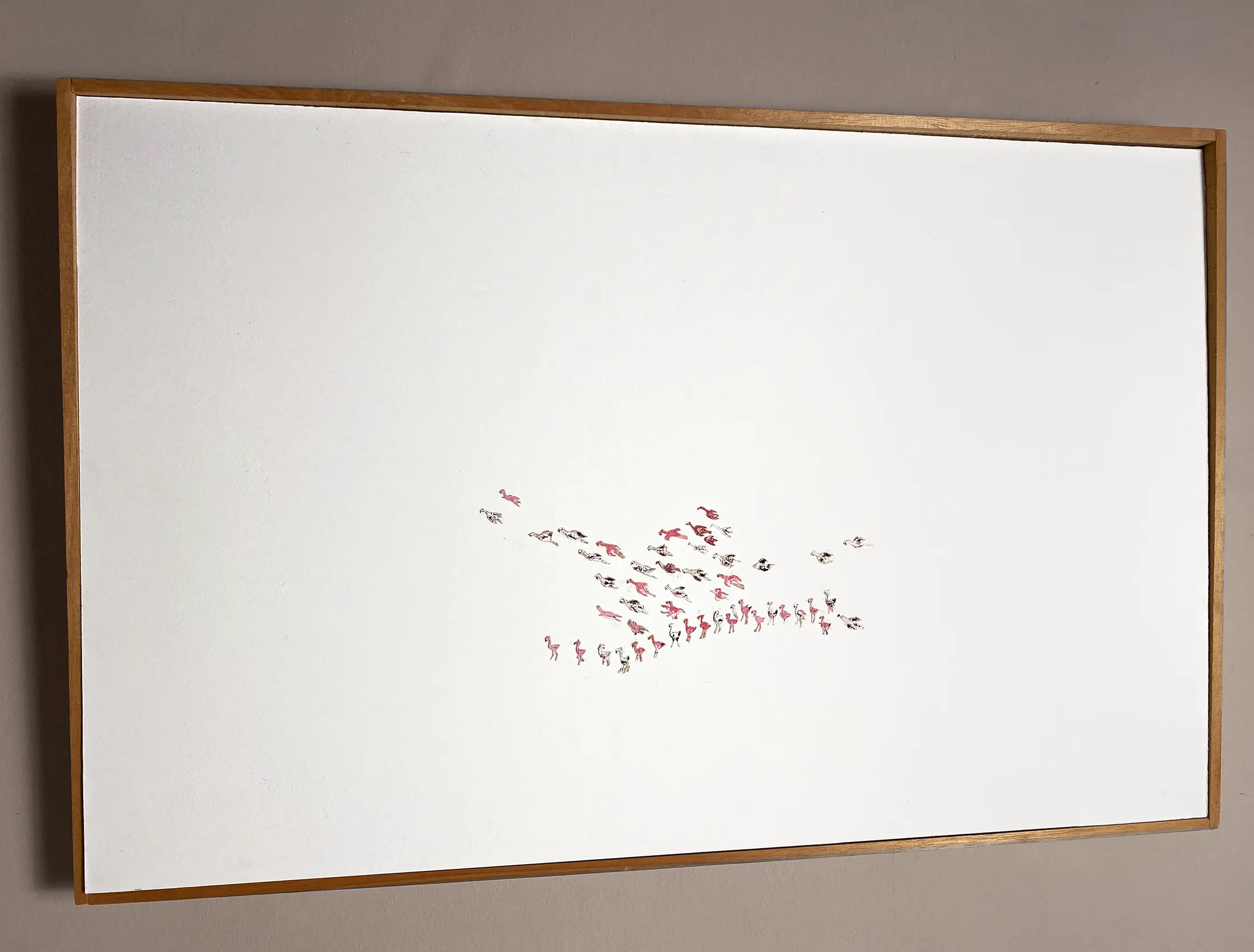
I was thinking of writing an entry on Philippe Favier… but not in this tone… and I look at the pink flamingos above my desk, a work we bought from him in his Saint-Étienne studio shortly before leaving the town…
F.B.
Update of 12 March 2026
Christian Bernard, with whom we founded the magazine Avant-guerre, points out to me that he discovered Philippe Favier’s ballpoint drawings with us on one of his visits to Saint-Étienne. When he was appointed to Lyon in 1983 as visual arts adviser at the Direction régionale des affaires culturelles, he backed the purchase of a piece by Philippe Favier by the FRAC Rhône-Alpes, then its showing in Paris at the FNAGP, rue Berryer. And when he was at the head of the Villa Arson, he restaged the Favier exhibition initiated by Didier Semin at the Musée des Sables d’Olonne in 1986, which made him one of the champions of the artist’s work along with Bernard Ceysson, Jacques Bonnaval and Didier Semin, the latter having written on Philippe Favier as early as 1982 in a pamphlet for the Atrium in Lyon, in the catalogue Ateliers 81/82 of the ARC Musée d’art moderne de Paris and in 1985 for an exhibition at the École Régionale des Beaux-Arts de Saint-Étienne.