The early years: three tutelary figures
On a recent visit to the Musée du Carré d’art de Nîmes we come across a work by Louis Cane from the “sol/mur” series, typical of the early 70s. A photo, snapped on the fly, takes us back to the days of black-and-white photos, the only ones we had most of the time when Scanreigh used to explain to me what interested him, for his own purposes, in the art of his contemporaries. It took some Paris exhibition or other, or the Basel fair, before we saw a “sol/mur” work for real.
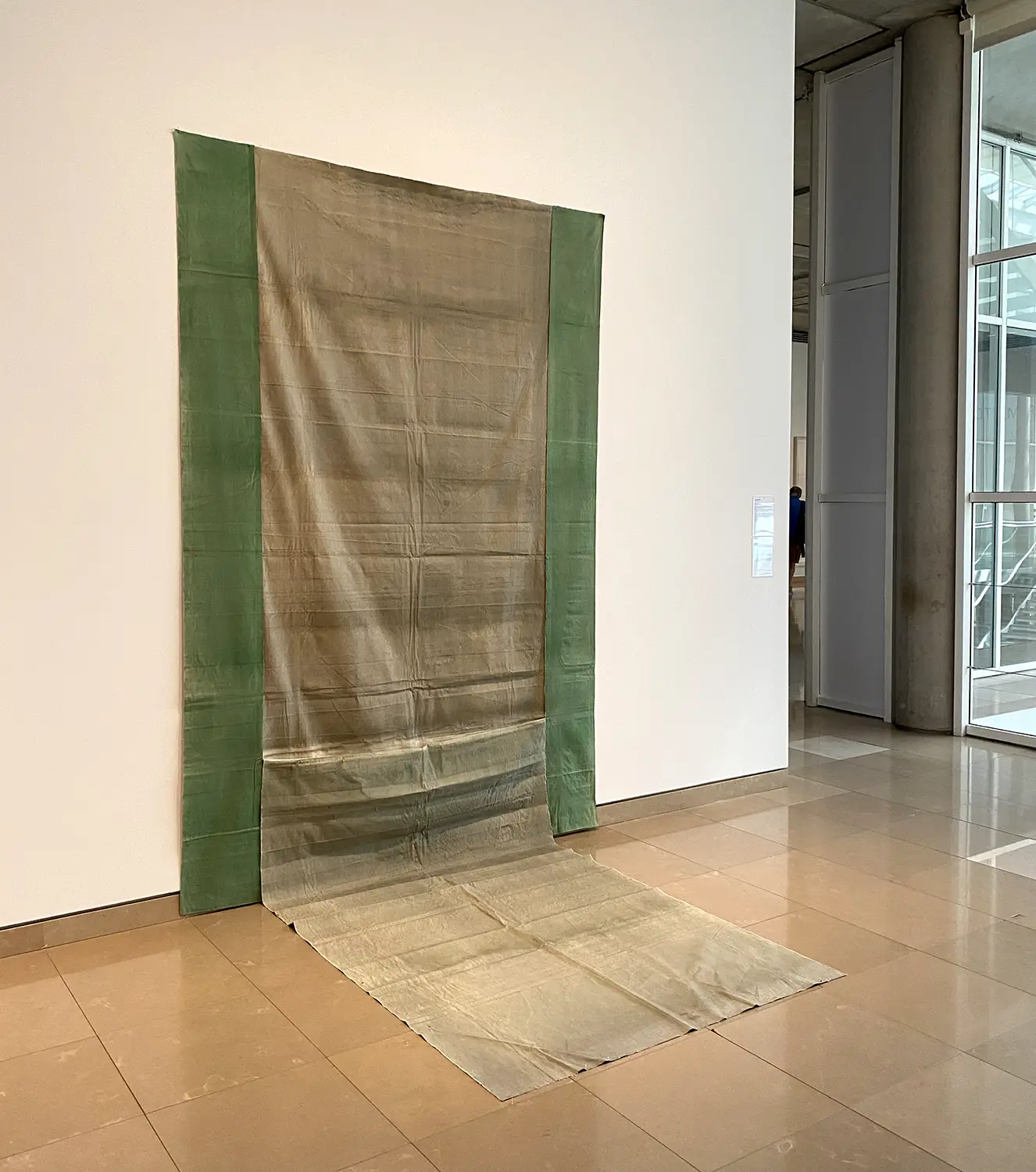
Scanreigh’s abstract period, at the start of his career, is often described as belonging to the orbit of Supports/Surfaces. Among the members of this French avant-garde group, Louis Cane undeniably had an influence on Scanreigh.
Among other influences, two other artists of the previous generation counted for a great deal: the American Barnett Newman and the Hungarian-born Frenchman Simon Hantaï.
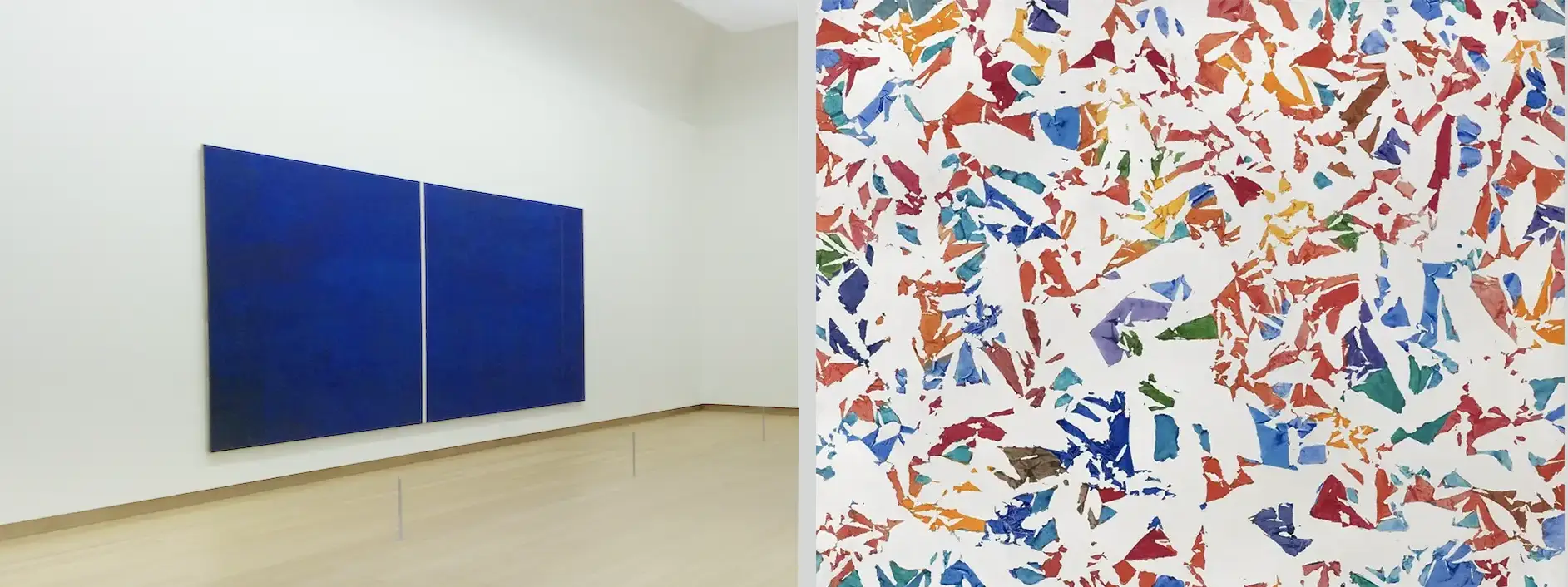
right: Blanc, Simon Hantaï, 1974 (detail)
Scanreigh tells me that he made a special trip to see the Barnett Newman retrospective at the Grand Palais in Paris in 1972. As early as 1948 the American artist had launched an extremely radical kind of painting, splitting large surfaces of colour with one or more vertical limits that he called “zip” and which, like a zip fastener, were meant both to divide and to join two spaces of the work.
As for Hantaï, it was his crumpled canvases that interested Scanreigh. The artist knotted his canvases before applying colour to them. Once unfolded, the canvas revealed an interplay of coloured imprints with the areas of the canvas spared by the colour. We had not seen the 1976 retrospective at the Musée national d’art moderne in Paris; on the other hand, the one in 2013 at the Centre Pompidou had plunged me back into a recollection like the one I had in Nîmes in front of the Louis Cane.
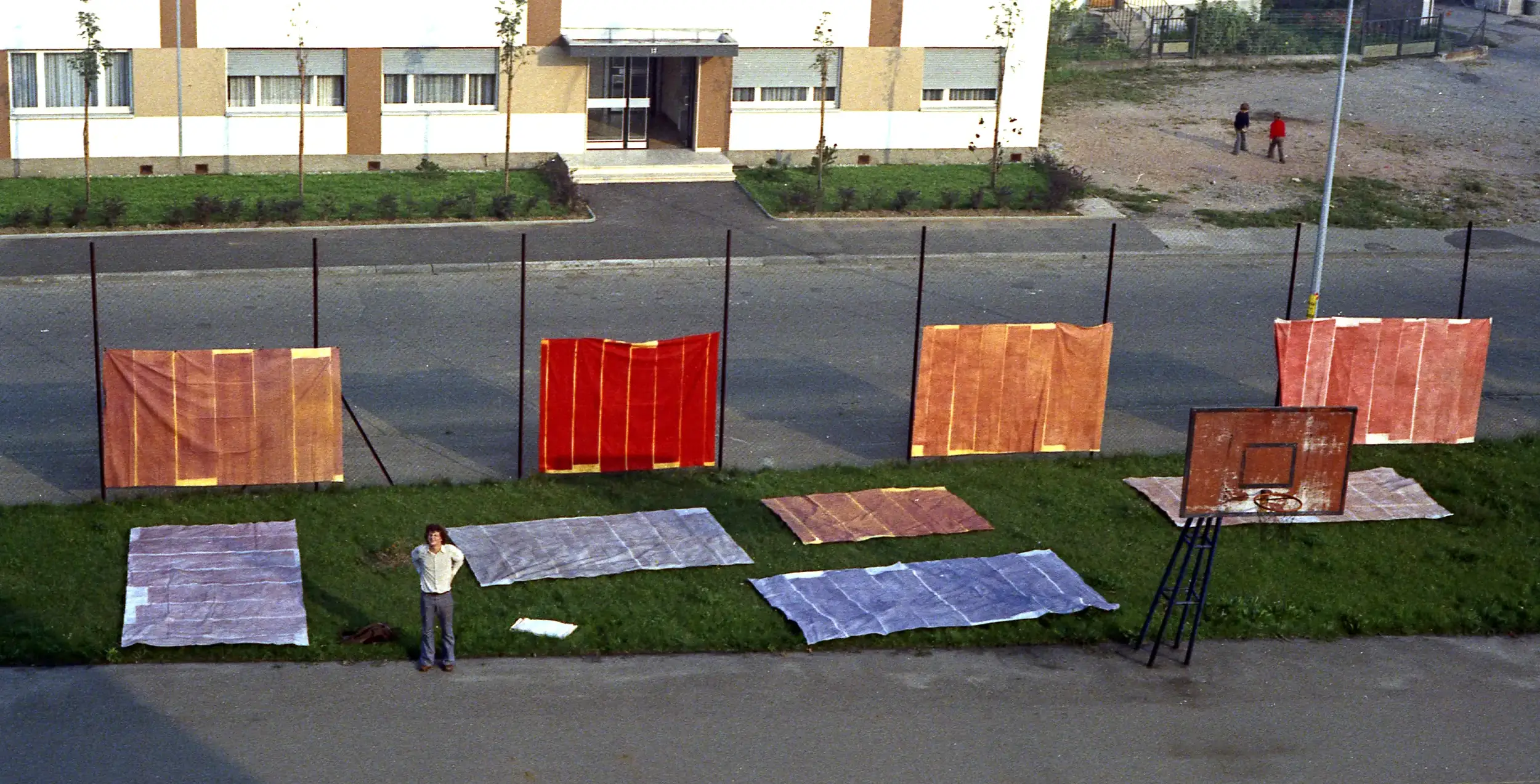
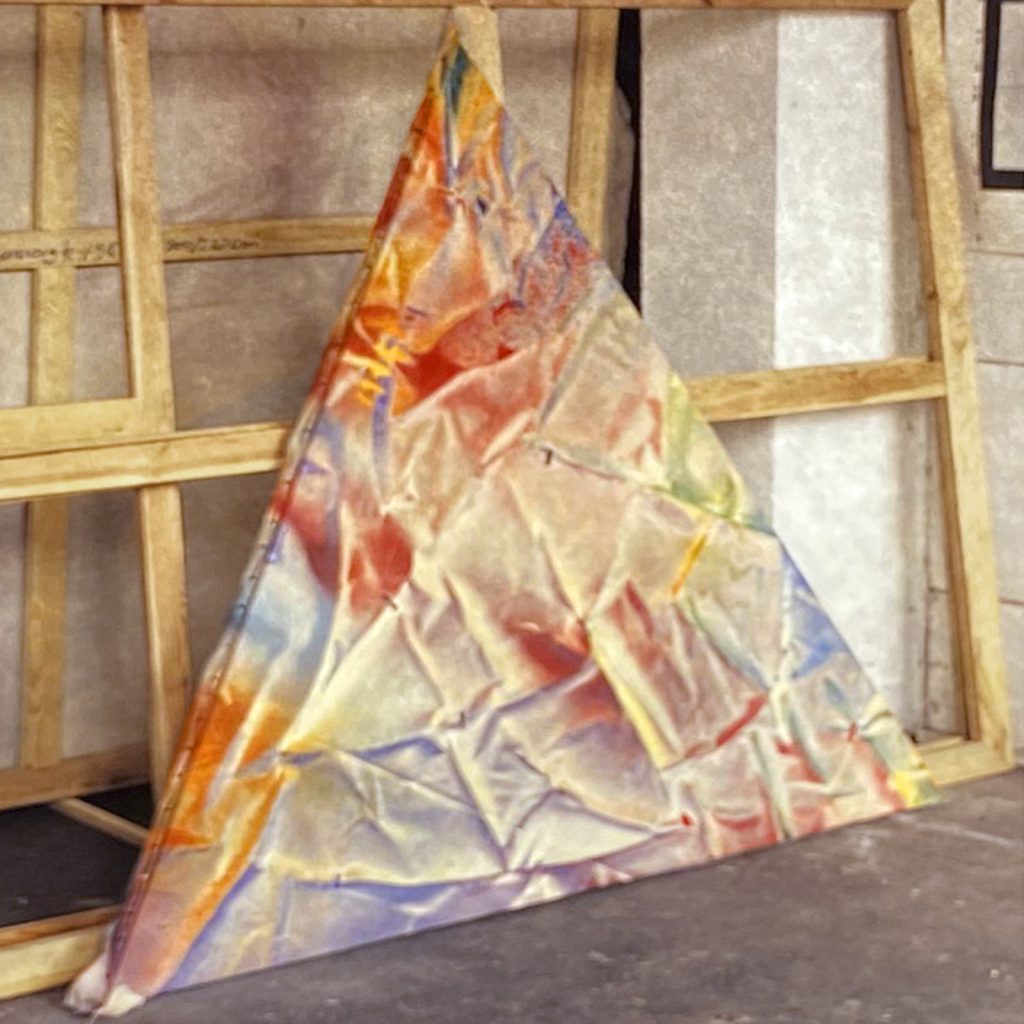
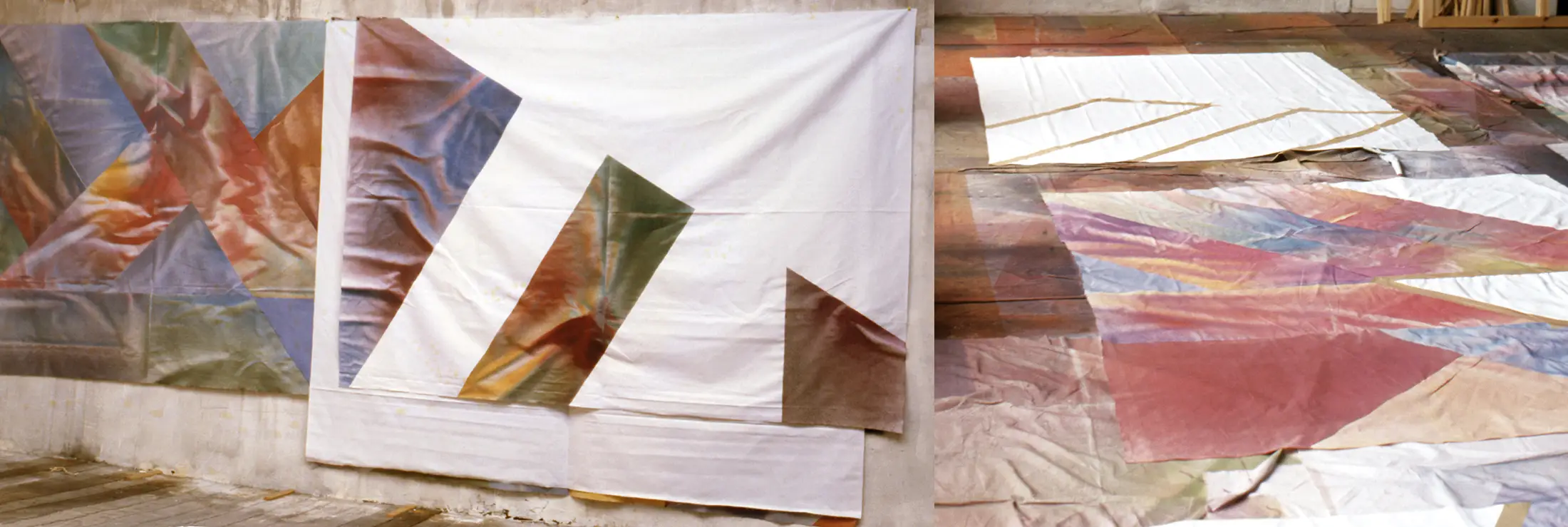
From the approach of his elders, Scanreigh also kept – at first – the large “human-scale” format that draws the viewer into the space of the work. With these three examples, Scanreigh, who had been trying out several formulas since 1972, had his “recipe”; it would be put into practice from 1974 onwards: large, almost monochrome unstretched canvases without stretchers (Cane), crumpled canvas (Hantaï), the whole served by a technique of marking out the inner zones of the work with adhesive tape (Newman). At first simple vertical bands, then diagonals, then diagonals set against a vertical, then crossed diagonals. The execution was meant to be detached, “impersonal”, by spraying dye onto canvas laid on the floor. (The dye, unstable in light, would be replaced by diluted acrylic.)
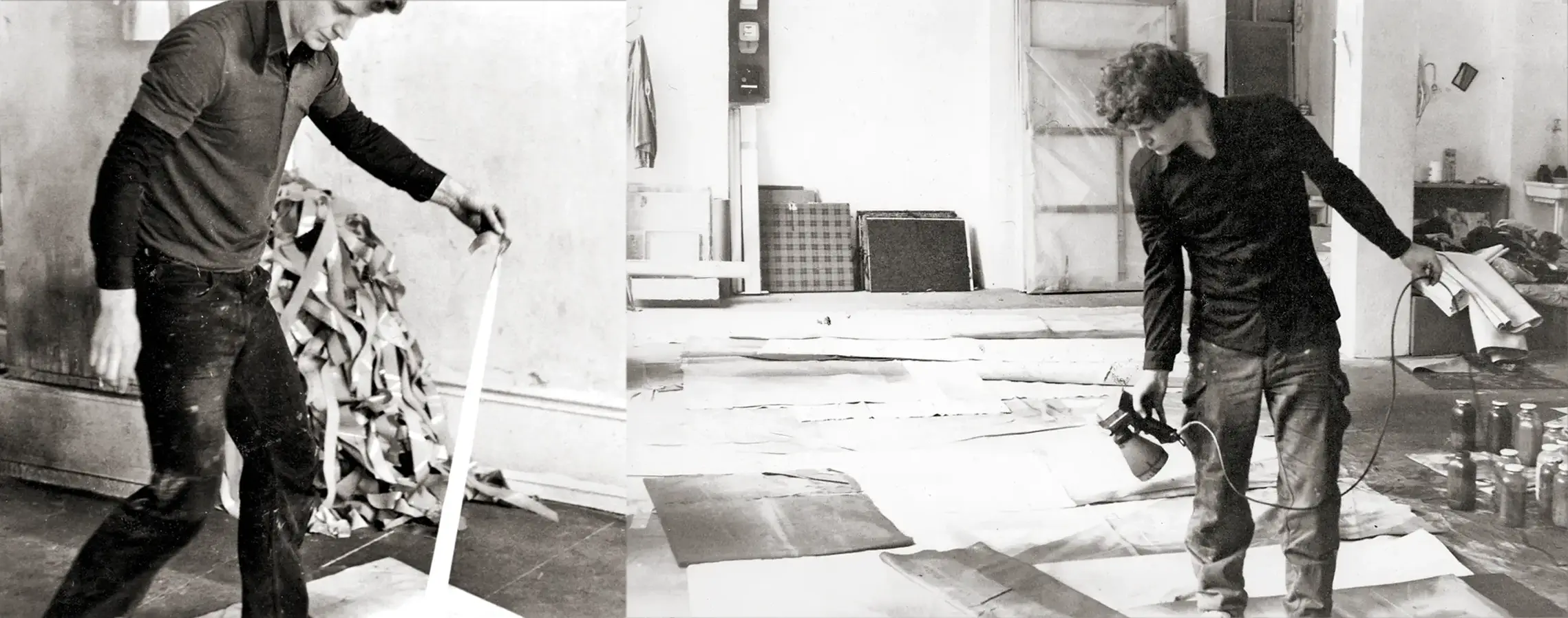
To back up these references, the theory of Supports/Surfaces, conceptualised by the review Peinture-Cahiers théoriques, had plenty to seduce the autodidact coming from the university, where the rebellious spirit of May ’68 was still blowing strong. There was a pleasure in making the disturbing, the raw, the “poor”, the question for the art of the moment being first and foremost to strip itself bare in its strict materiality and through the gesture that brought it into being. No biography, no narrative, no subject, no mental projection into anything whatsoever, nothing to show but the pictorial fact itself.
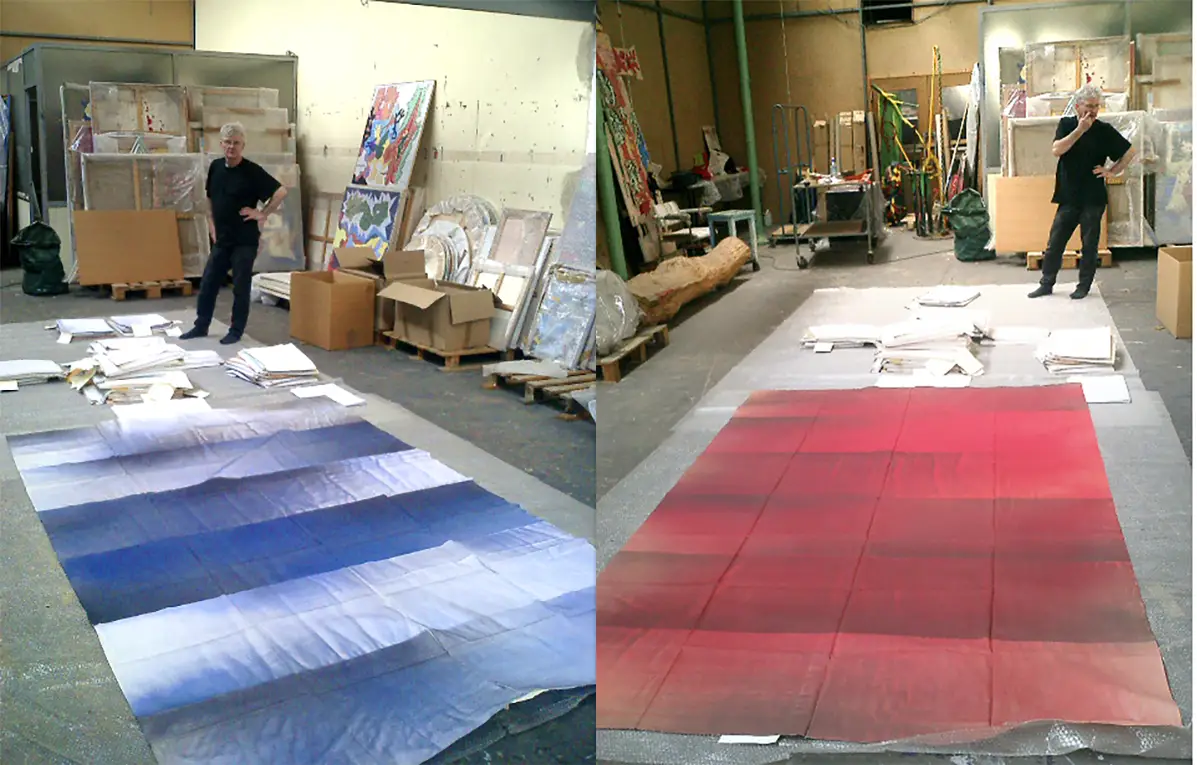
from the Villefranche-sur-Saône studio in 2006
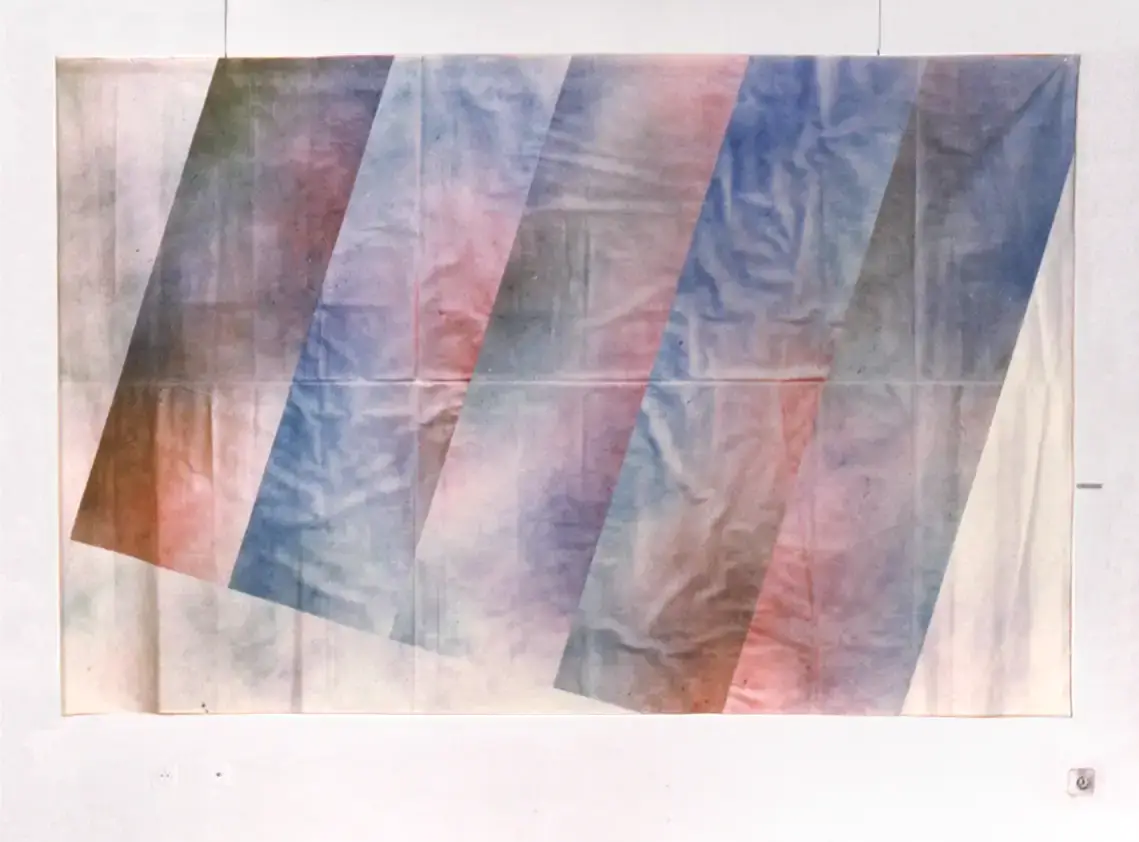
Strasbourg, 1975
For starting from nothing it was perfect, but the Supports/Surfaces group, where the wind was blowing from, was already in the midst of splitting up when Scanreigh began to paint. Already disinclined to the spirit of schools, and even though he took a keen interest in the human sciences, Scanreigh felt cramped in the theoretical rigorism he had leaned on. Unwilling to give up a certain kind of seduction, he gradually moved away from the initial minimalism, fully embracing the heresy of coloured trompe-l’œil reliefs. He would never stop intensifying the three-dimensional and illusionistic effects in his work. At the same time, as if in reaction, he gave importance to the internal structure of the paintings, even if the bands, by remaining open at their ends, continued to suggest an “all-over” space fairly faithful to the initial concepts.
The internal compartmentalisation of the paintings of this period seemed bound to dam the fluidity of the colour. It would take Scanreigh several years before the raw cut in this shifting colour revealed itself to him as the most elementary expression of drawing, namely a line. And what followed would prove just how much drawing was desired.
FB
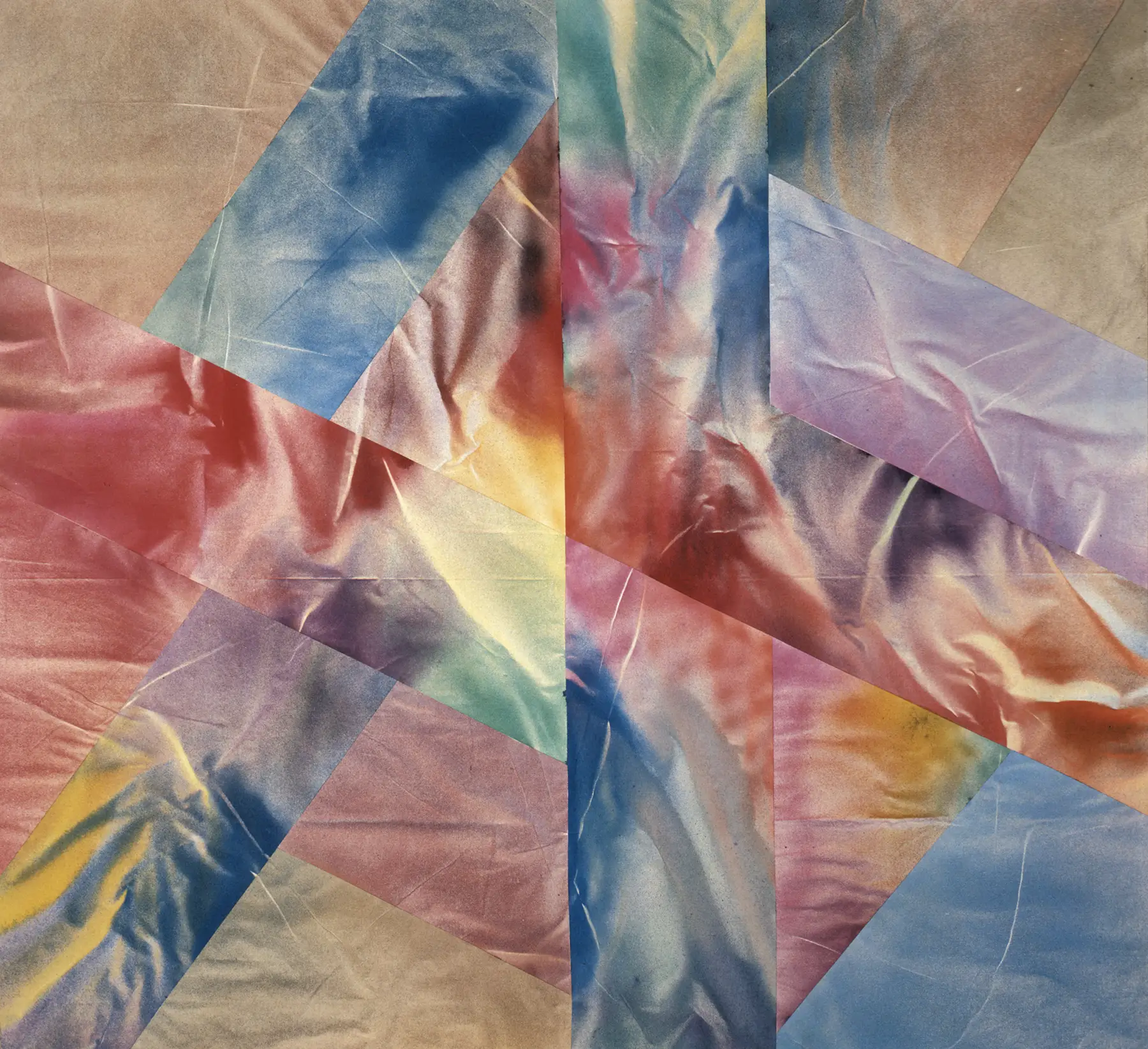
private collection
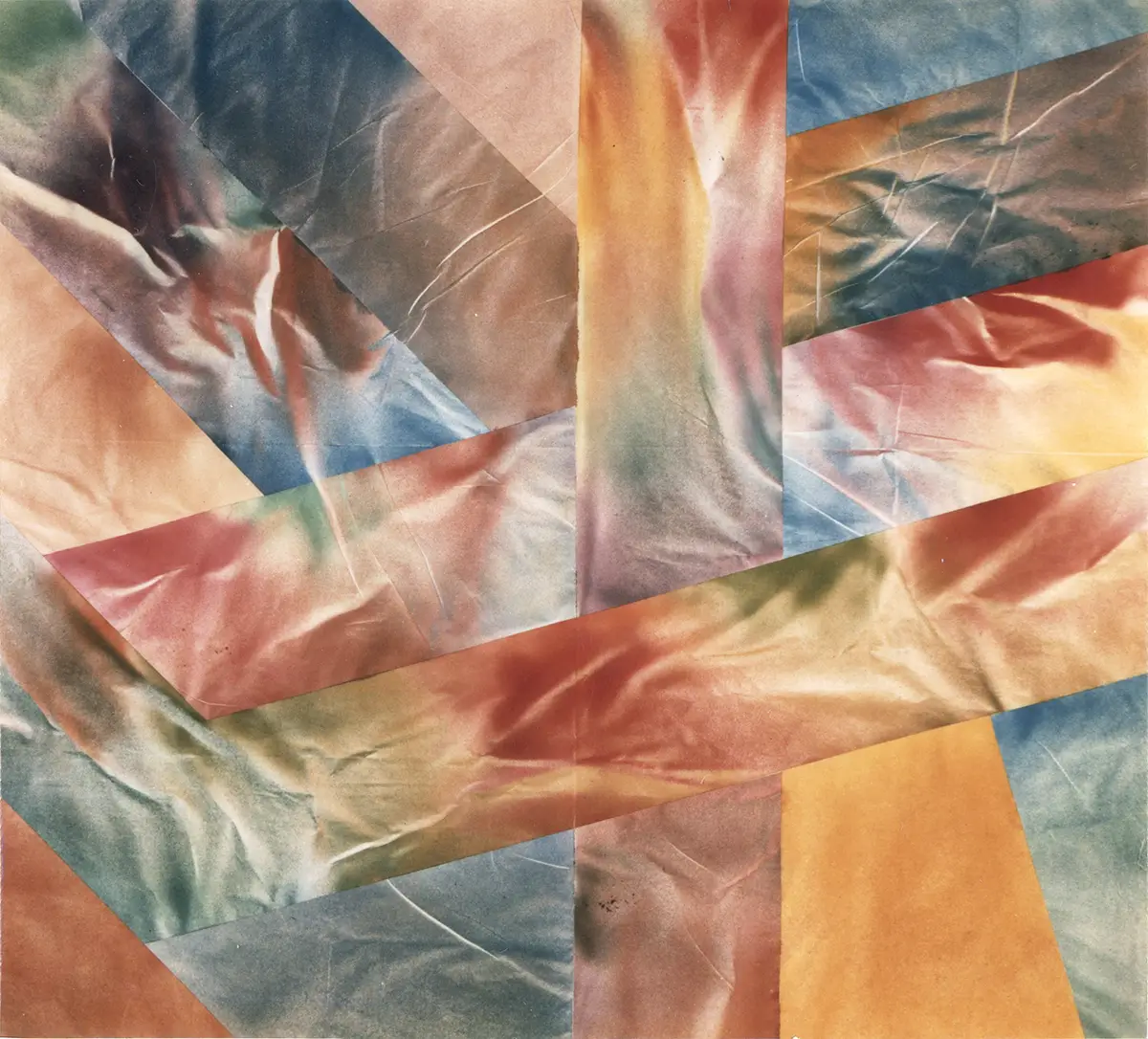
The canvases Foucques avec Du Val and Le Roy avec Seron were exhibited at the Ateliers aujourd'hui of the Centre Georges Pompidou in 1980.