The triangle, a rare shape
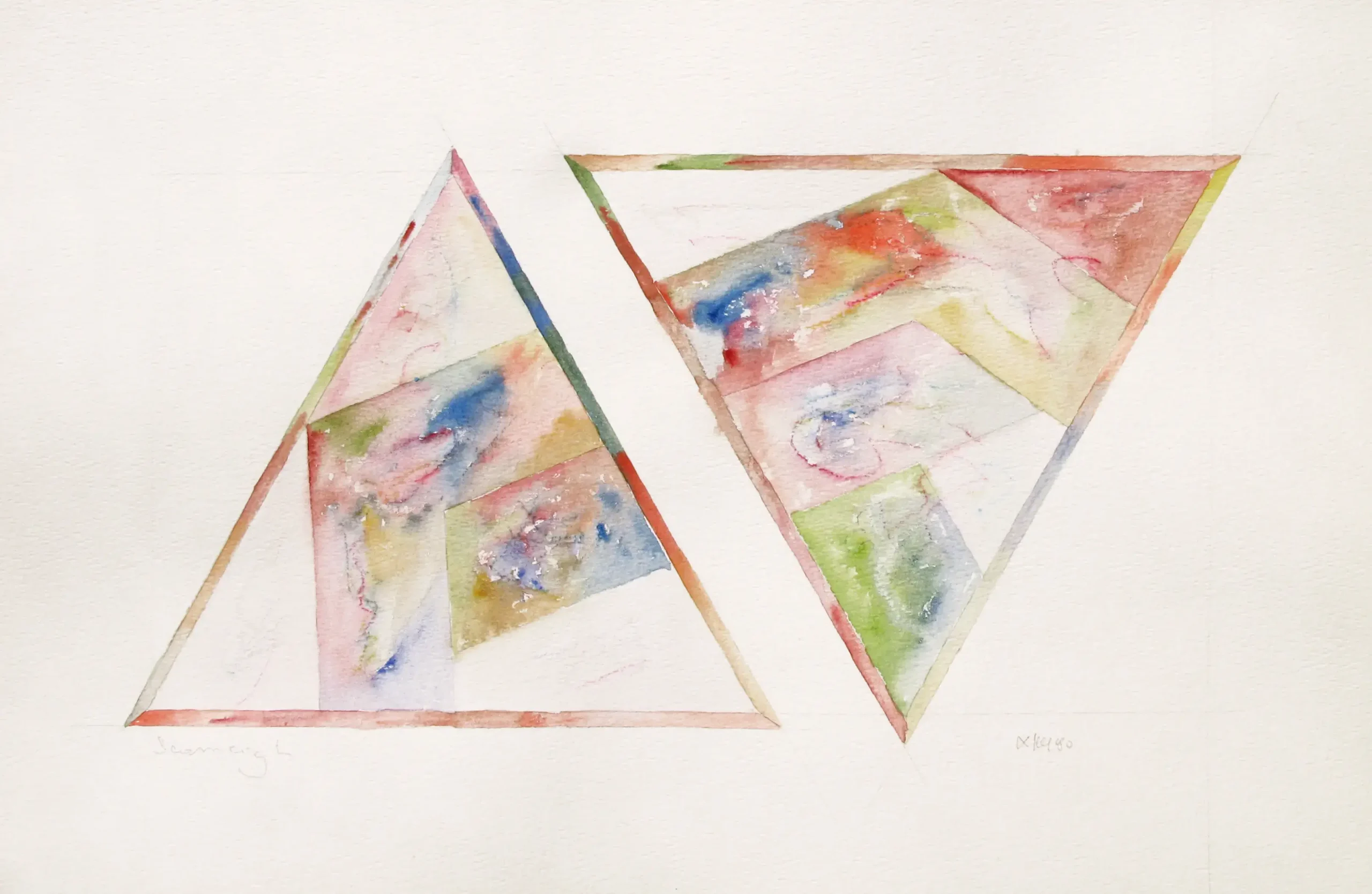
Watercolour on watercolour paper,
32 × 50 cm
Might the triangle be a thankless shape in painting? On a wall, its base demands space and then its sides run off to a point, leaving a lot of emptiness around them. Even if the shape is uncommon in art, there have always been modern and contemporary artists to try their hand at it. At the Kunstmuseum in Cologne Scanreigh saw Jasper Johns’s exceptional Map, which is a virtuoso exercise. He also remembers a Chirico seen on his very first visits to the Kunstmuseum in Basel in the 70s. There are triangles in Barnett Newman too (including Jericho, which is now at the Centre Georges Pompidou), no doubt present in the Newman retrospective at the Grand Palais in 1972, which Scanreigh visited. In the early 80s, weary of a decade of abstraction that had become repetitive and held no prospect of a “radiant future”, Scanreigh looked for challenges that would signal where he was heading. What led him to order a batch of triangular stretchers from a joiner in Saint-Étienne? The trigger, he says, may have come after leafing through catalogues on the work of Henri Cueco.
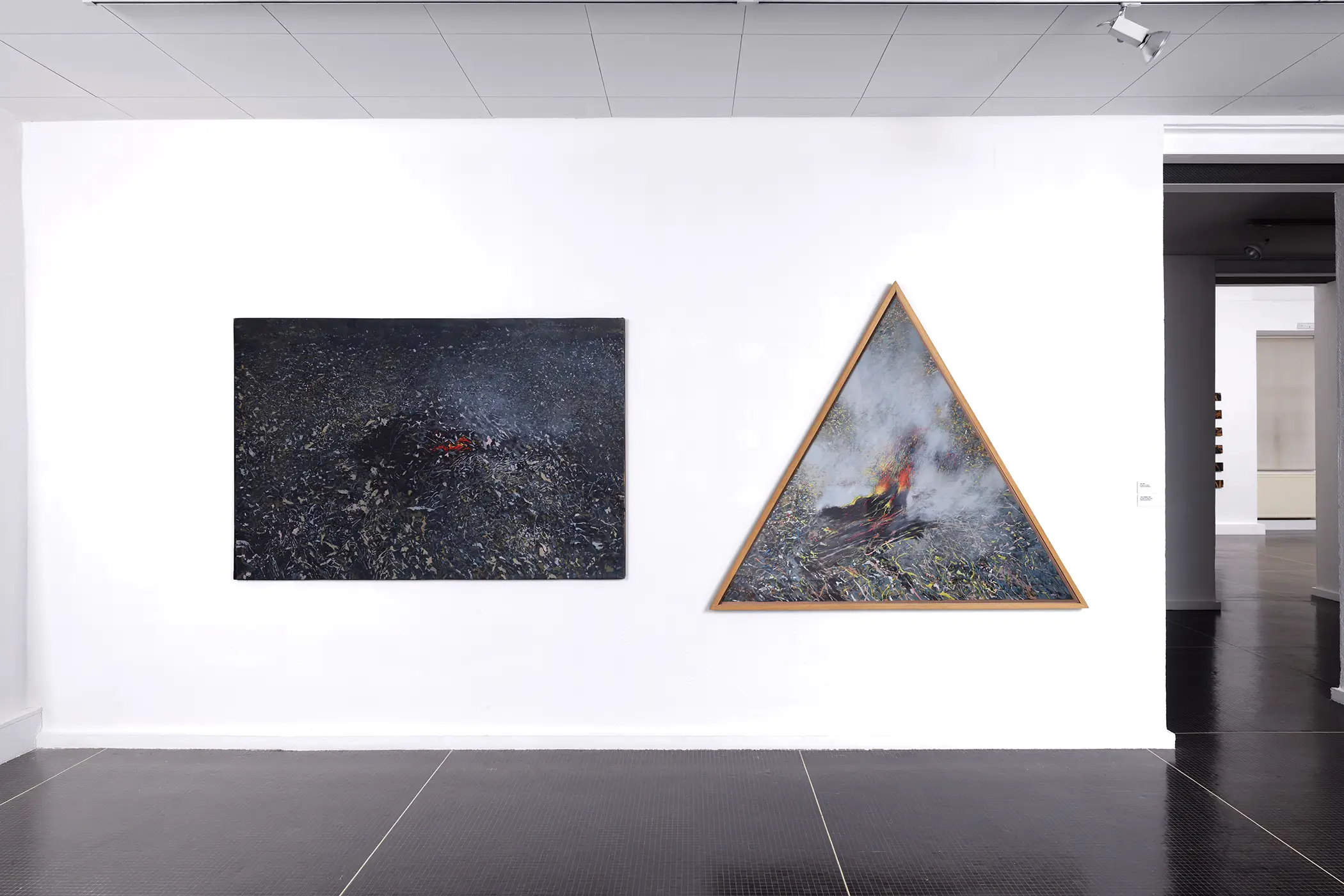
Courtesy Musée des Beaux-arts de Dole
© Aurelien Mole
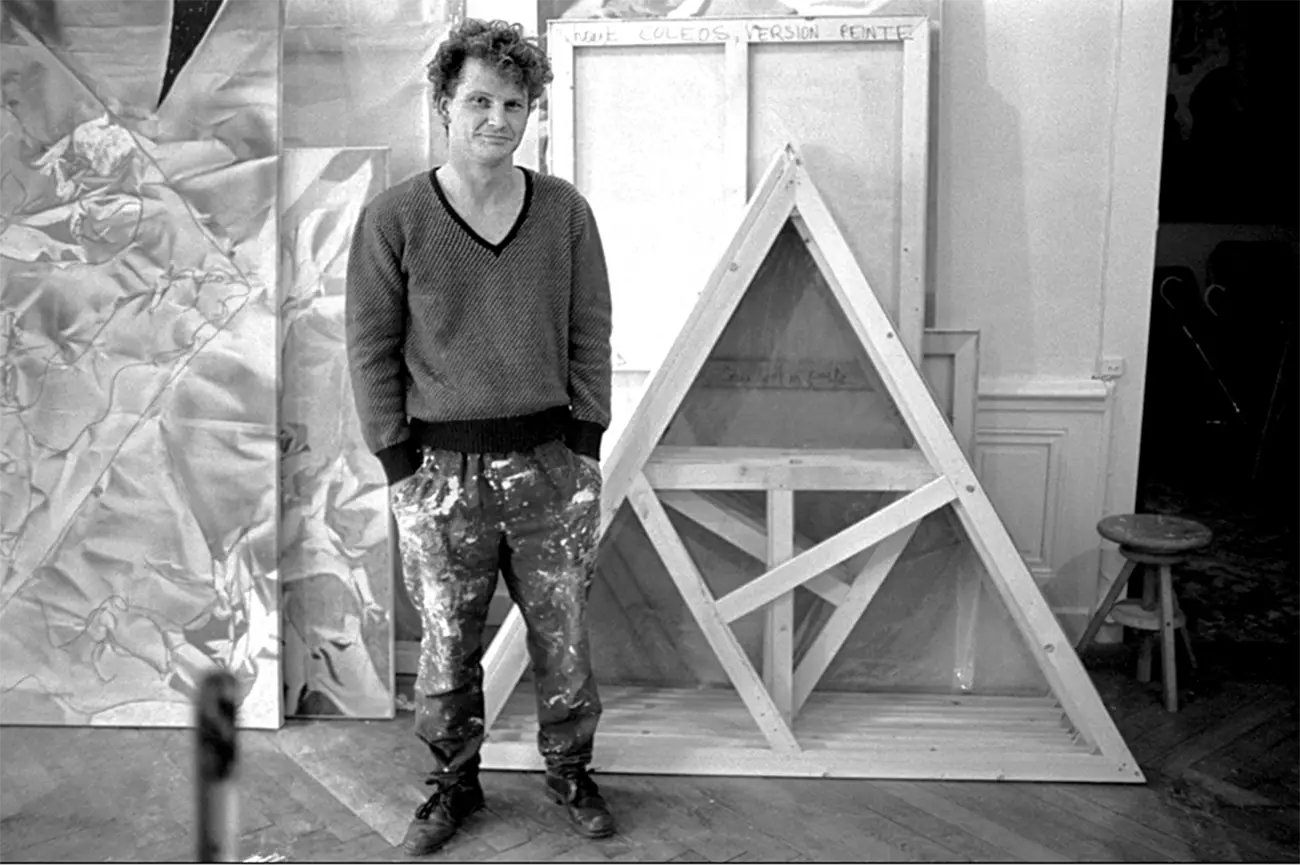
© Philippe Clerc
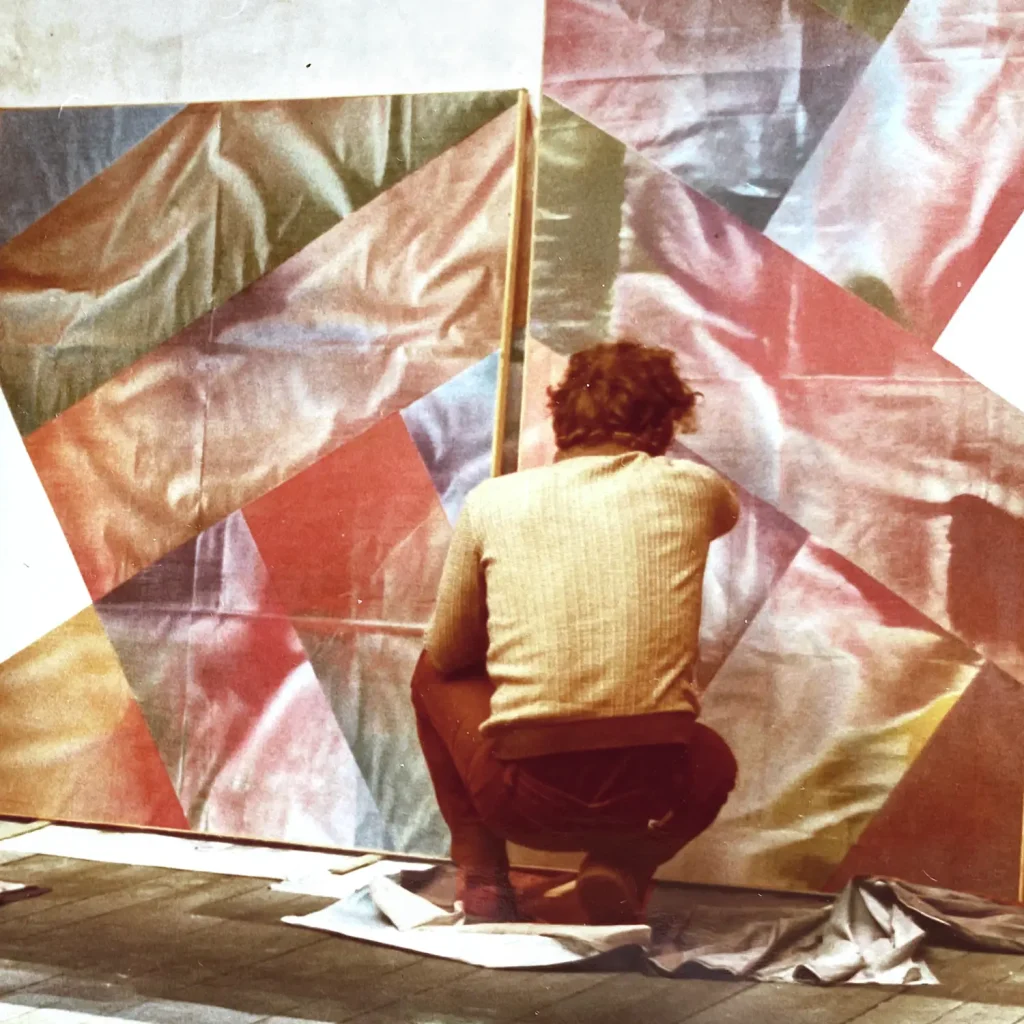
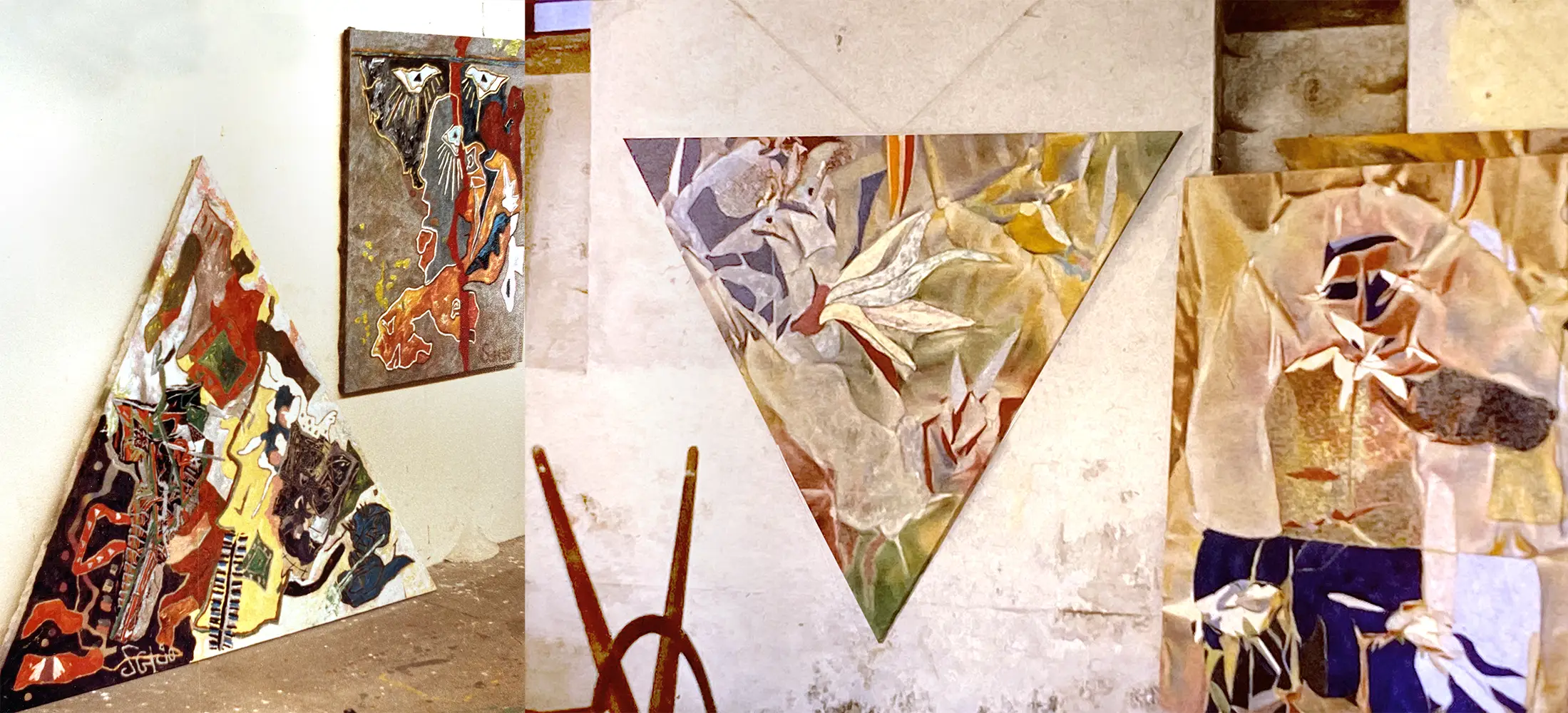
Triangular stretchers waiting in the studio look rather fine, but once the canvas is stretched the difficulties begin. The central part of the triangle turns out to be cramped, and the three points even more so. A first reflex is to fill the centre with a single motif and to furnish the points with somewhat arbitrary extensions. Then, on the contrary, one considers starting from the points and the sides in a combined dynamic that makes the centre a more complex meeting point. The triangular shape resists repetitive compositions surprisingly well, which is reassuring when one needs renewal. It coincides with the introduction of figurative motifs into the illusionist folds of Scanreigh’s first manner of painting. In the studio on rue Raisin in Saint-Étienne a particular atmosphere reigns, because for a time it is as much a sculpture studio as a painting one. But this is not the place to take up that subject now; it needs to be dealt with in its own right. We can simply say that the sculptures greatly stimulated the emergence of figurative elements in the paintings.
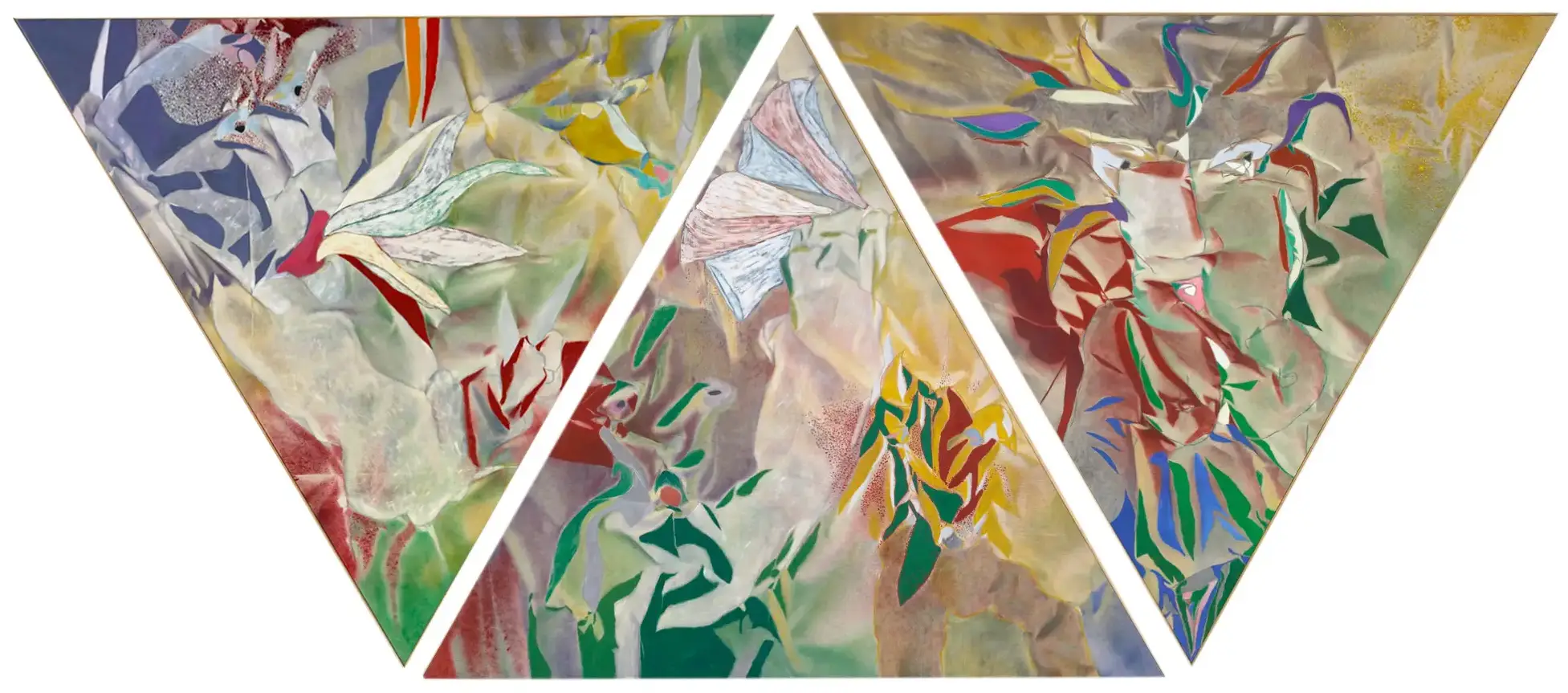
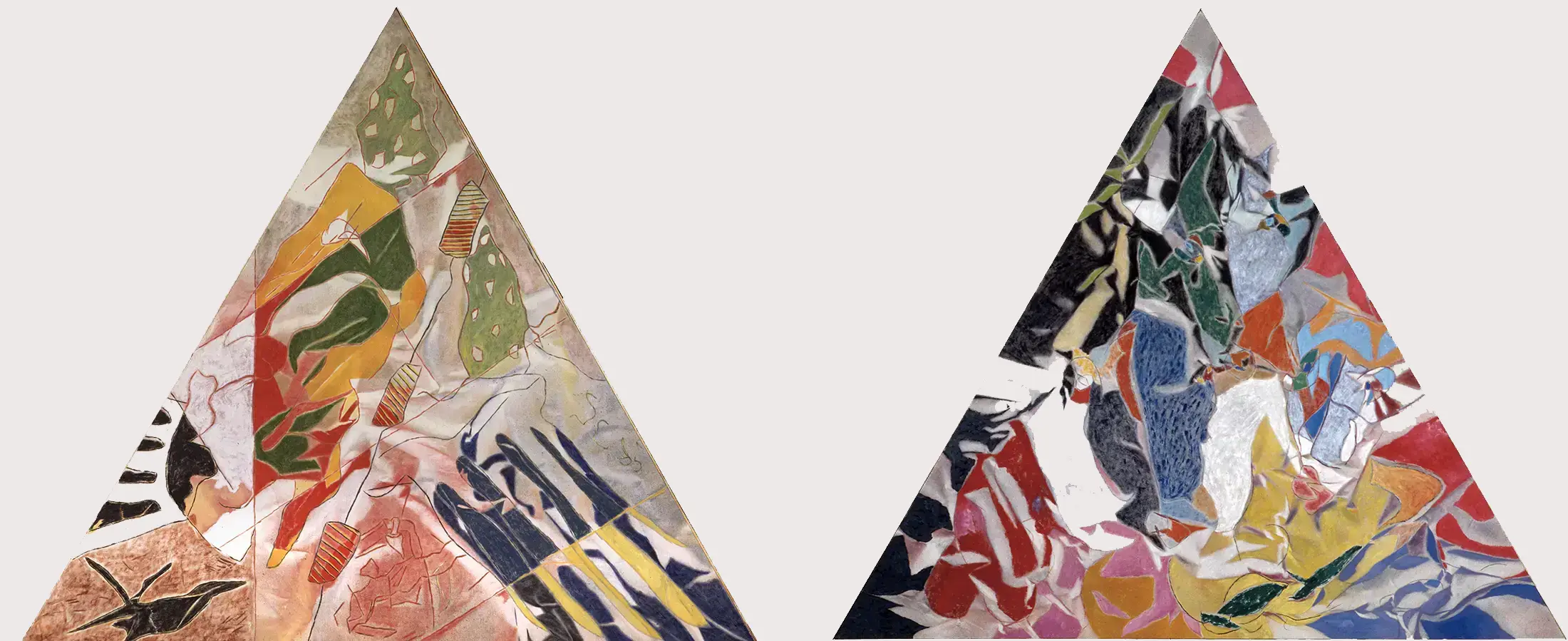
Acrylic on canvas, 3 × (160 × 182 cm)
Acquired by the FRAC R.A., collection I.A.C. Villeurbanne
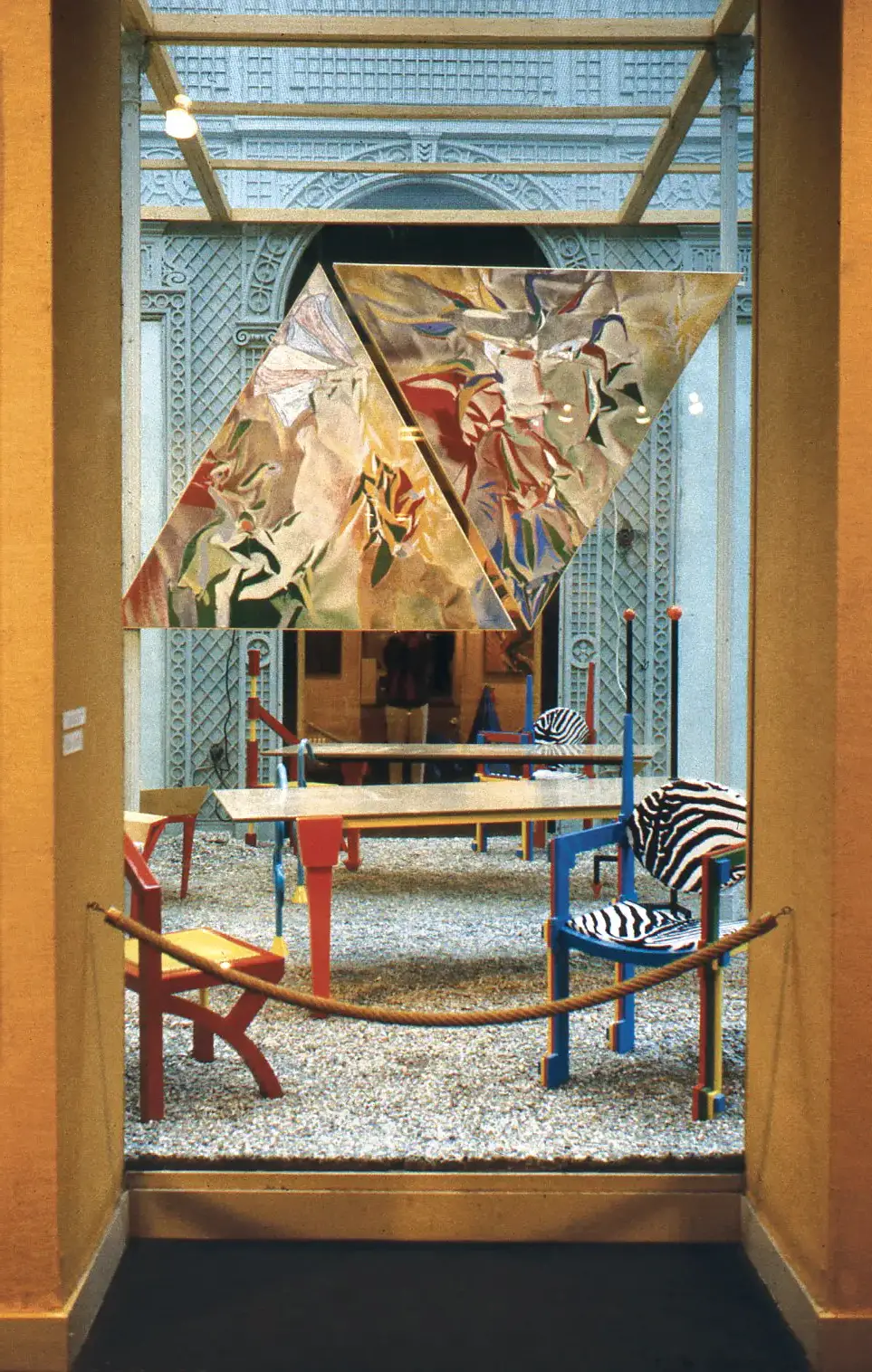
FNAGP, Paris 1984
A pseudo-triptych of triangles painted in the Saint-Étienne studio in 1982 is representative of the hybrid situation of that period. It was acquired by the FRAC Rhône-Alpes and turned up in 1984 in its inaugural exhibition at the FNAGP in Paris. In fact only two triangles of the trio were shown, at the organisers’ whim, though they had the good idea of pairing them with furniture by the group TOTEM, impetuous and talented designers, in a rather delightful display. I was at the opening as assistant to the curator of the FRAC Rhône-Alpes, and Scanreigh reminds me that I apparently passed on to him a nasty remark about his work made by an official (it would be neither the first nor the last!)… but I don’t remember it any more.
on the right: Depuis trois jours, 1983, private collection
Acrylic on canvas, 150 × 170 cm
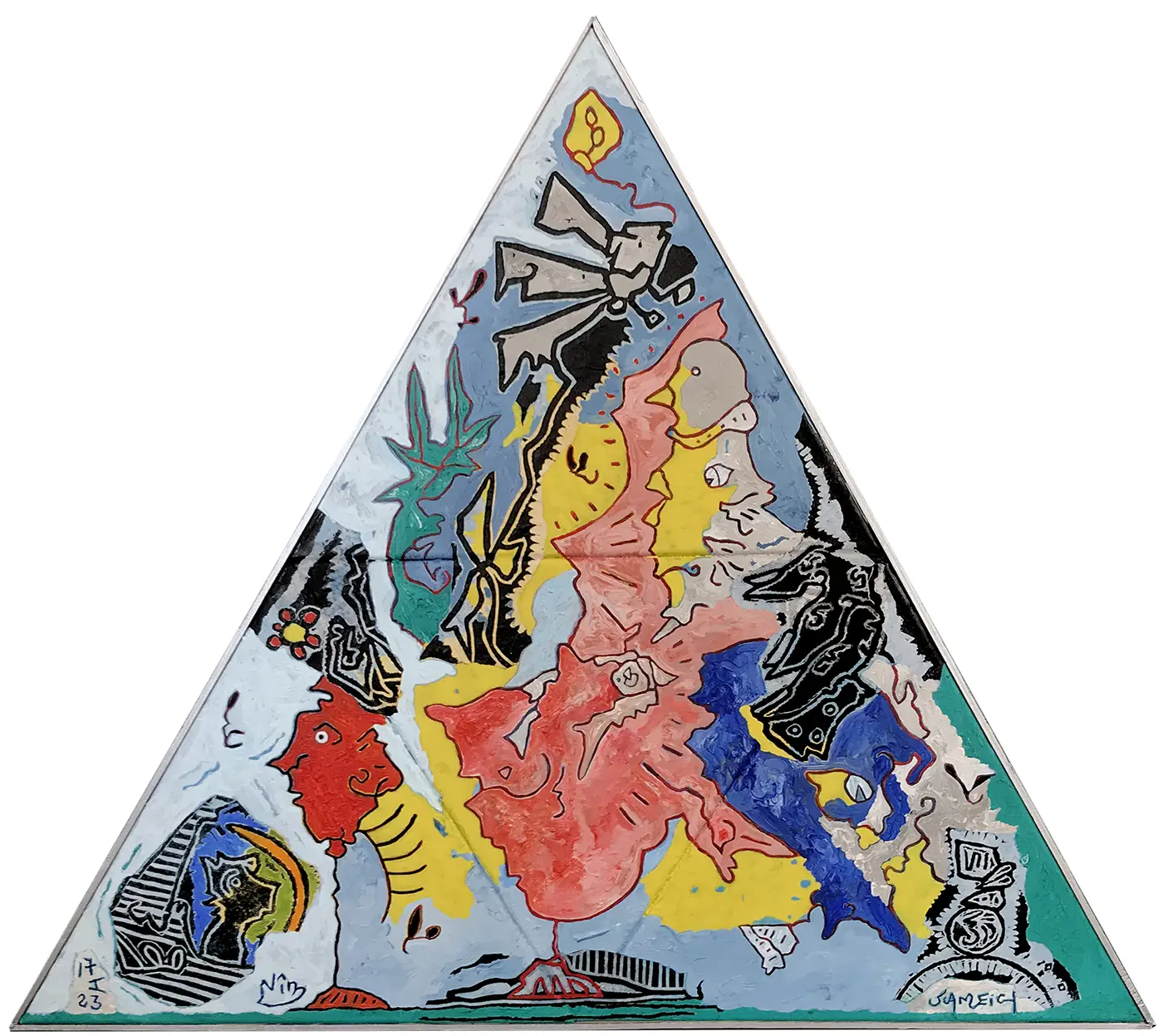
More than twenty triangle-paintings were painted between 1981 and 1995, including two late ones in 2017 and 2023. Scanreigh still has four, some ten are in private collections. Some have been destroyed. The FRAC Rhône-Alpes holds three. The Musée Dini in Villefranche-sur-Saône holds three from the Blanckaert collection. The FRAC Alsace holds one. F.B.
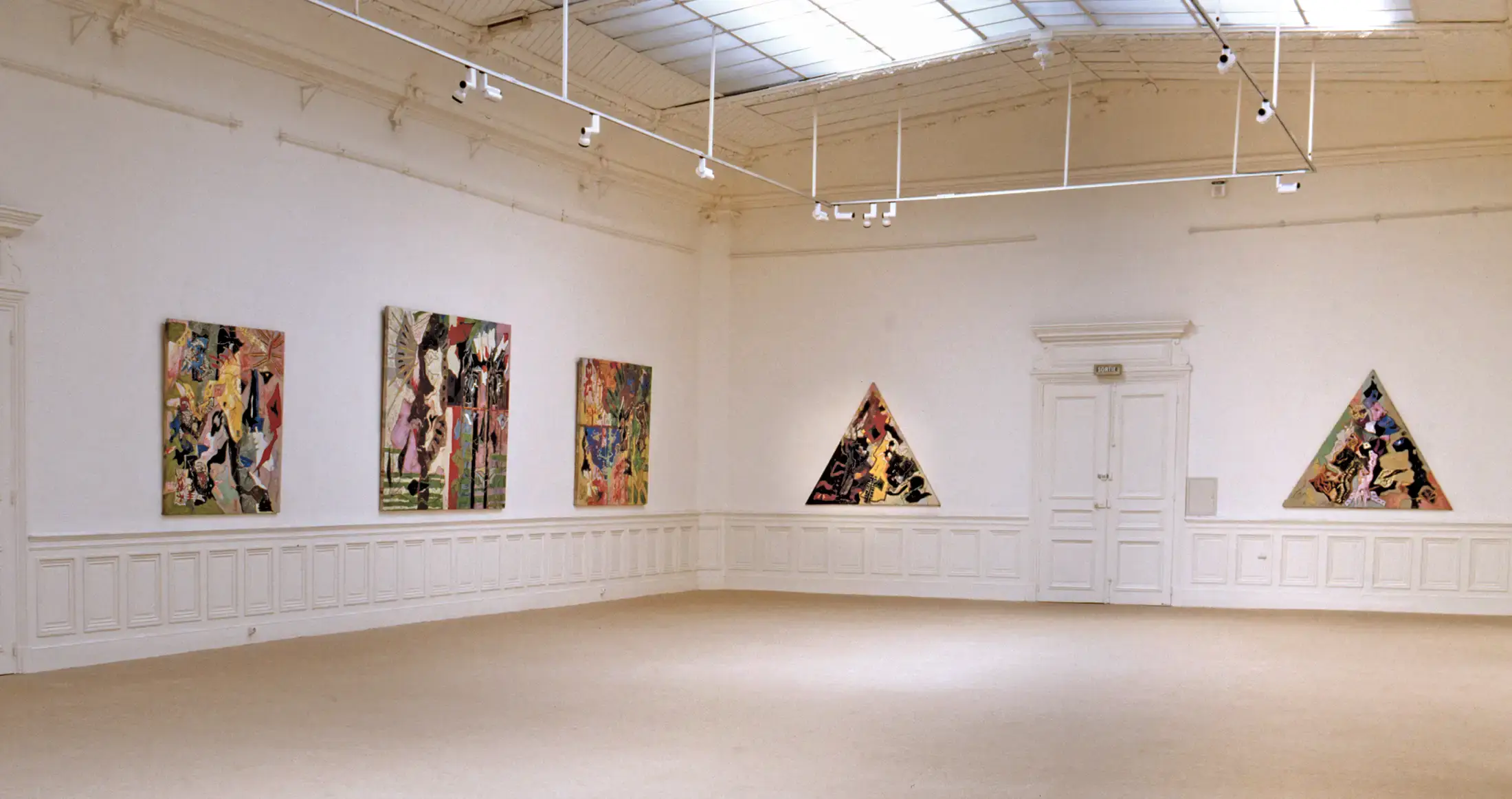
in Villefranche-sur-Saône in 1990
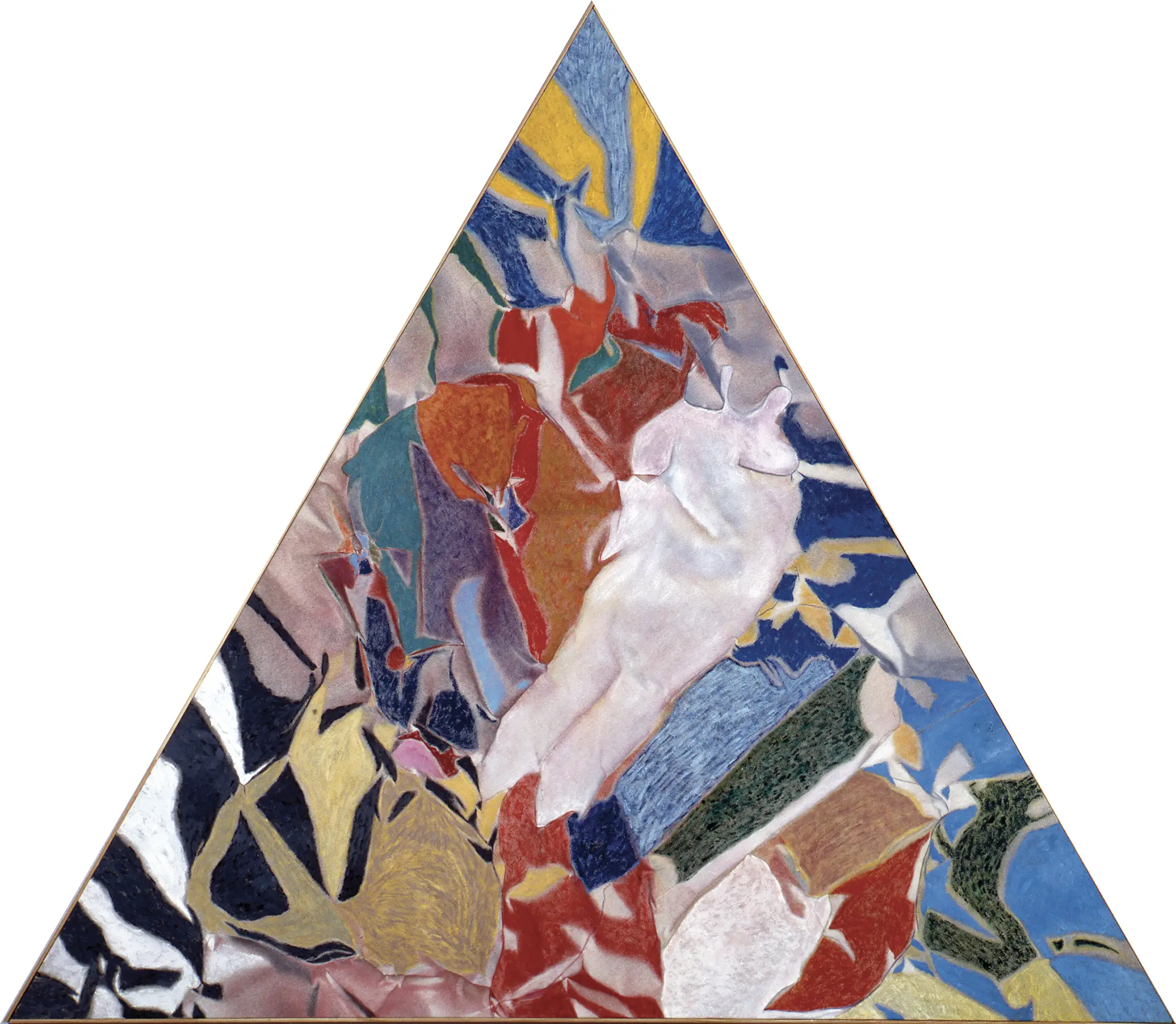
Acrylic on canvas, 150 × 170 cm
FRAC Alsace collection
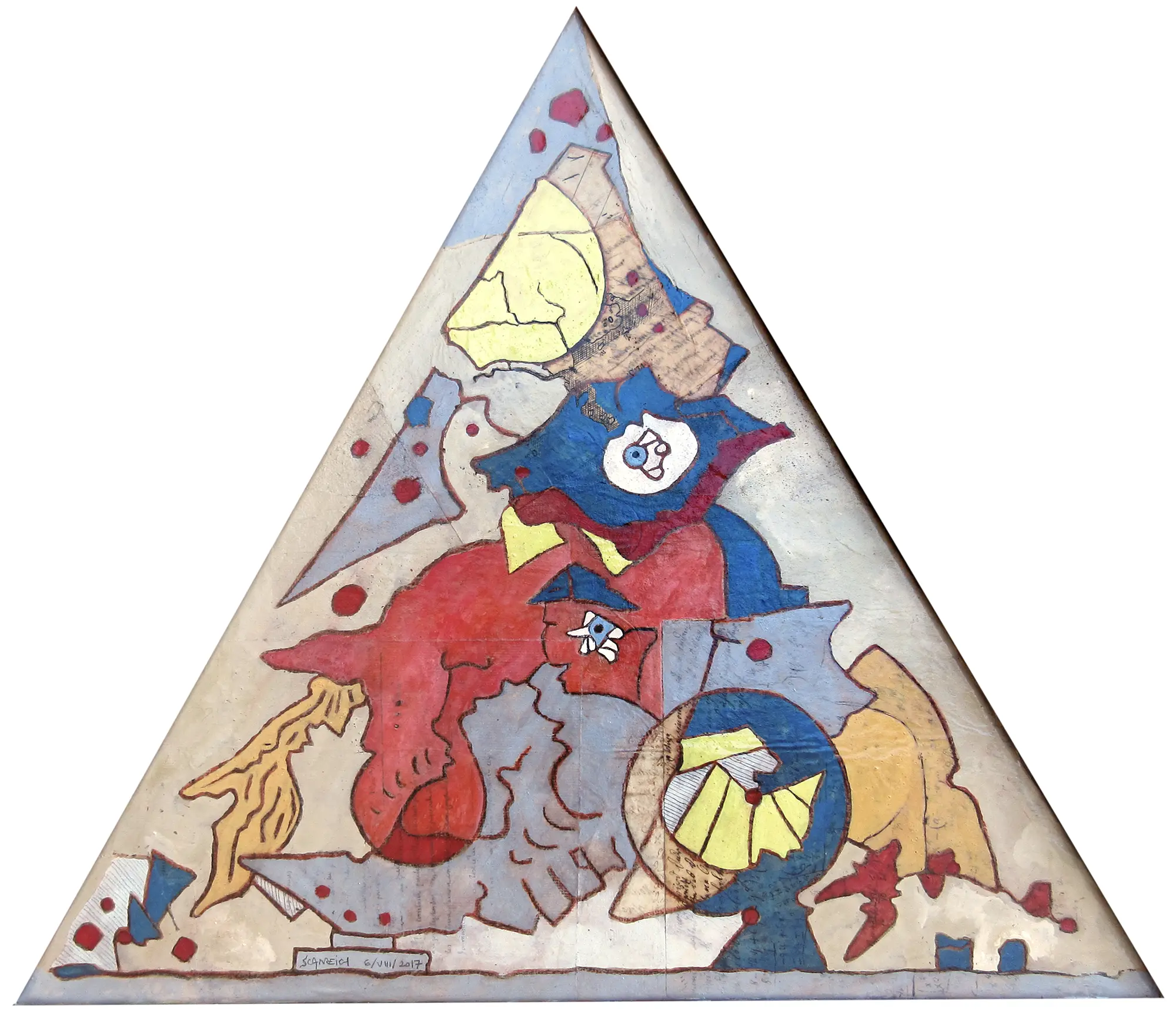
Gouache on canvas, 43.5 × 50 cm
Acrylic and collage on canvas
Work made up of 4 triangular stretchers
78 × 90 cm