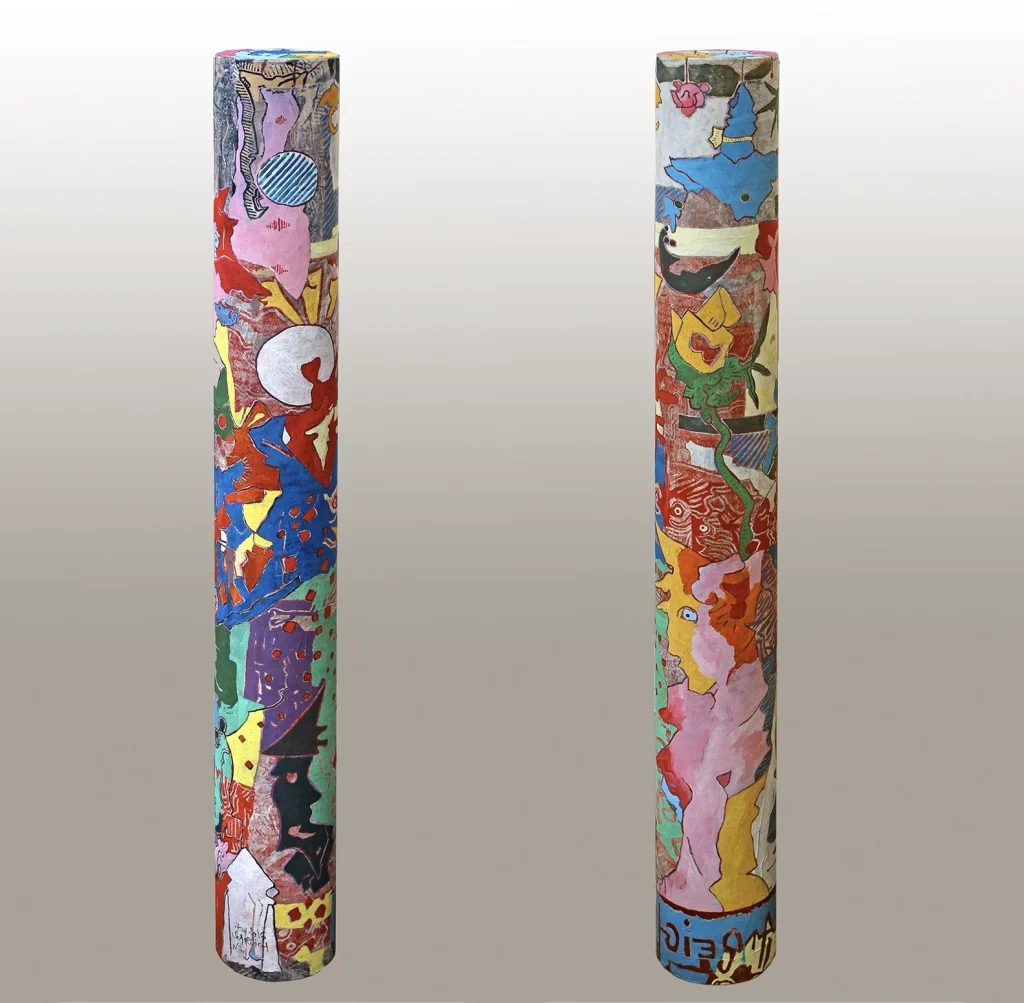
Catalytic sculpture
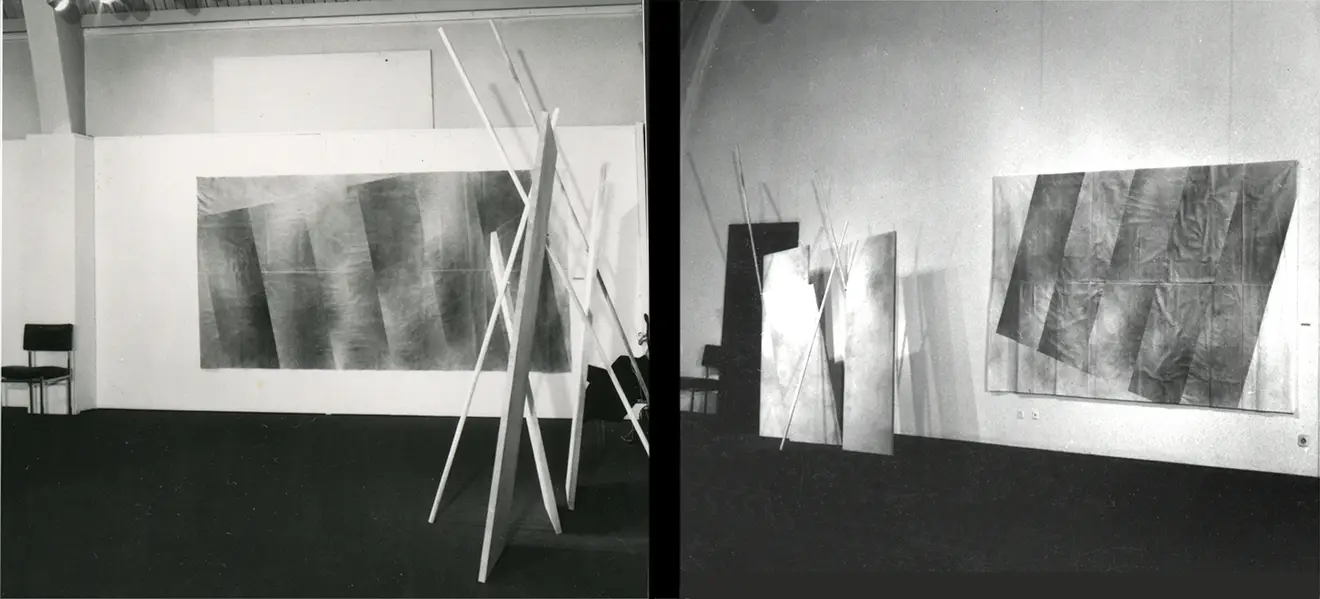
Sculpture has been there in Scanreigh’s imagination from the start. Two mediocre photos bear witness to a piece shown at the 1976 exhibition at the Musée d’art moderne de l’Ancienne Douane in Strasbourg, which did not survive the event. It was a minimalist sculpture made of spray-gun-painted panels in a dislocated arrangement, accompanied by a pick-up-sticks jumble of thin bars.
Sculpture would not become a subject again until the critical period of the early 80s. It would offer Scanreigh crutches to get out of his way of painting, which, after more than ten years of practice, he perceived as too procedural and too detached. He wants to get his hands dirty, and that is what he does by learning how the tools and techniques of printmaking work. But before and alongside this novelty, there was the “sculpture sequence”, fairly productive, of which almost nothing remains. Scanreigh speaks of it as “the success of a failure”, by which he means that sculpture as such did not develop but that the approach was not in vain, far from it!
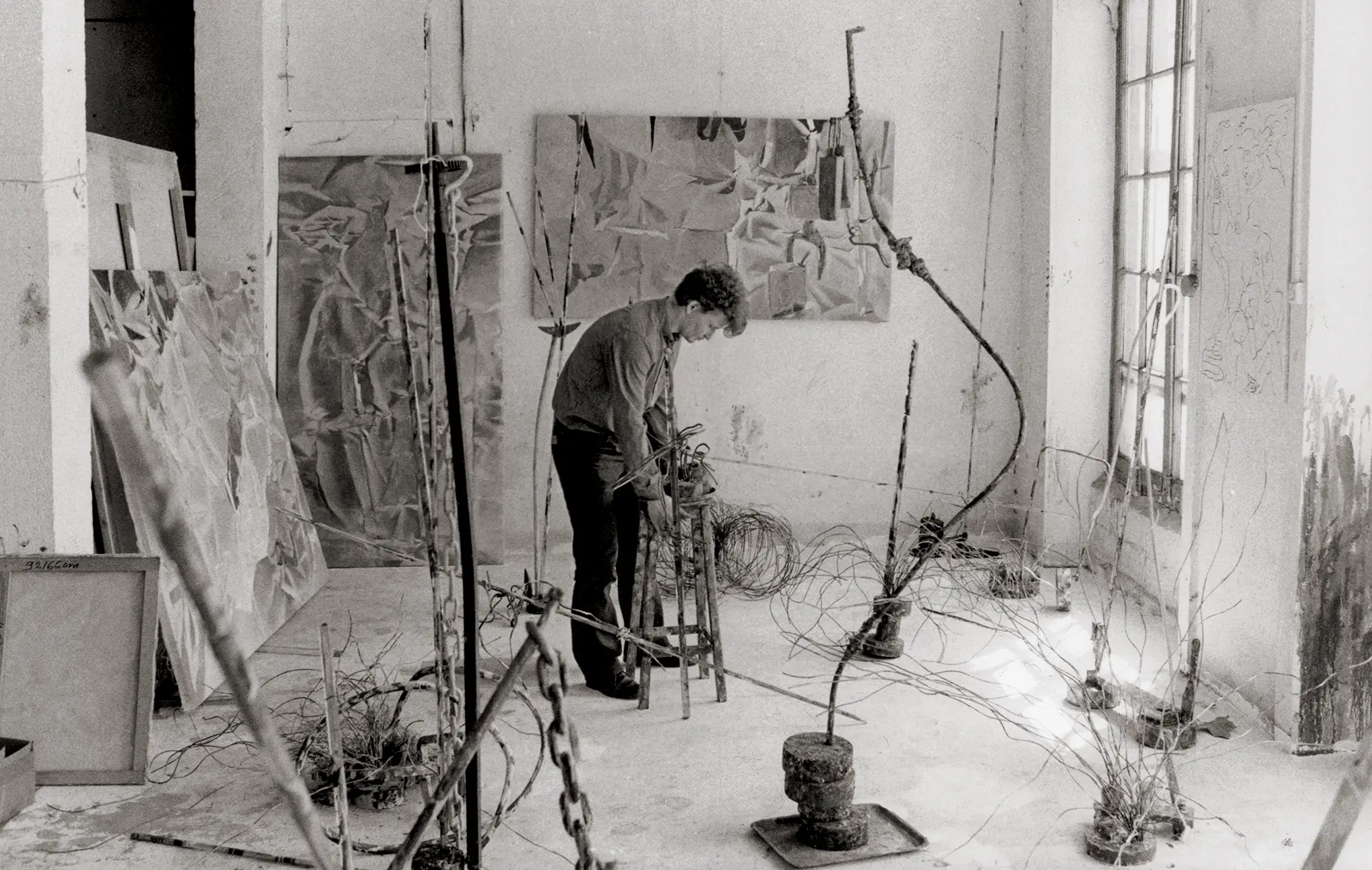
© Cyrille Sabatier
The sequence begins in 1981 in the studio on rue Raisin in Saint-Étienne. It continues in Lyon in 1983, or more exactly in the two dilapidated studios he occupied one after the other in Villeurbanne, before settling “royally” in Villefranche-sur-Saône in 1988, in premises made available to him by the industrialist and patron Gilles Blanckaert.
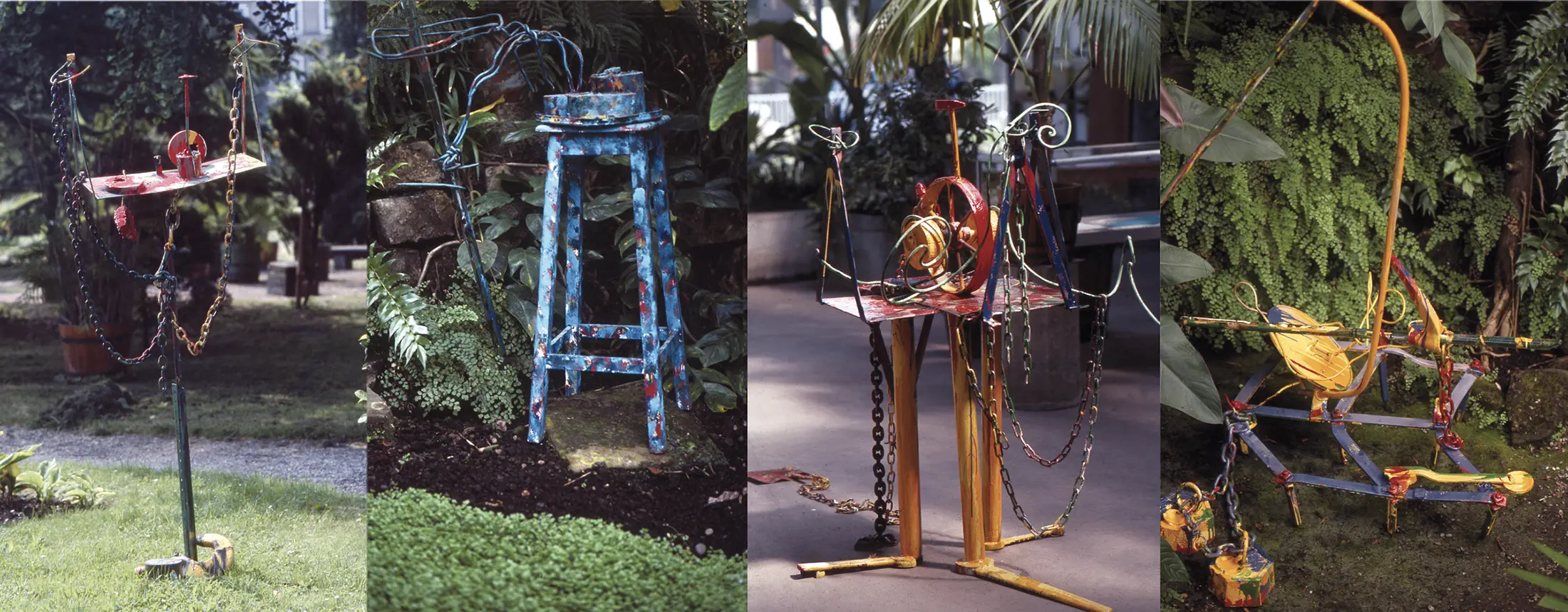
The first Saint-Étienne sculptures are mainly assemblages of salvaged metal, very often incorporating glass rods found in the former ribbon-weaving workshops of Saint-Étienne.
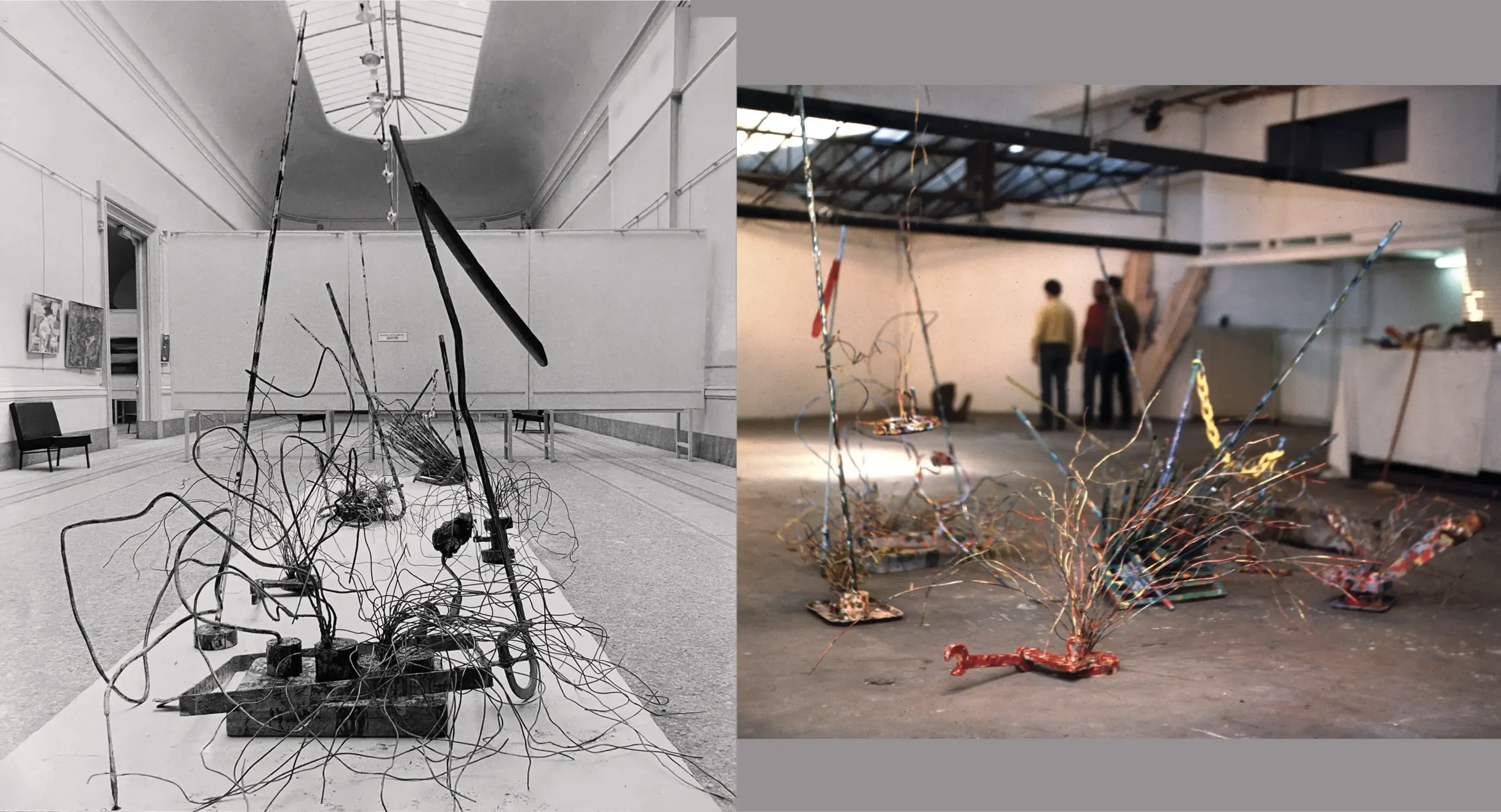
on the right: Exhibition at Base Internationale, Villeurbanne, 1983
Despite the ballast of the steel or cast-iron pieces that form their base, the sculptures look light thanks to wires, rods and small suspended accessories, the whole painted in bright colours. While the neo-sculptor goes about his work freely, the painter is hampered, even paralysed, by his desire to return to figuration. “Where to begin?” “What to depict?” And the answer at first is “as little as possible”, as if out of loyalty to the minimalism of his beginnings. What better, then, than these shaggy sculptures with no precise subject, spreading their tapering forms in space like “abstract drawings in the void”. They will supply figurative motifs for the painting. They remain allusive, just as allusive as the forms that the painter’s pareidolic vision feverishly tracks down in the trompe-l’œil crumplings of his abstract painting and that he extracts from the maze of folds by gradual, cautious touches.
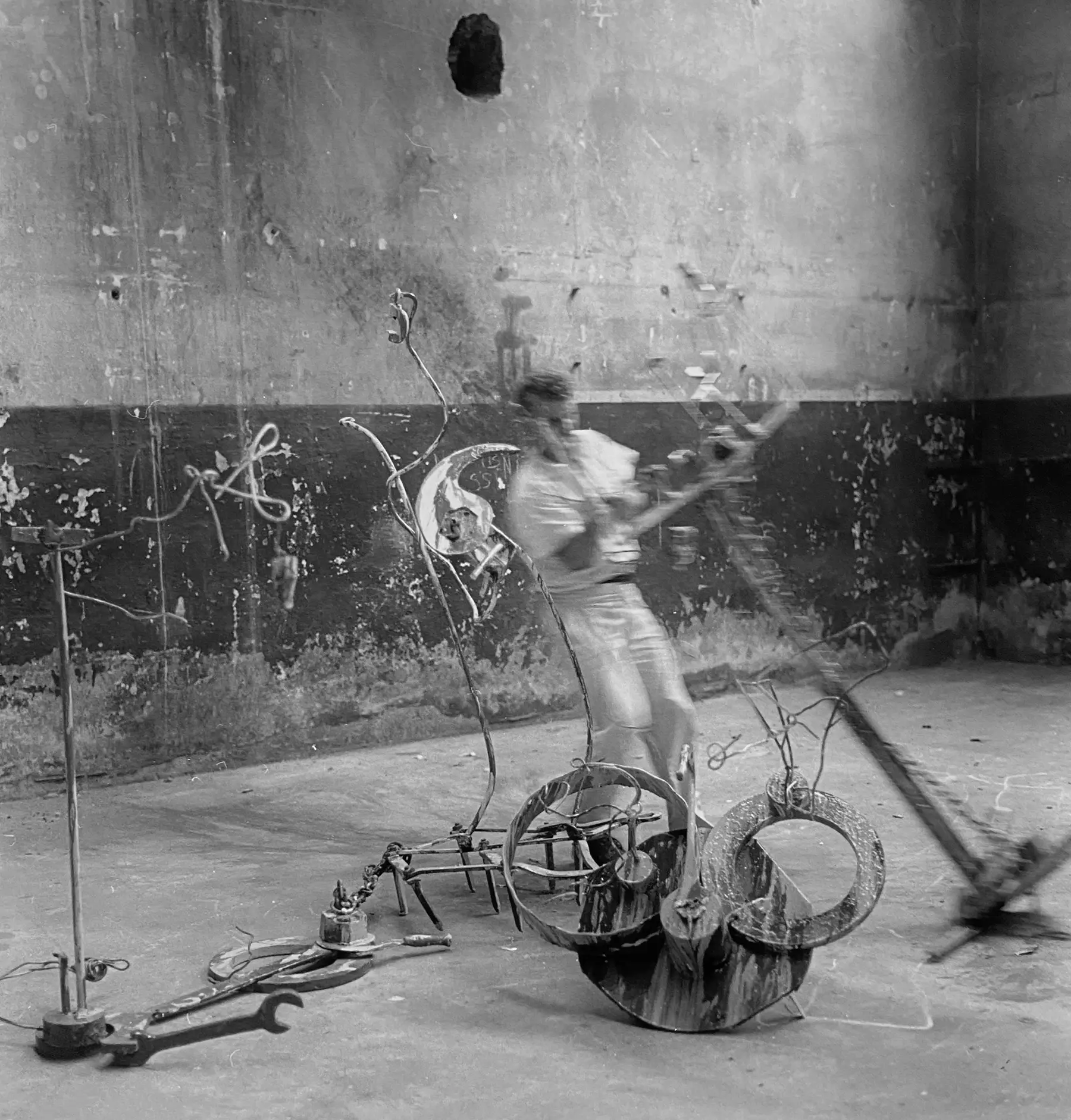
© Michel Jaget
In 1988, the forced move out of the Villeurbanne studio because of demolition would lead to the destruction of most of the metal sculptures. After this episode, Scanreigh varies his approaches. As well as working wood as a printmaker, he works it as a sculptor. So painting lets itself be won over by the 3rd dimension, with some supports taking on a truly sculptural look. This is the period of the “palettes” and the “totems”, held up by bases and painted on both sides.
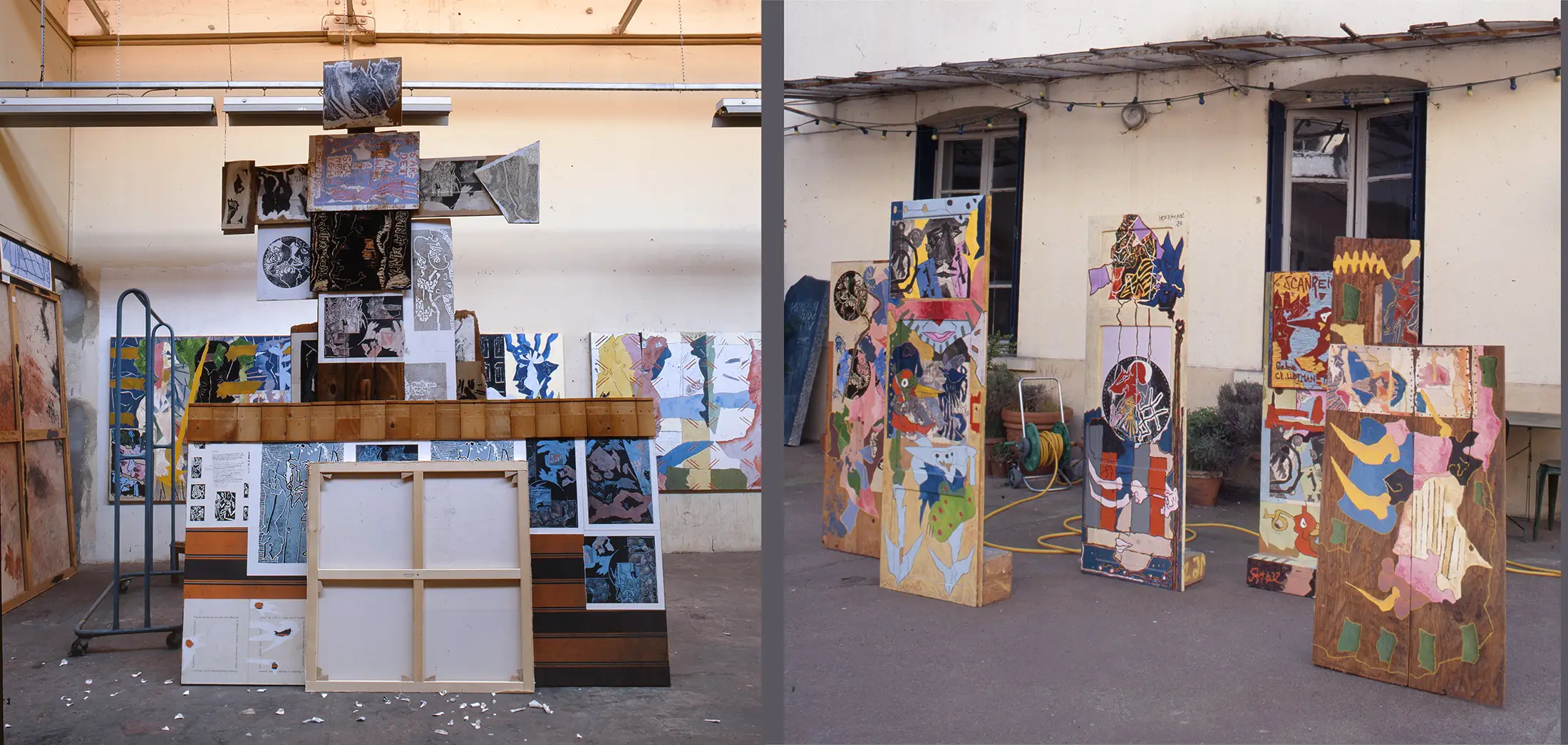
© E. Yalopoulos
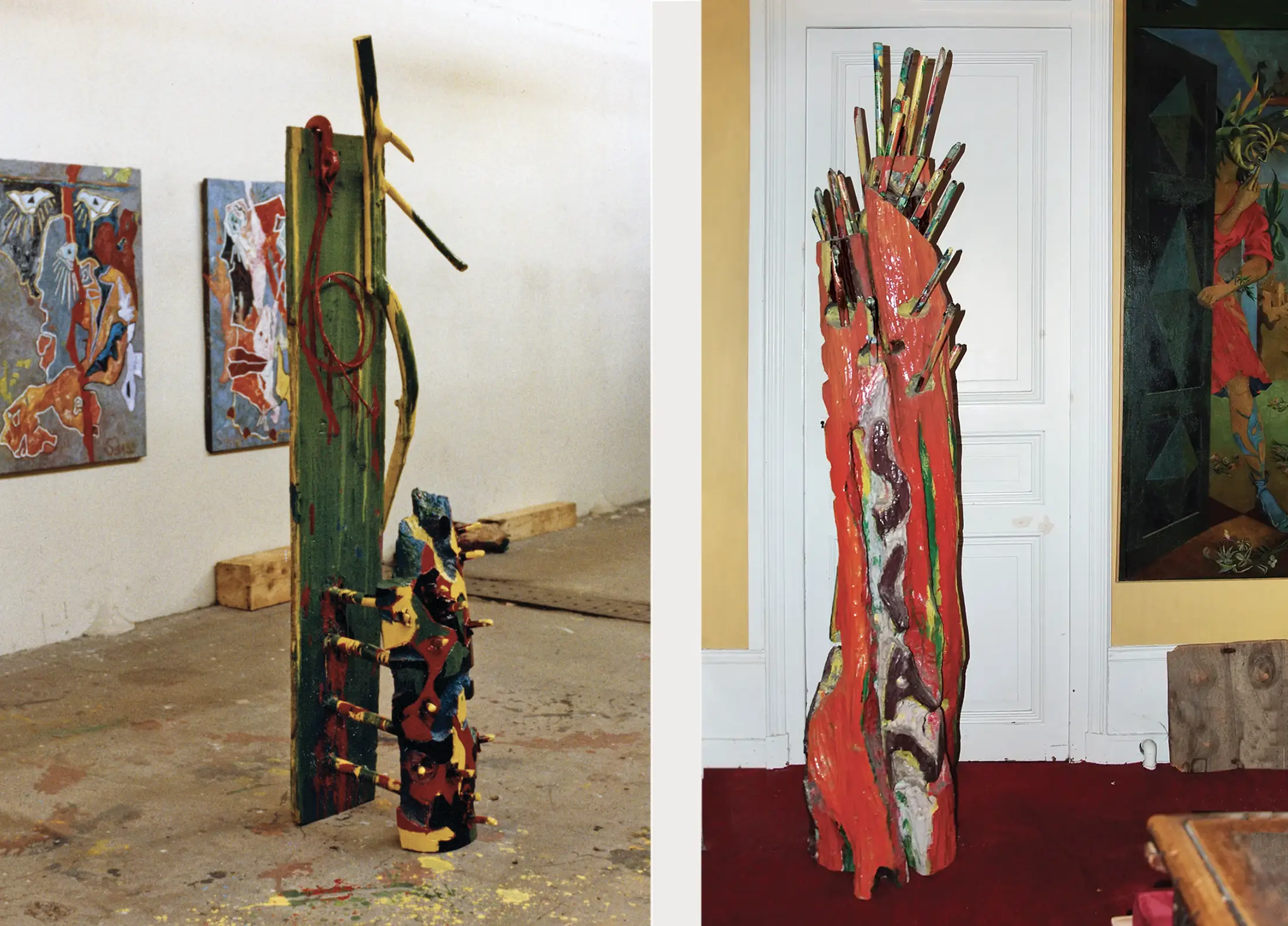
on the left: destroyed, on the right: Private collection
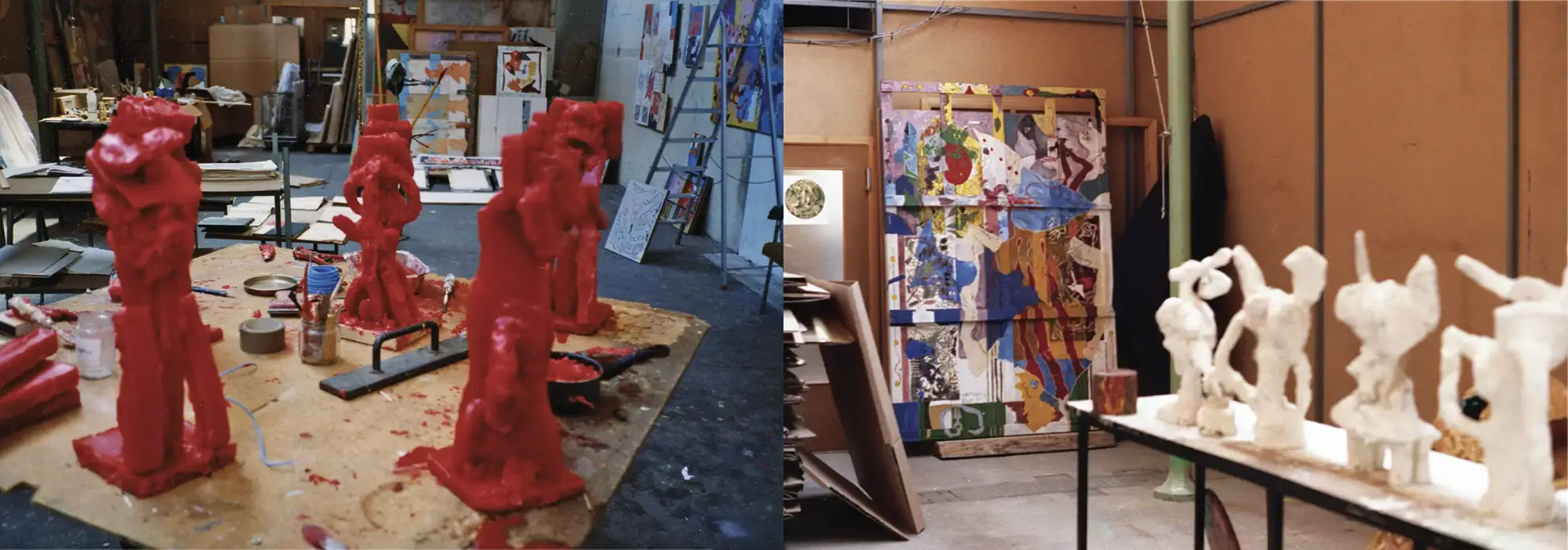
Scanreigh also worked plaster and wax, two models of which would be cast in bronze by Bruno Cuffini in his foundry at Cusson near Tain-l'Hermitage.
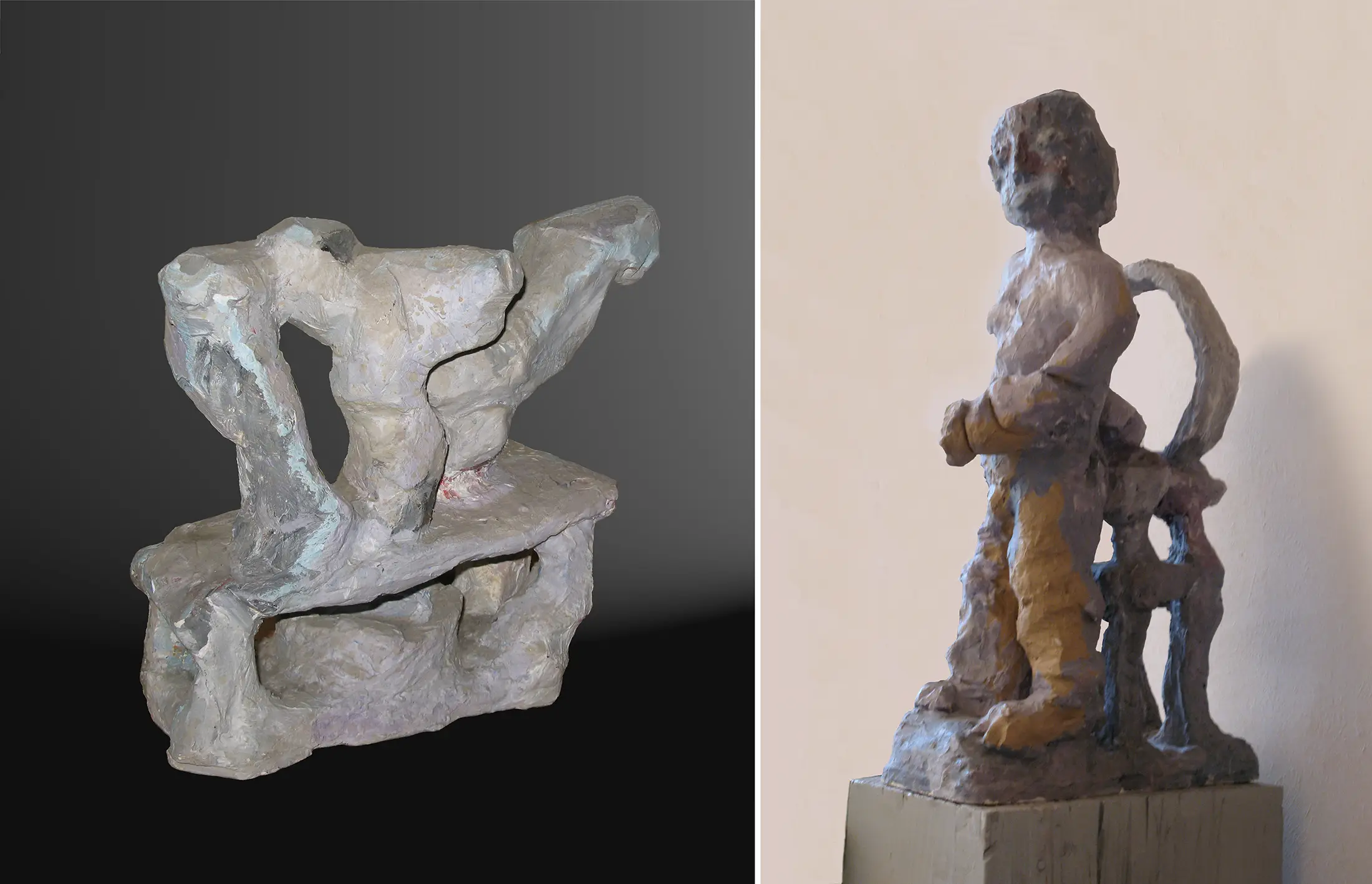
on the right: Fiorelli, 1985, painted plaster, 50 × 27 × 13 cm
Collection of the artist
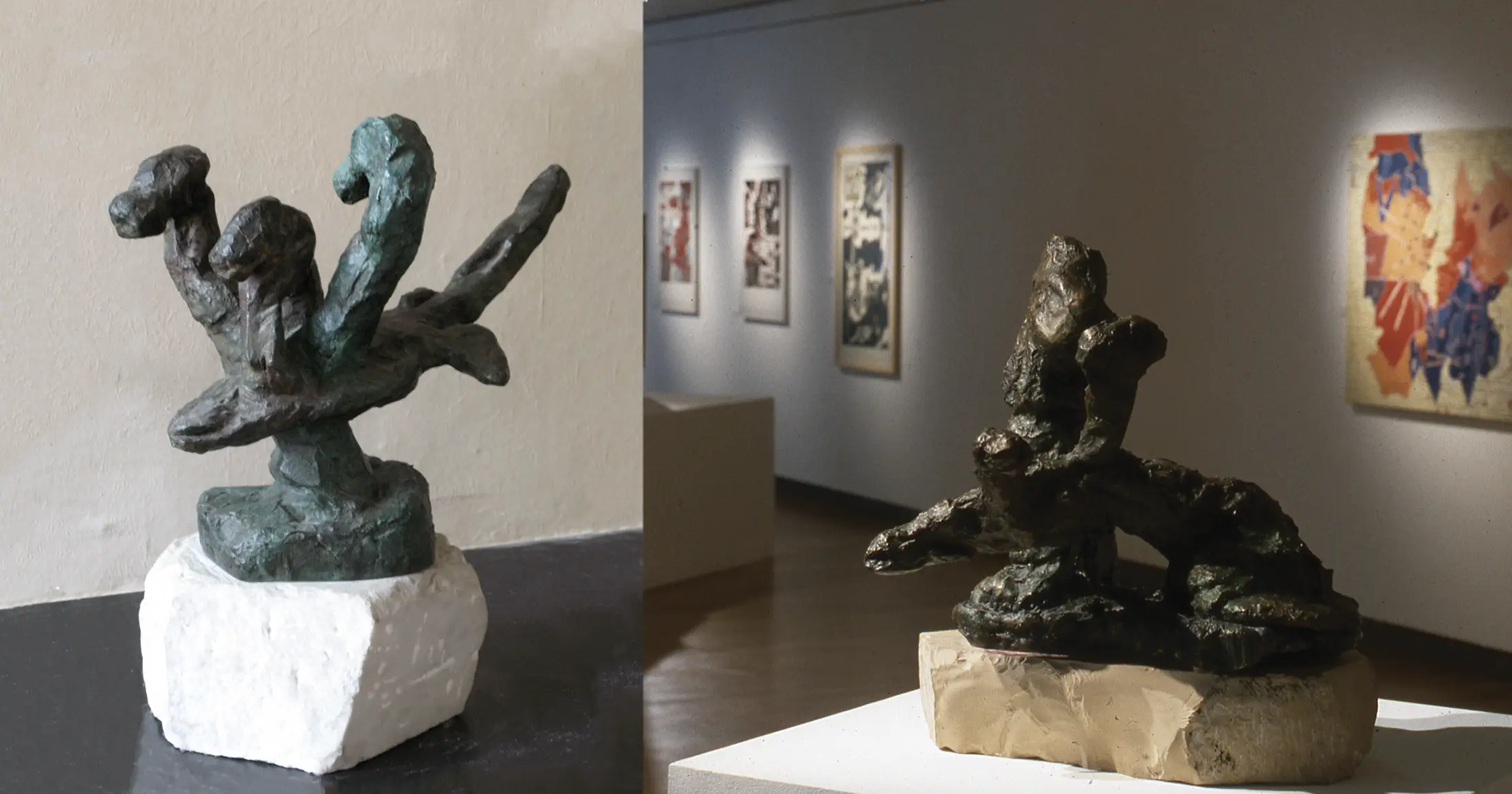
on the right: En chemin, 1988, bronze shown in the retrospective
at Saint-Quentin-en-Yvelines in 1998
Collection of the artist
Very few sculptures from the first period have been kept. A few rare pieces exist in private collections, including a painted plaster statuette stolen during a short showing in Oullins in 1984. Only three large pieces are in public collections.
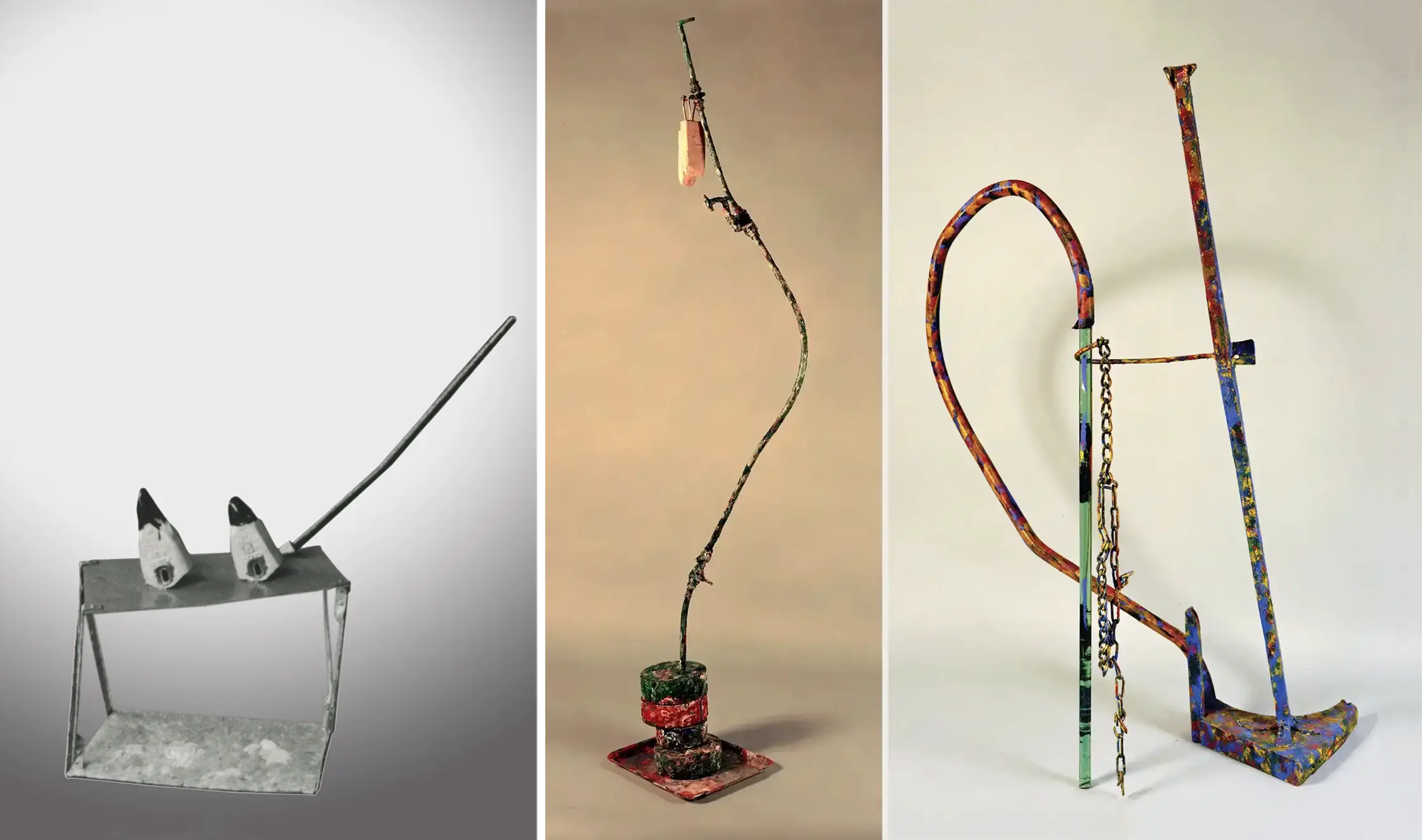
Les Toucans, 1984, 170 × 160 × 85 cm, FRAC Rhône-Alpes
Coléos, 1981, height 225 cm, FRAC Alsace
La Fin de sa vie, 180 × 100 × 60 cm, FRAC Alsace
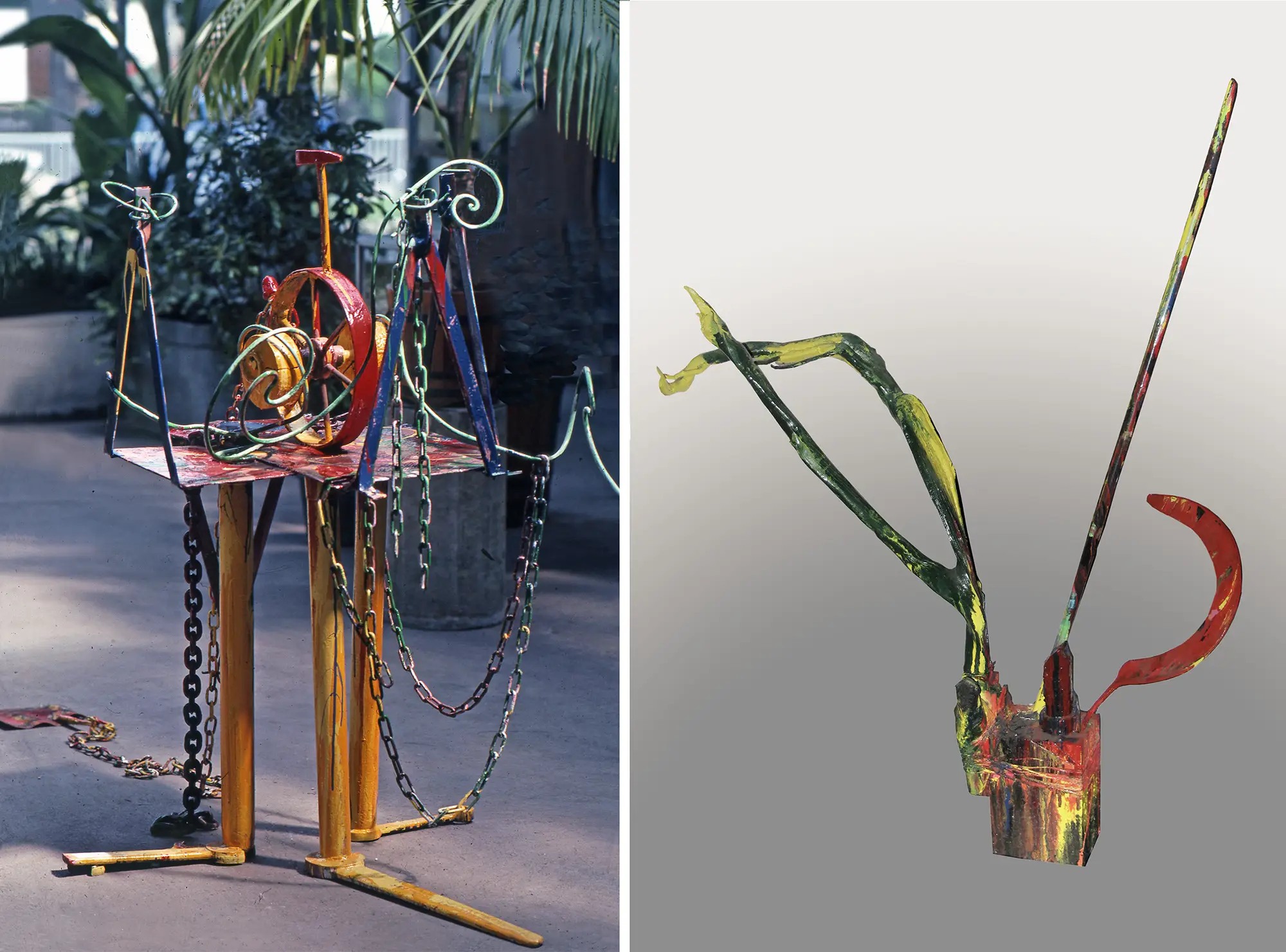
on the right: Sujet hanté, 1988, painted wood, glass and steel.
Private collections
Table apprêtée was shown in the exhibition Les Jardins de Babylone in Strasbourg in 1986. This sculpture, among the most important of the 80s, is a condensation of ideas through the handling of lines and their colouring, as well as through the treatment, not without humour, of the feet of the base and that long chain which seems to hold on a leash a piece of felt painted in the Abstract Expressionist style. F.B.
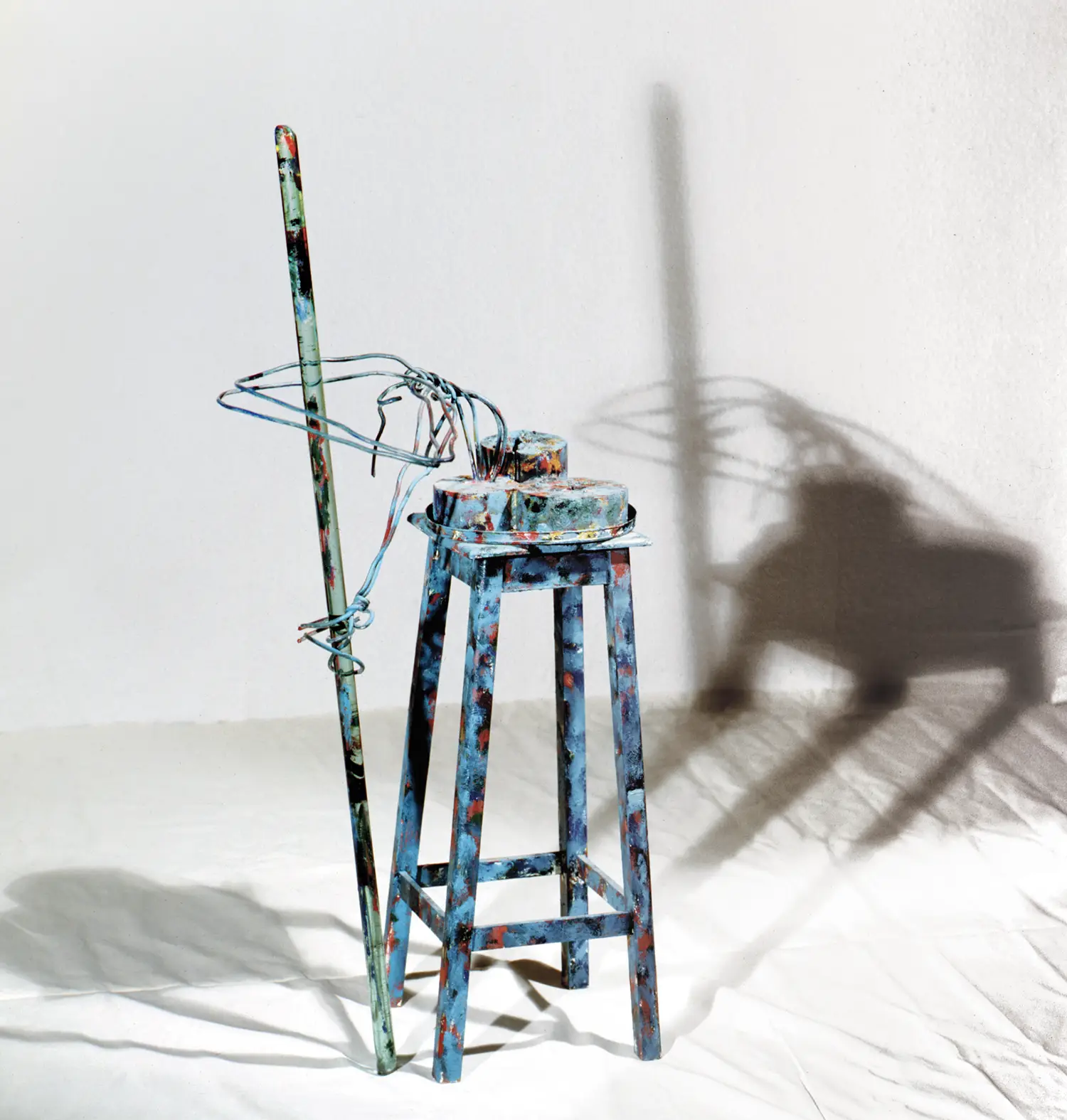
Painted wood, steel and glass, 130 × 40 × 60 cm
Collection of the artist
© Michel Jaget
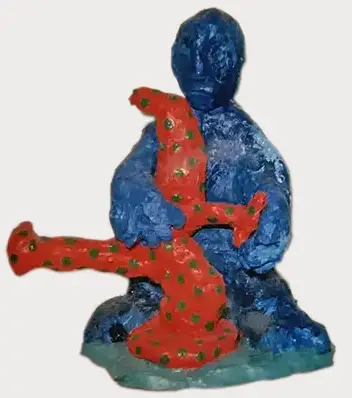
Painted plaster, 23 × 16 × 28 cm
work stolen in 1984