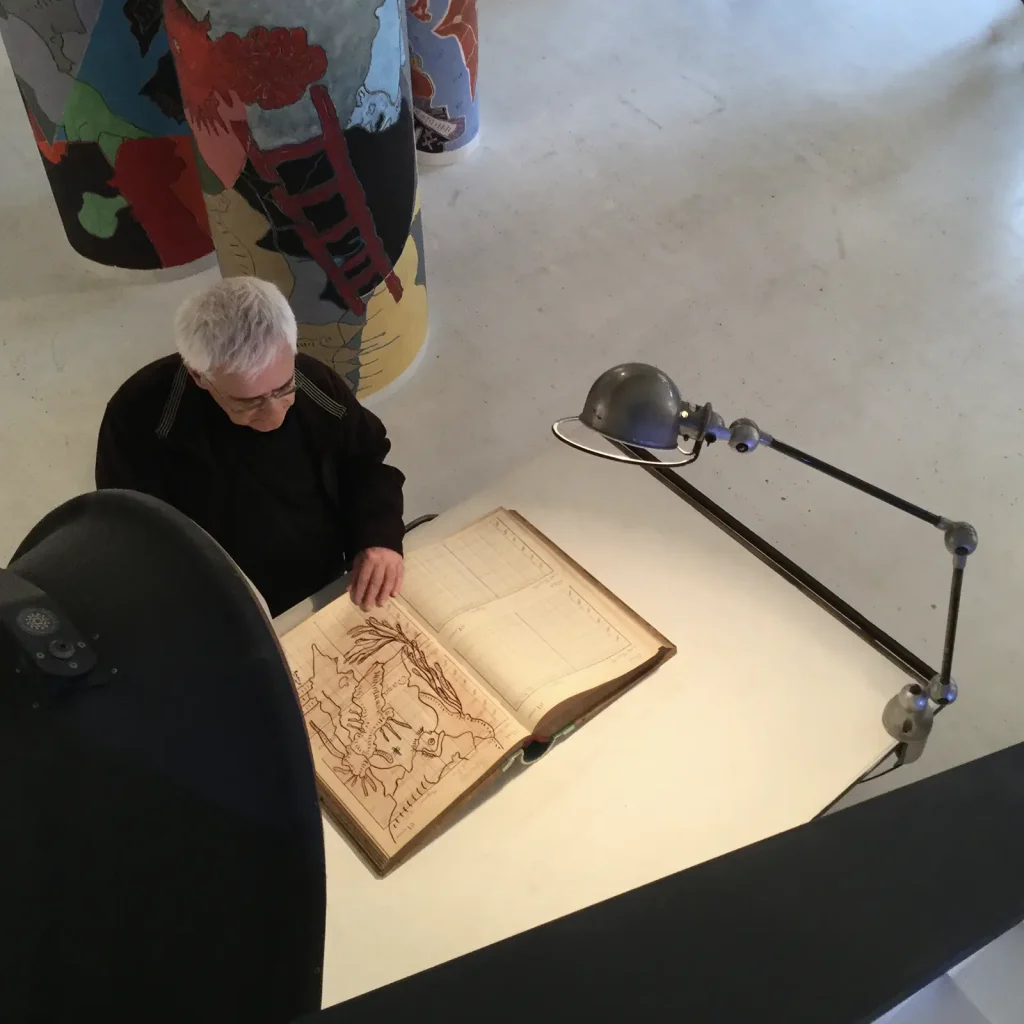
“Squiggles” drawings on wood
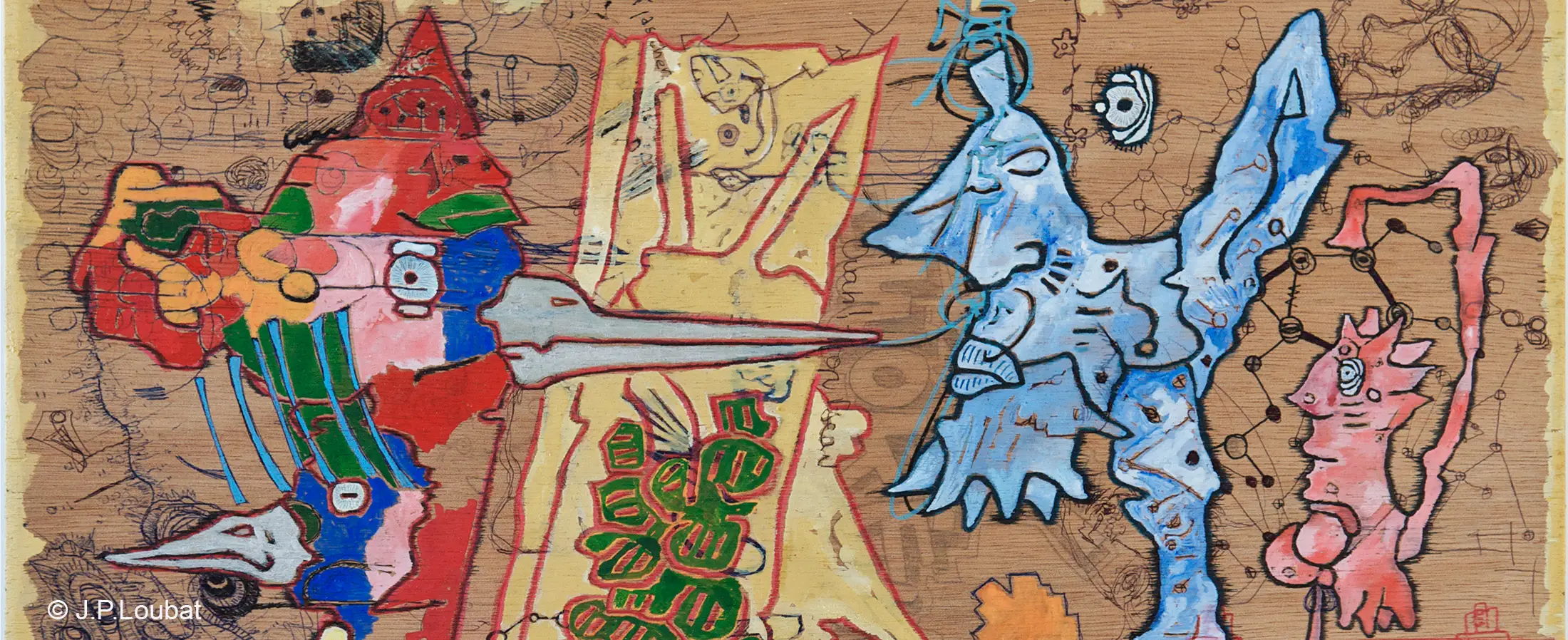
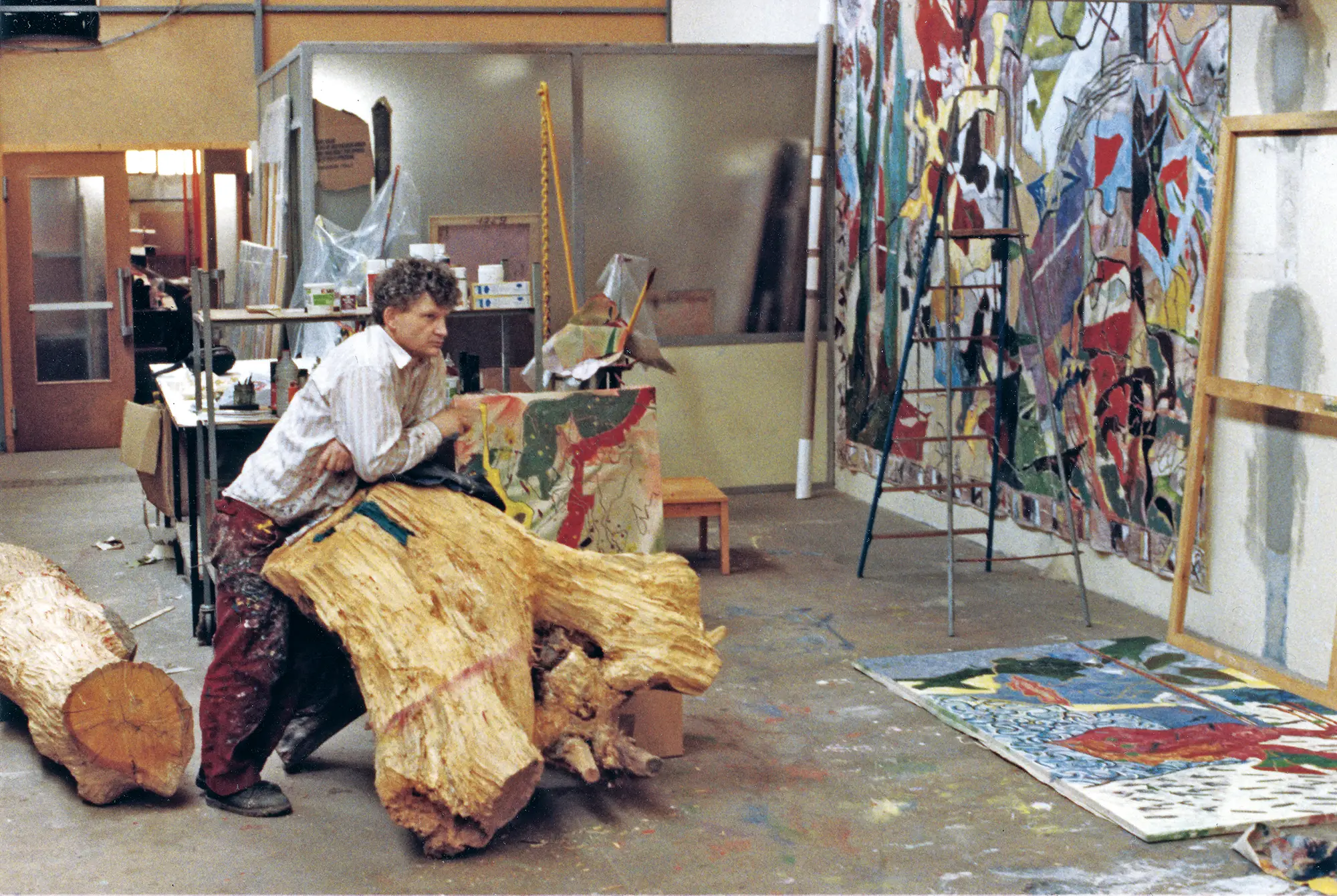
Scanreigh’s relationship with wood begins very sensibly and very classically when, in the early 80s, he takes an interest in printmaking techniques, the oldest being that of the wood one carves to print on paper. More surprising is what happens next in the studio in Villefranche-sur-Saône, a vast space that the industrialist and patron Gilles Blanckaert generously made available to him in the immense factory partly occupied by his company. A friend from Savoy even saw fit to have wood delivered there for a sculpture. Scanreigh would find the wood of the handling pallets lying around all over the factory more interesting. He had the idea of taking them apart, restructuring them into various shapes and painting them. He would even fix onto them old blocks that had been used for printing. He also turned into paintings the wooden cases used by typographers in the days of lead type.
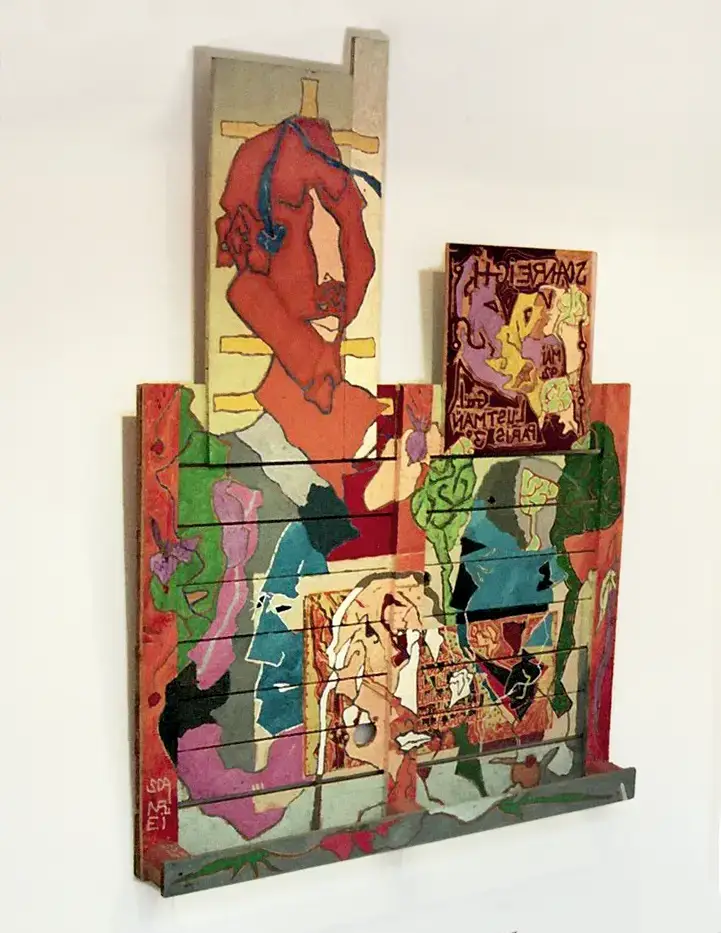
for the exhibition at the galerie Lustman in Paris
Even more unusual is the wooden artist’s book that we created together from shelf dummies. In this case, these are the pieces of wood whose job in libraries is to stand in for a book temporarily missing from the shelves. In the mid-90s, Scanreigh had salvaged shelf dummies that the Part-Dieu library in Lyon was getting rid of, computerisation having made them obsolete. We made artists’ books out of them, delighted to send a few copies back to occupy an unsimulated place on library shelves.
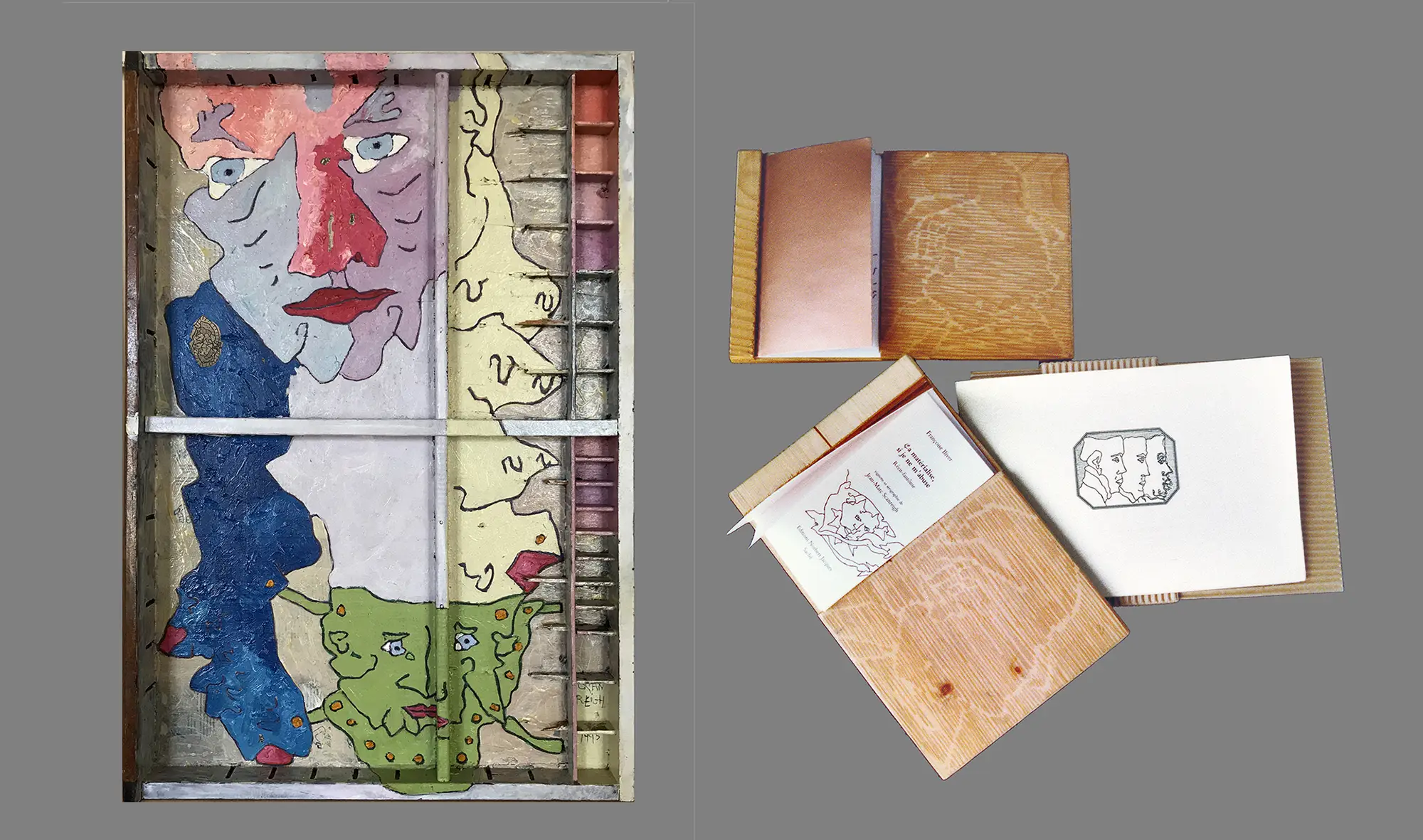
on the right the shelf-dummy book
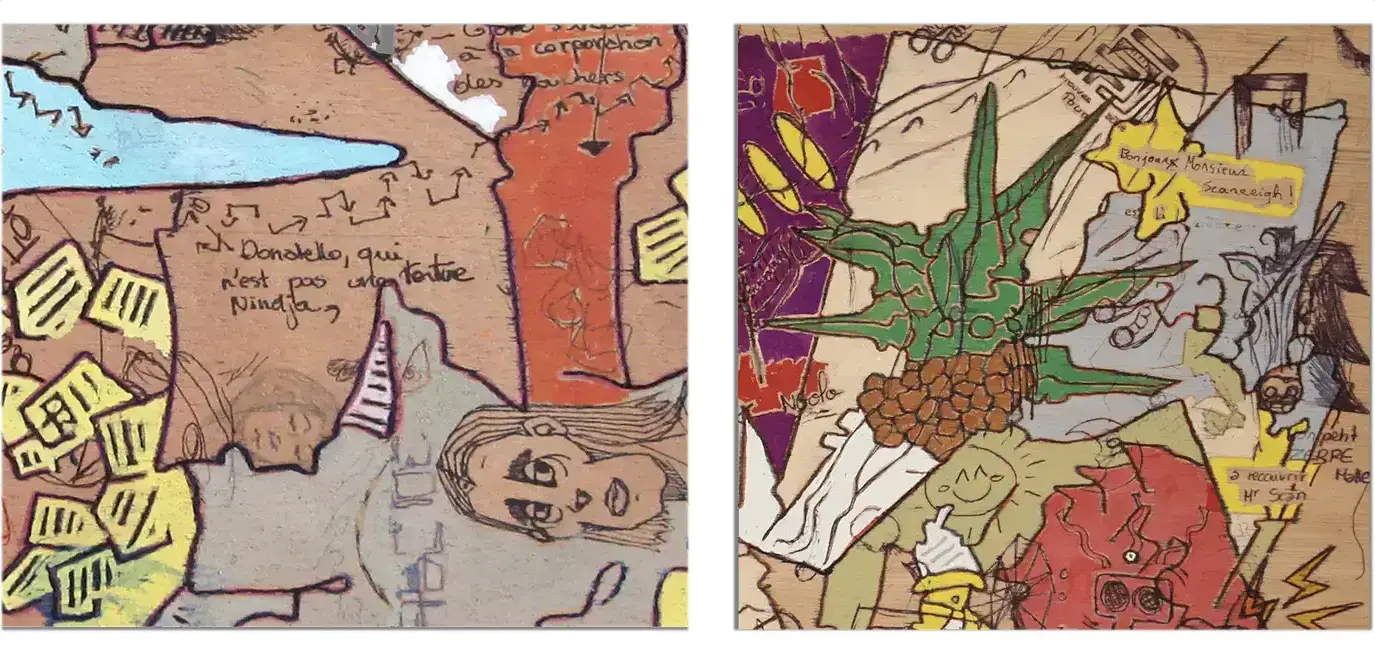
So drawing on wood in this context is not at all surprising. Once again, it is a rescue. At the école des Beaux-Arts in Nîmes, wooden boards used by students as desk pads for taking notes were going to be replaced – thrown away – because they were too scribbled over with graffiti. These boards caught Scanreigh’s eye and he salvaged them. He saw in their wild embellishments an invitation to intervene. Often playing with palimpsest himself in his paintings and drawings, he set about finishing the dressing-up of the boards in his own way. To the students’ amusing graphic flights of fancy, witty, obscene, virtuoso or crude, he added his signature touch and dabs of gouache, ennobling the most modest and most universally shared of the urges to draw: doodling.
Why call these drawings “squiggle”? I suggested the term to Scanreigh because it refers to the English psychoanalyst and paediatrician Donald Winnicott, to whom we owe, incidentally, the brilliant notion of the good enough mother (= assez bonne mère), and who, I discovered, also invented a therapeutic game he called squiggle (= gribouillis), based on doodling, which enabled him to get a better grasp of his young patients’ minds.
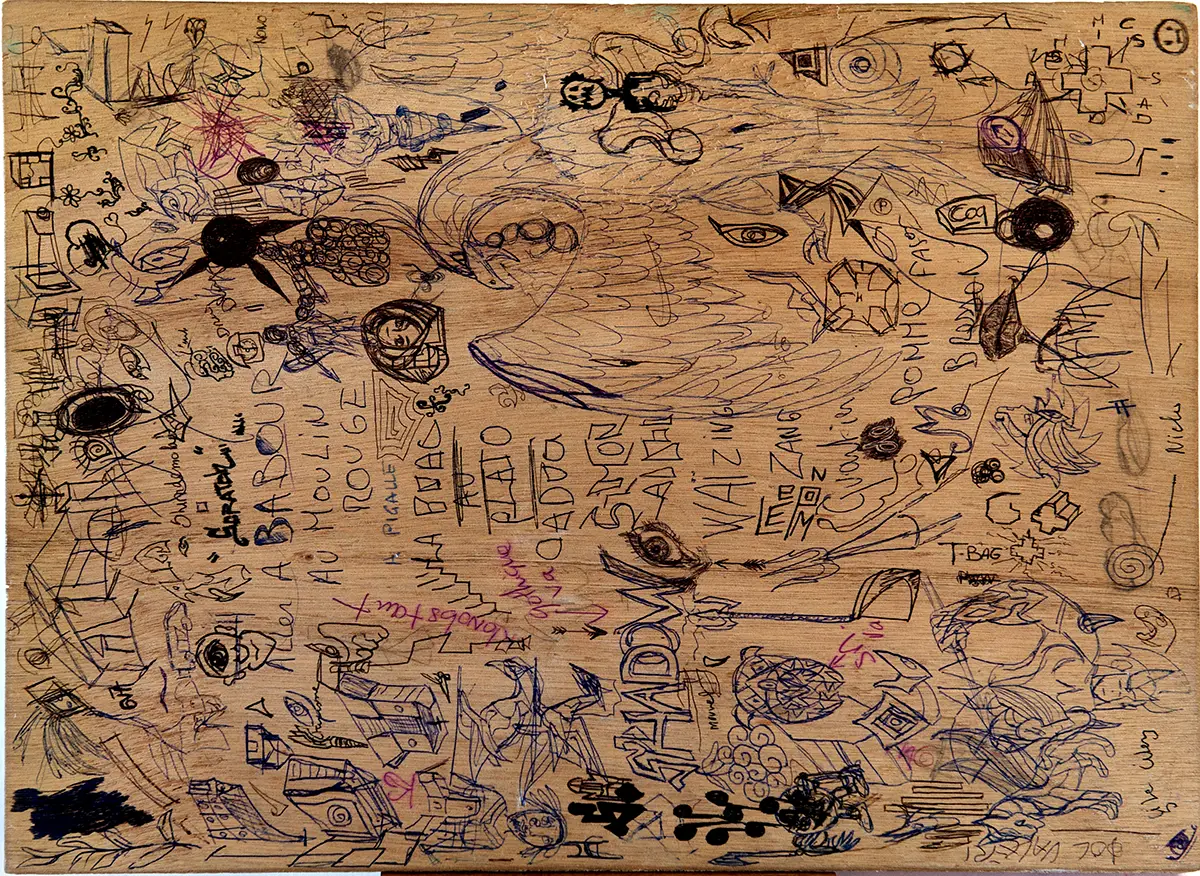
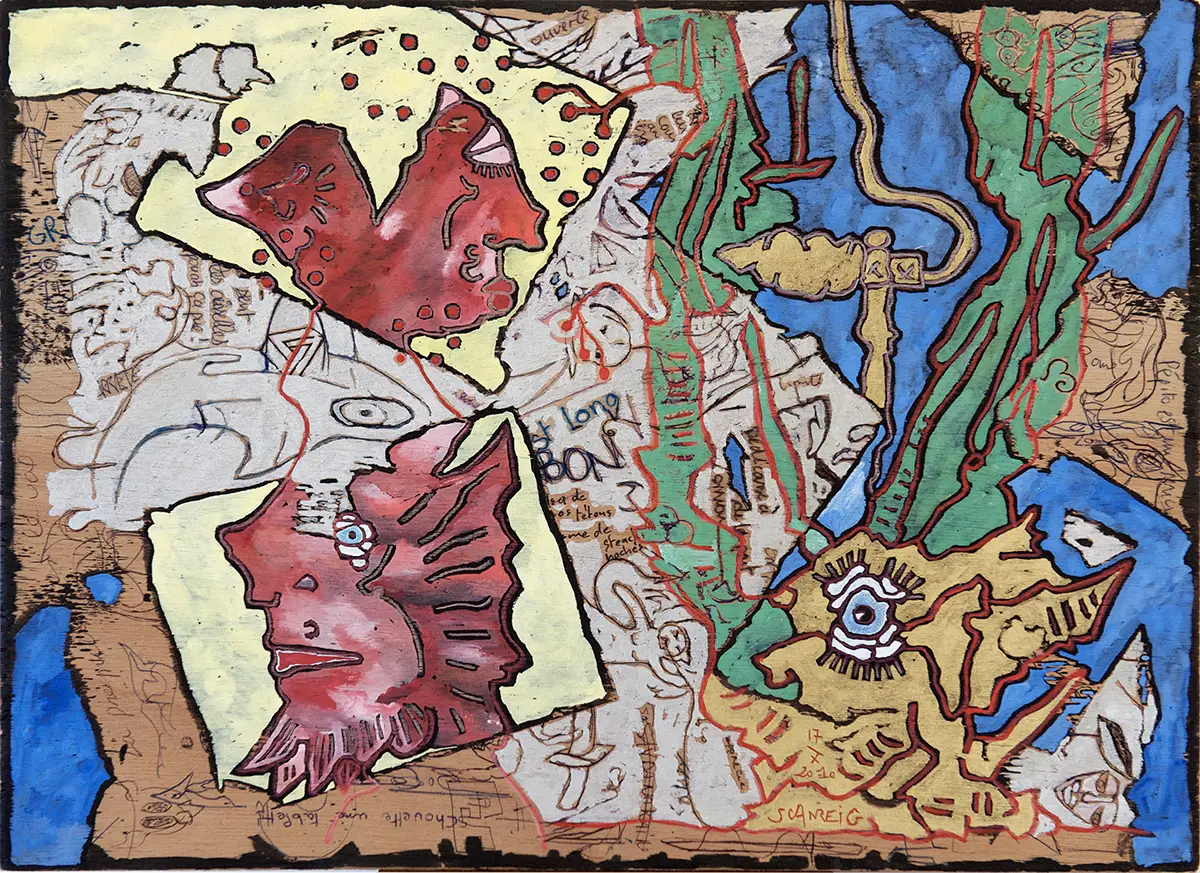
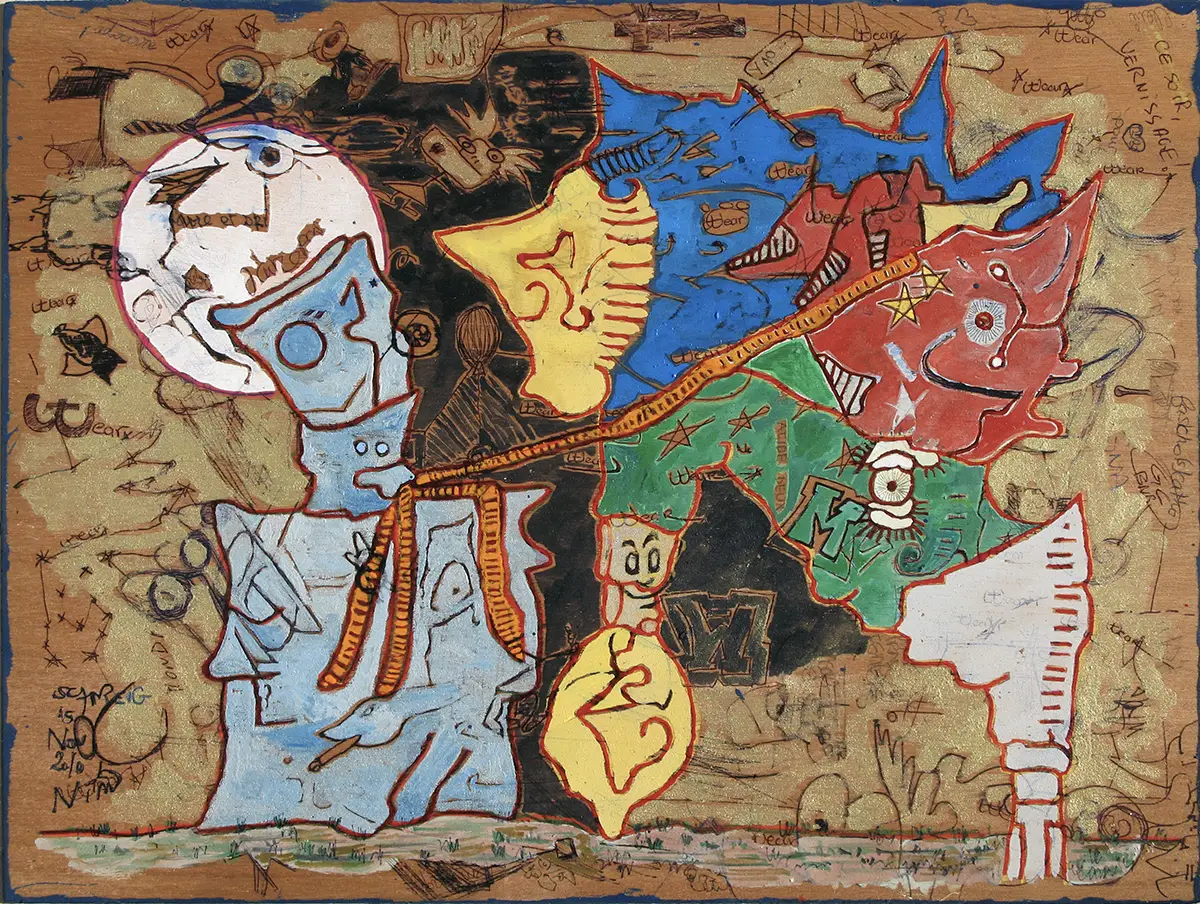
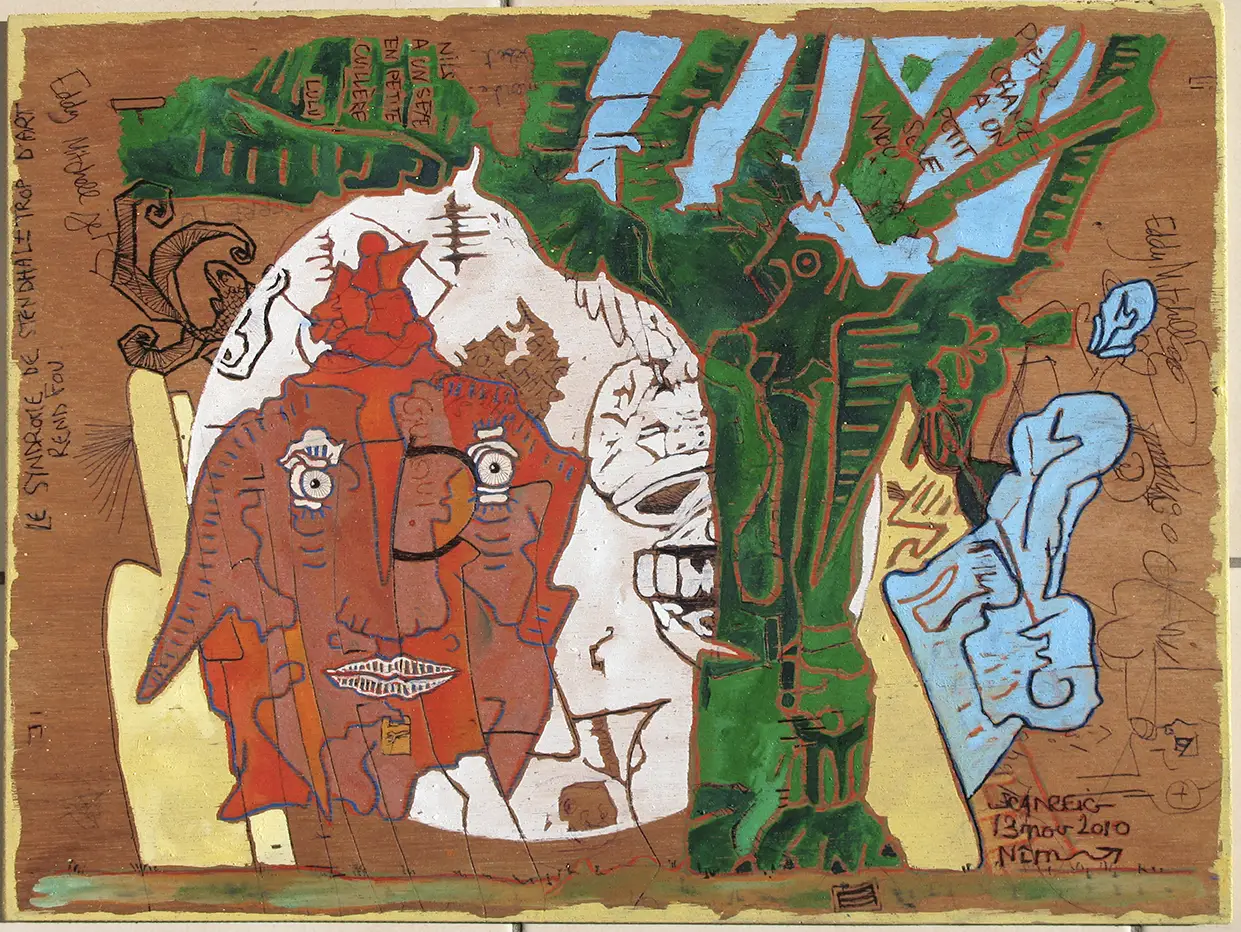
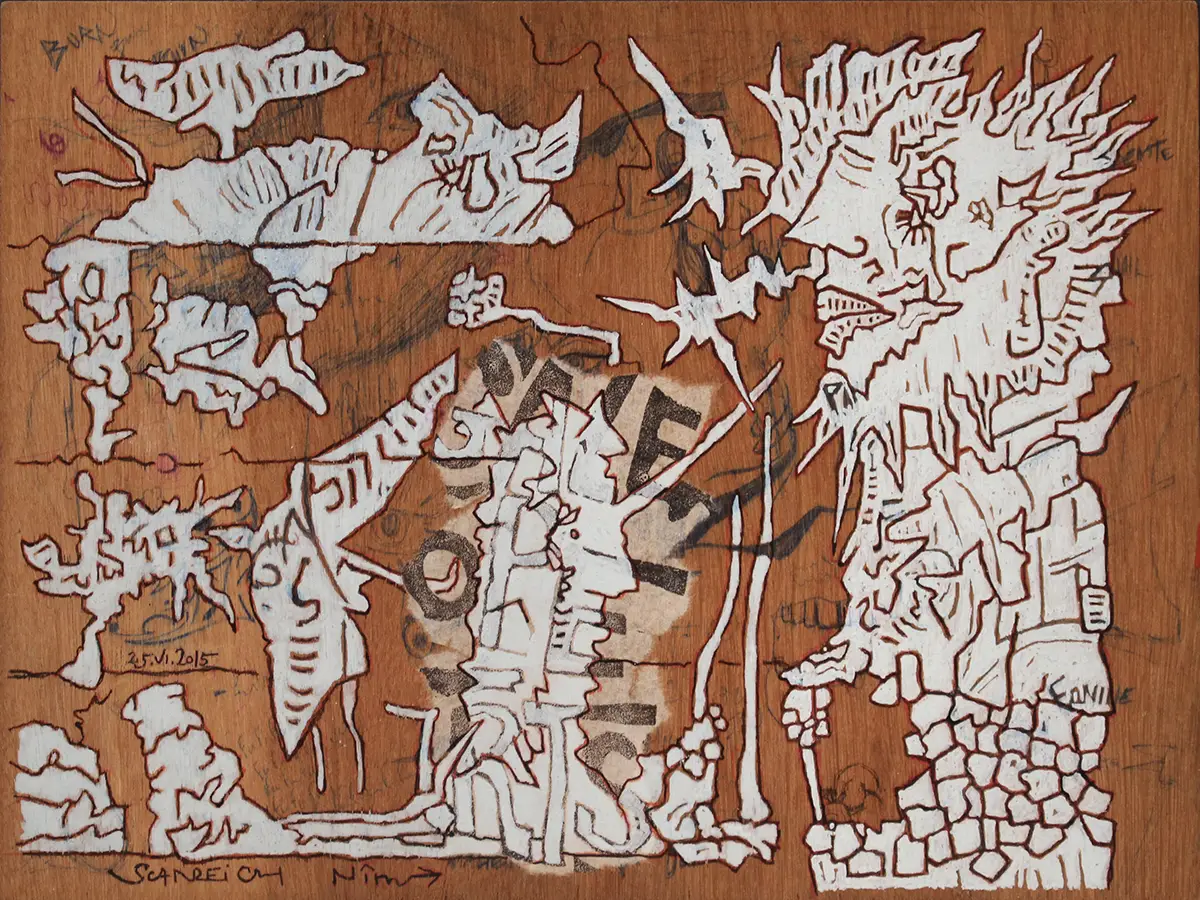
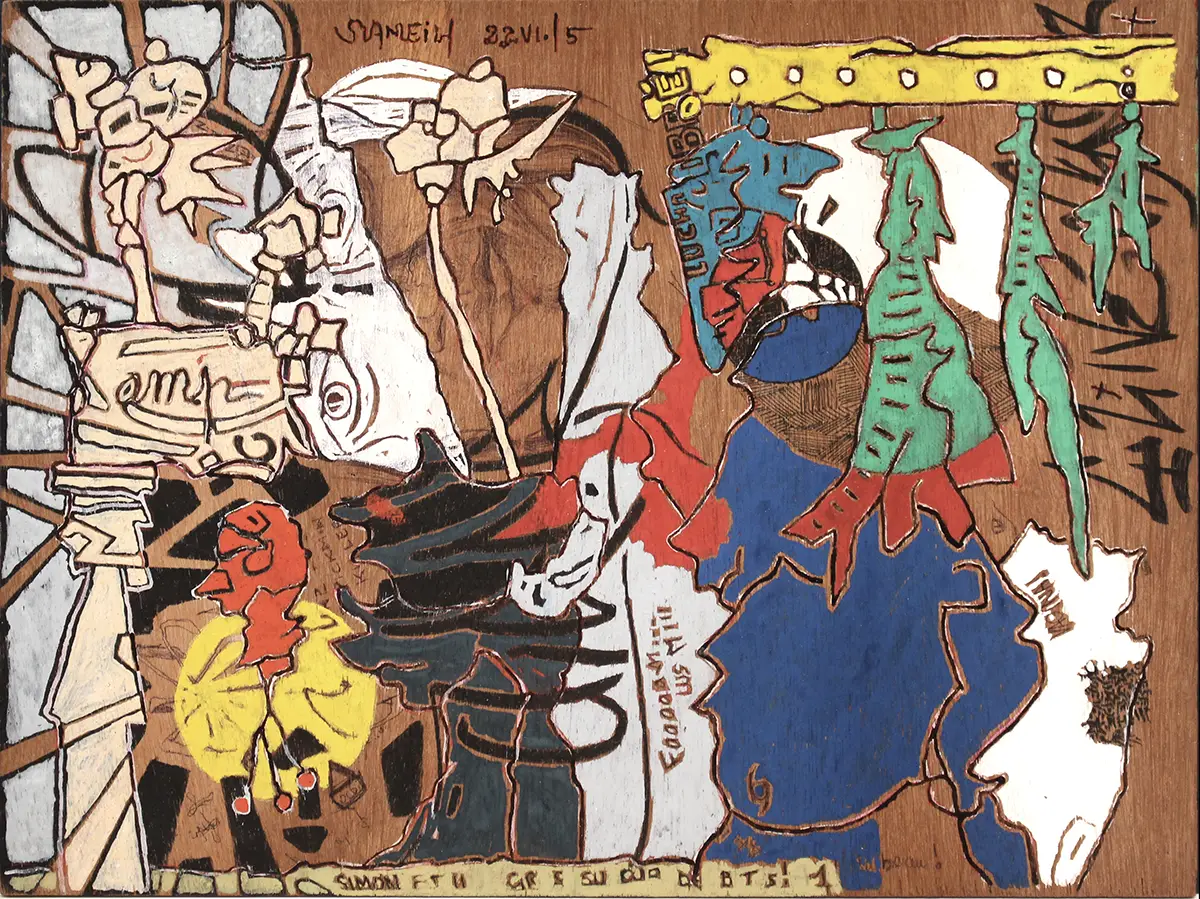
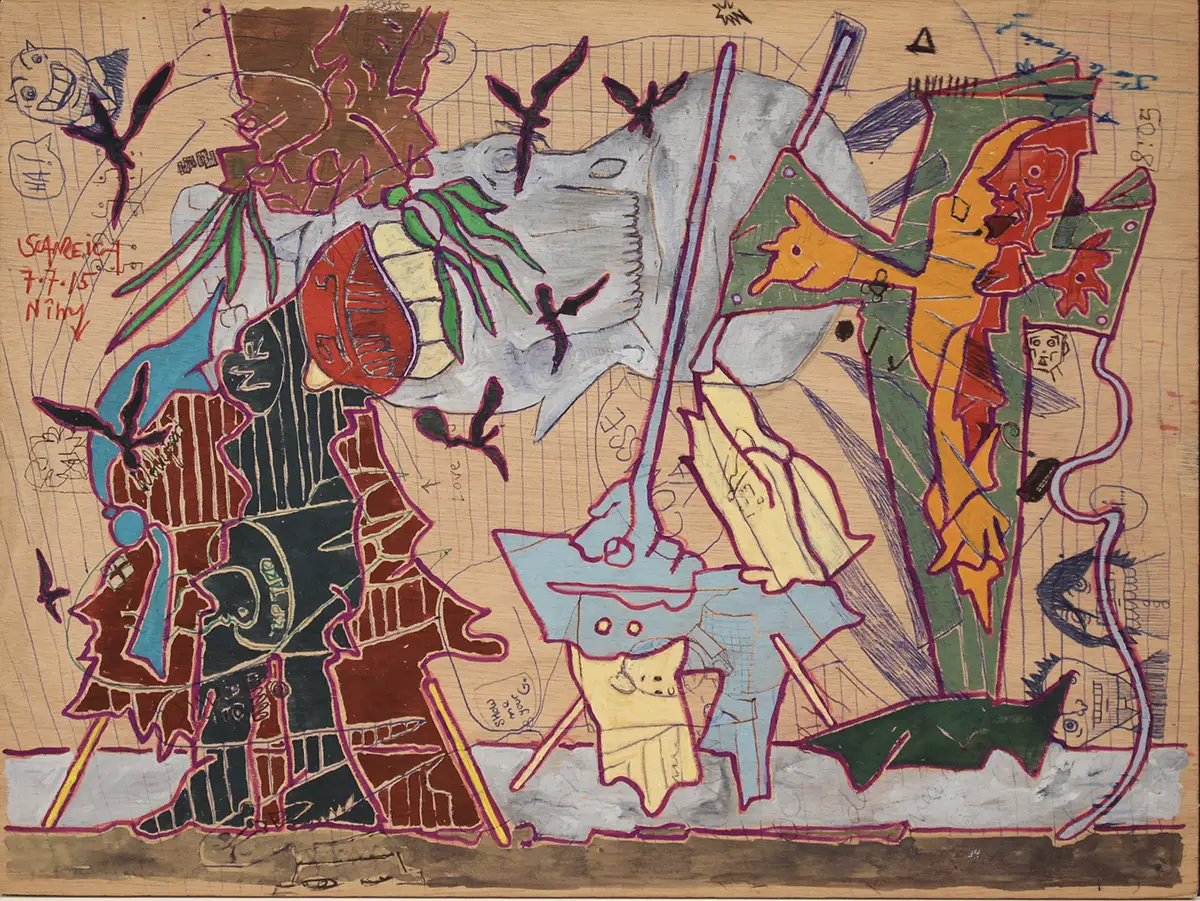
Some of the inscriptions are really funny. So on one board we find this reminder, no doubt hammered home insistently by the art history teacher: “Donatello who is not a Ninja Turtle”.
After starting the Squiggles in 2010, Scanreigh salvaged a new batch of boards in 2015. The students were not fooled about what he was going to do with them: one of them let it be known by scribbling on his board: “Hello Mr Scanreigh!” – “To cover over Mr Scan”.
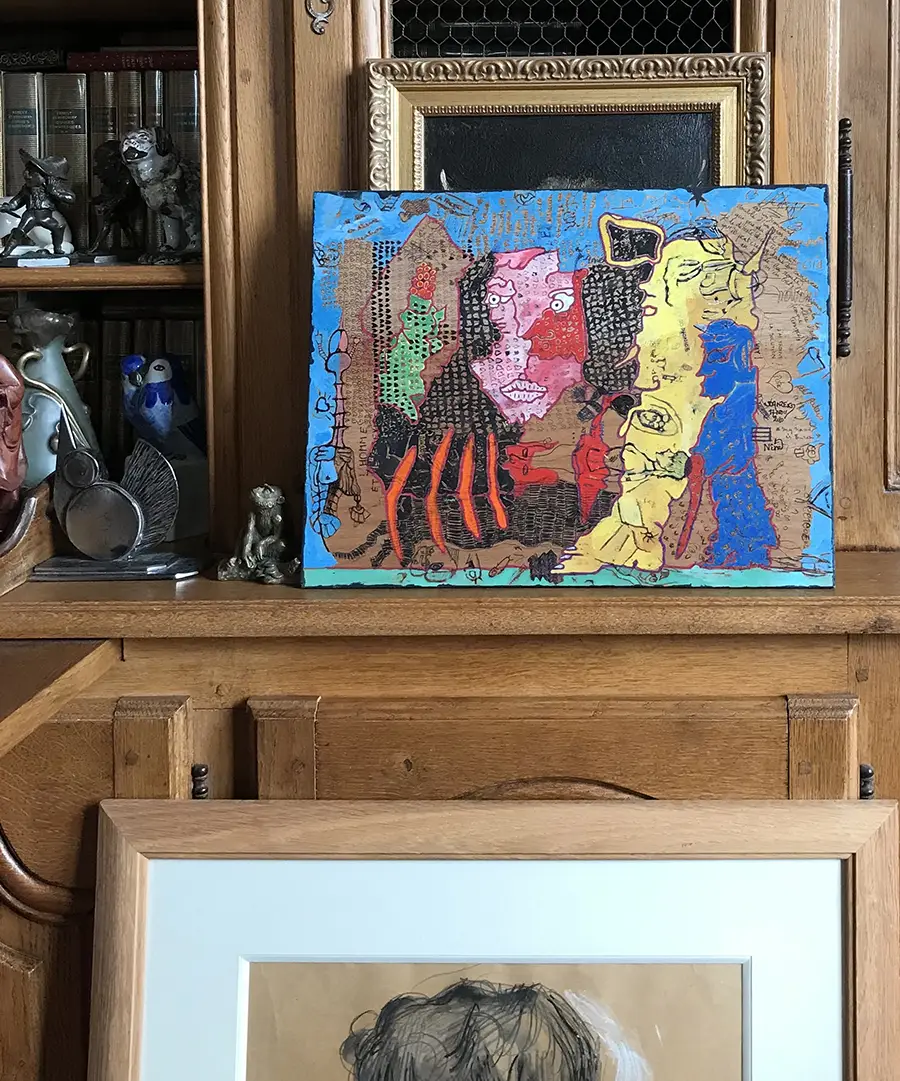
30 × 40 cm, [D 2010 066] private collection
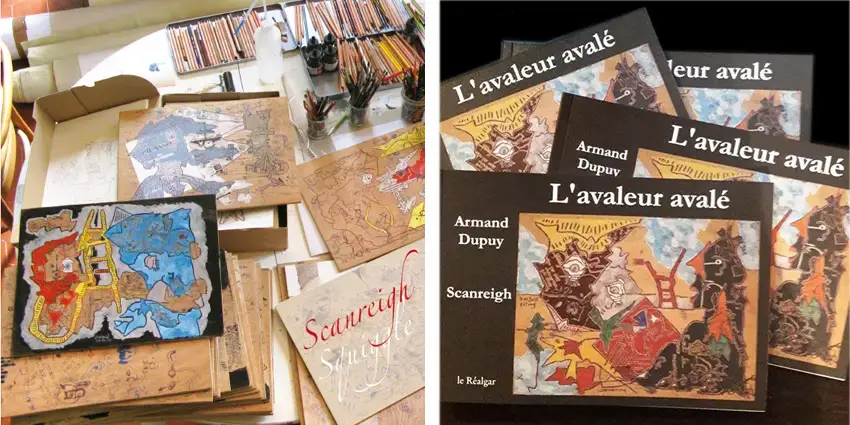
on the right: l'Avaleur avalé by Armand Dupuy, 2017
A catalogue was published in 2011, which can be viewed here. A book titled l'Avaleur avalé by Armand Dupuy came out in 2017 from éditions Le Réalgar, a very personal narrative based on a series of squiggles, the author deliberately playing Winnicott’s game by letting himself be pervaded by the strange presences of Scanreigh’s boards, which reawaken in him a whole past of very intimate memories and sensations. The deluxe issue of this book comes with mini-squiggles in the format of the book.