Avant-guerre, sur l’art, etc – The beginning
Can the founding of the review Avant guerre, sur l’art etc. be called the starting point of Scanreigh’s whole publishing adventure? Yes and no.
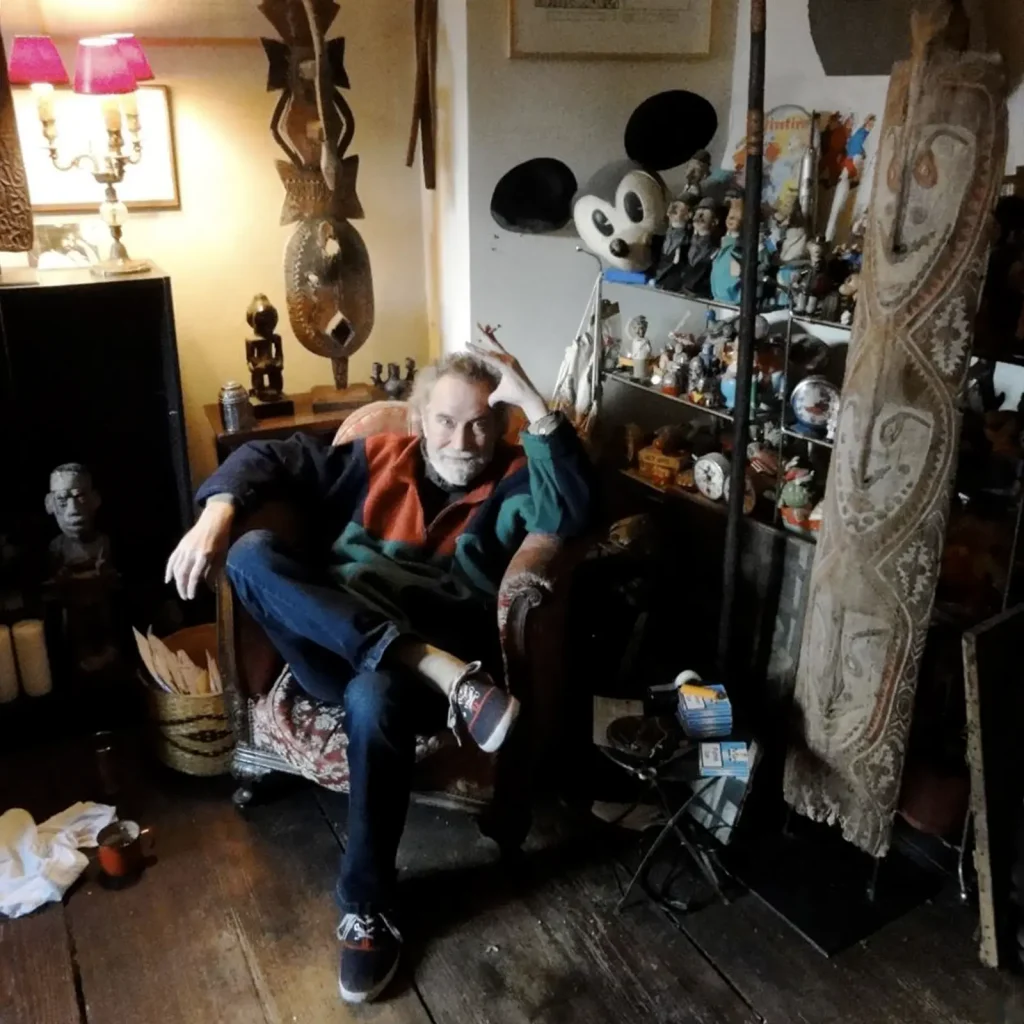
Yes, because each of the protagonists who worked in Strasbourg to bring it into being from 1977/78 onwards had their own motivation. For my part, I spent my whole childhood and adolescence among newspapers and magazines thanks to my parents’ shop, and crossing over to the other side seemed familiar and logical to me. Scanreigh was on the lookout for everything rare and cutting-edge in the art press and wanted people to write about his painting; as for our academic friends, they had all been bottle-fed on humanities journals, which were particularly flourishing in the 70s.
No, because Scanreigh soon felt himself in an awkward position in his status as artist-publisher, all the more so as he was questioning himself artistically and would soon throw more than one person by changing style, not to mention that he had a different idea of publishing for himself (still in embryo at the time).
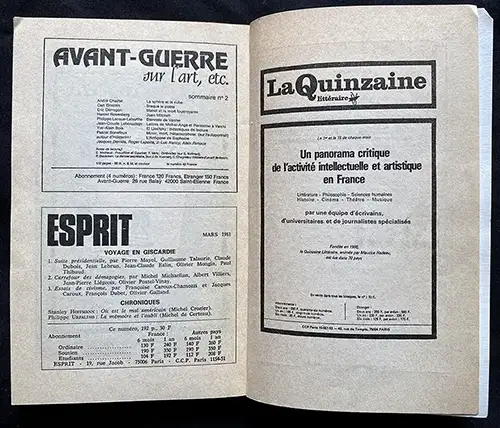
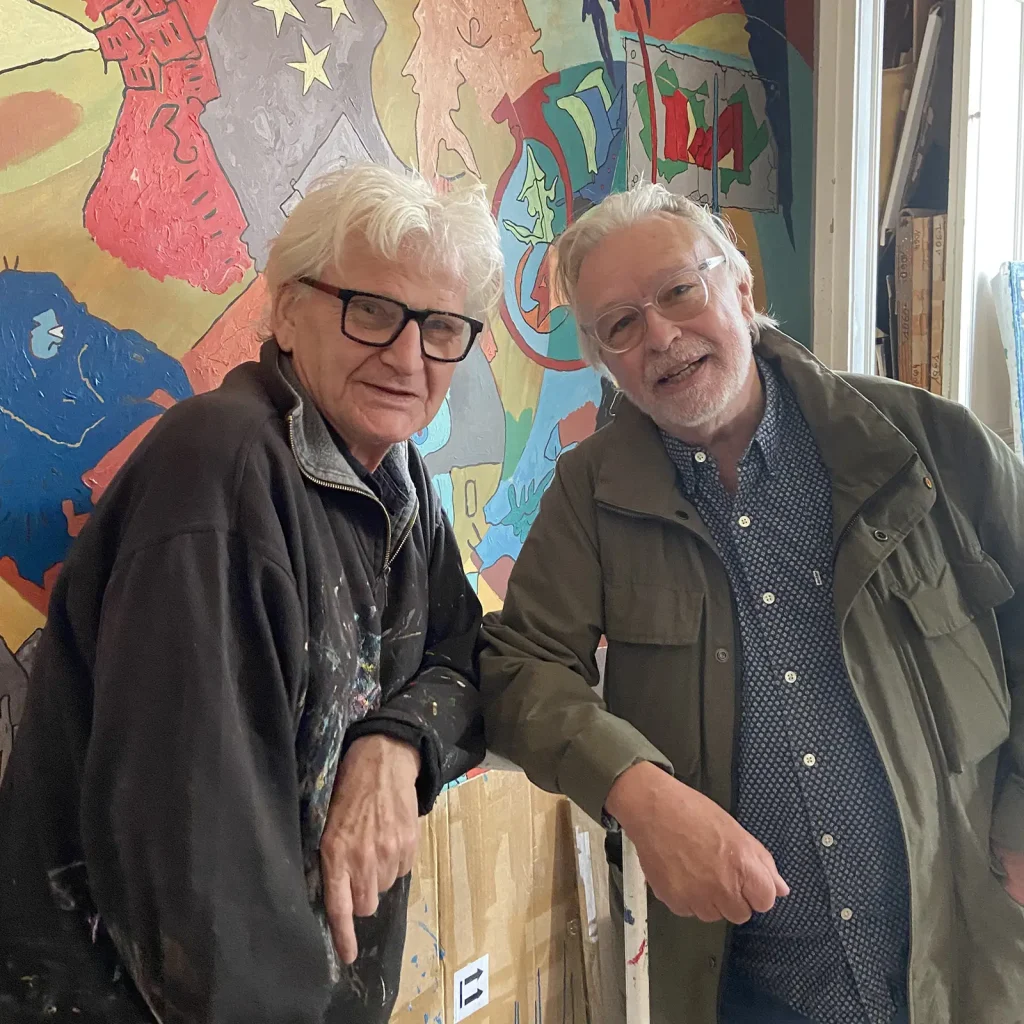
In 2017, in an afterword to the republication by L’Echoppe of an article by André Chastel that appeared in no. 2 of Avant guerre, Didier Semin, who was one of the co-founders of the review, told the story of its creation very well. There were five of us launching the project in Strasbourg, backed by a small, effective network of young and not-so-young academics. Scanreigh, very excited by the idea of creating a review, and carried along by the project’s sympathisers, began by selling paintings to fund it. Since an exhibition in 1973 at the bookshop-gallery Les Idées et les Arts, he had been somewhat known among the “egghead” crowd. But nothing would have been possible without the work of Didier Semin and Marie-Laure Monfort, just out of university, and above all without Christian Bernard, an “influencer” intellectual ahead of his time, blessed with a good address book. Once the funds were raised, the collective editorial board managed to put together a first table of contents and to get ahead on the second. The production phase of the review fell right in the middle of the whole team’s swarming off to the Rhône-Alpes region. Scanreigh and I to Saint-Étienne in the summer of 1978, where Scanreigh had won a post at the école des Beaux-Arts by competitive examination, then Didier Semin, an aspiring curator, whom we put up during an internship with Bernard Ceysson at the Musée d’Art et d’Industrie, and Marie-Laure Monfort, a young literature teacher posted to the region. As for Christian Bernard, who stayed in Strasbourg during the launch of the first two issues, I met him again in 1983, freshly appointed visual arts adviser at the Direction régionale des affaires culturelles, when I was assisting the young curator Anne Dary in launching the FRAC Rhône-Alpes and we had just moved to Lyon.
The title of the review was born of a somewhat tangled collective feeling: we wanted to play ironically on the sound of the term avant-garde, relatively devalued, and to put art back into a non-artistic context, we the children of the post-war years, suddenly fearing that the epilogue of one war would turn into the prelude to another in the face of the fratricidal Chinese invasion of Vietnamese territory in 1979 – a low-intensity conflict compared with the situation today!
We borrowed the appendix to the title, “sur l’art, etc ”, from the insolent “et cætera” of Serge Gainsbourg’s reggae Marseillaise.
We wanted a review that would do “news” like the political weeklies, of a more wide-ranging kind than the young review Art Press. Les Chroniques de l’art vivant belonged to the past, Beaux-Arts magazine had not yet been born, and we thought, not without reason, that there was a no man’s land to occupy.
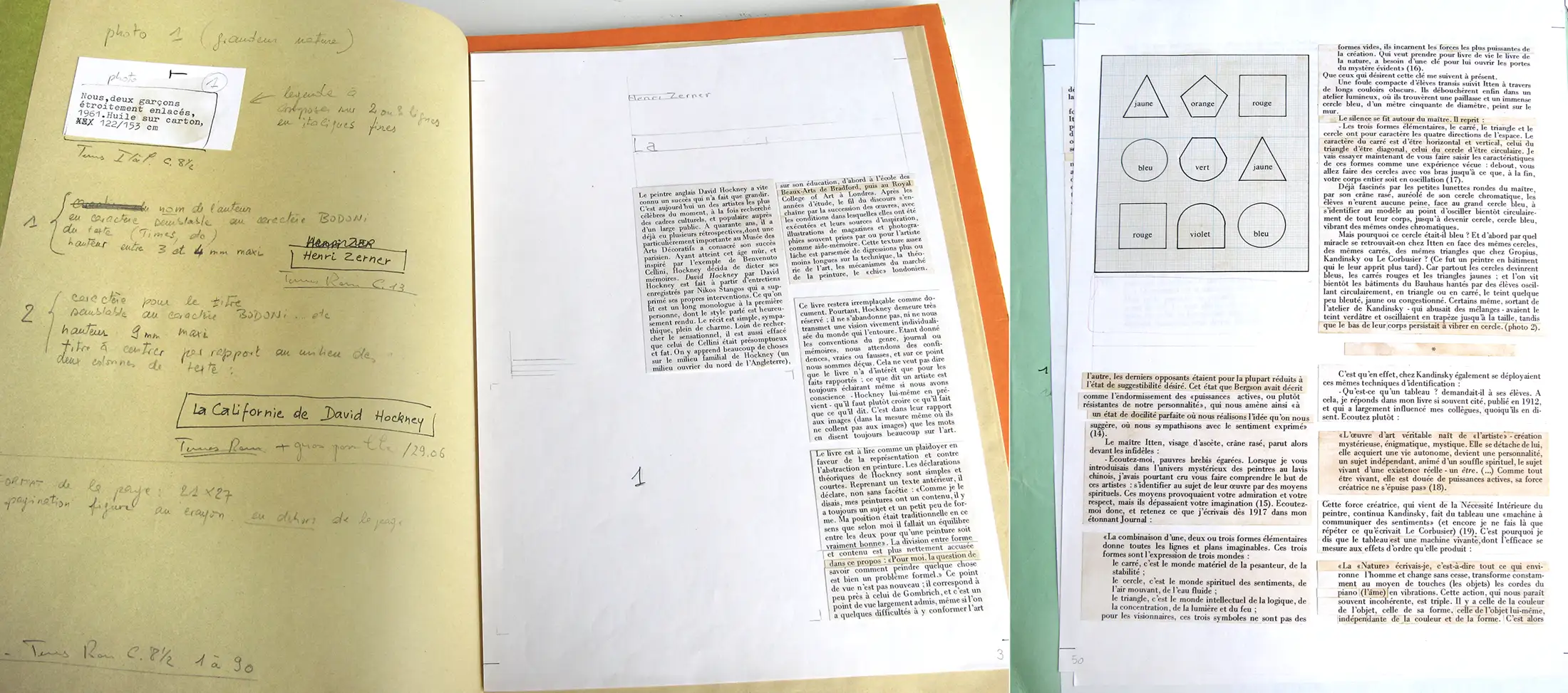
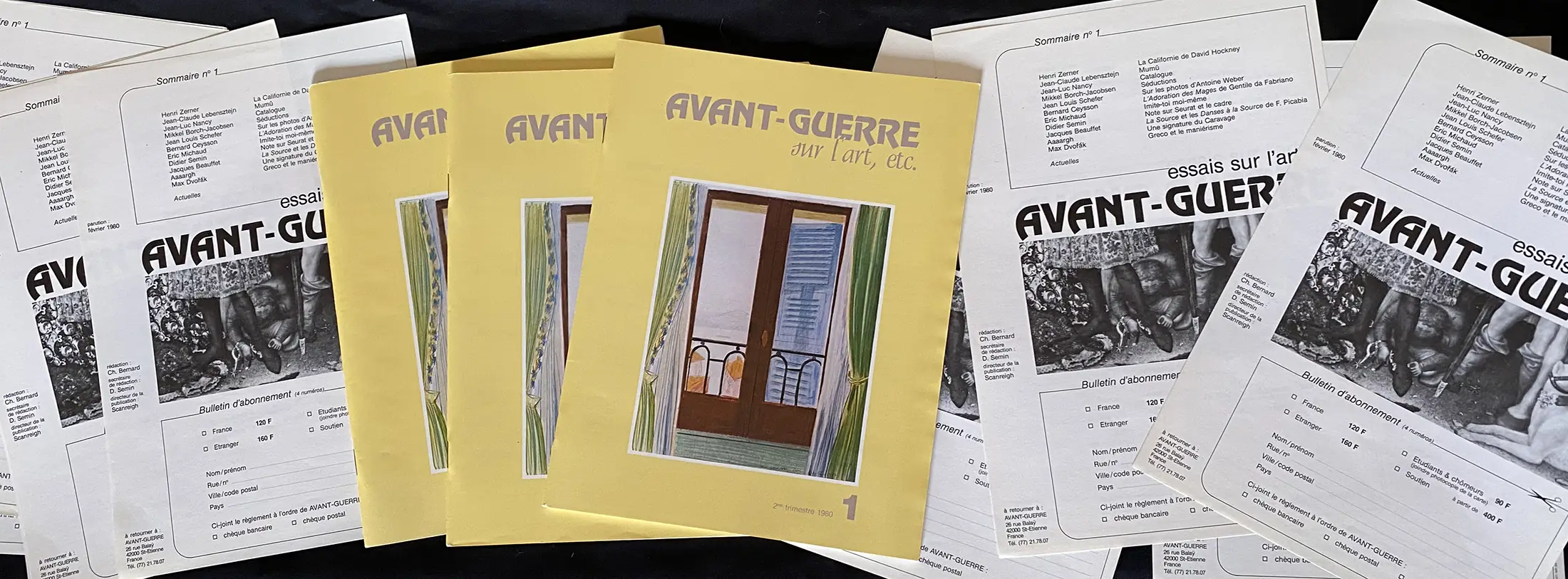
The layout of the review was to be done in Paris on a Composphere, a semi-professional typesetting process on paper (and not on bromide, as at the printers’). Repeated complications and setbacks meant that I inherited the layout in a rush, with no experience other than the Letraset graphic design exercises of my year at art school in Nancy and the advice of Scanreigh’s colleagues at the Beaux-Arts in Saint-Étienne. I remember choosing the title font casually because it was called “Revue”. I rather regretted it when I saw a butcher’s shop sign sporting it, and then other examples of the same ilk. The text corrections were Homeric: we sent lines of text to be redone to Paris without allowing for the enlarging effect of the photocopier. The lines we received, faithful to our photocopies, were too long; the spaces between the words had to be tightened with a scalpel to fit them correctly into the text columns of the layout. Prehistory, prehistory! nothing to do with today any more. In short, the first issue came out in 1980 with David Hockney (more topical than ever!) on the cover, and in the contents:
Henri Zerner, La Californie de David Hockney; Jean-Claude Lebensztejn, Mumû [on Brice Marden]; Jean-Luc Nancy, Catalogue [on François Martin]; Mikkel Borch-Jacobsen, Séductions [on Scanreigh]; Jean Louis Schefer, Le Regard et la proie [on photos by Antoine Weber]; Eric Michaud, Imite-toi moi-même [on the Bauhaus]; Didier Semin, Note sur Seurat et le cadre; Aaaargh (alias Didier Semin), Une signature du Caravage; Max Dvorák, Greco et le maniérisme (translated by Bertrand Badiou)
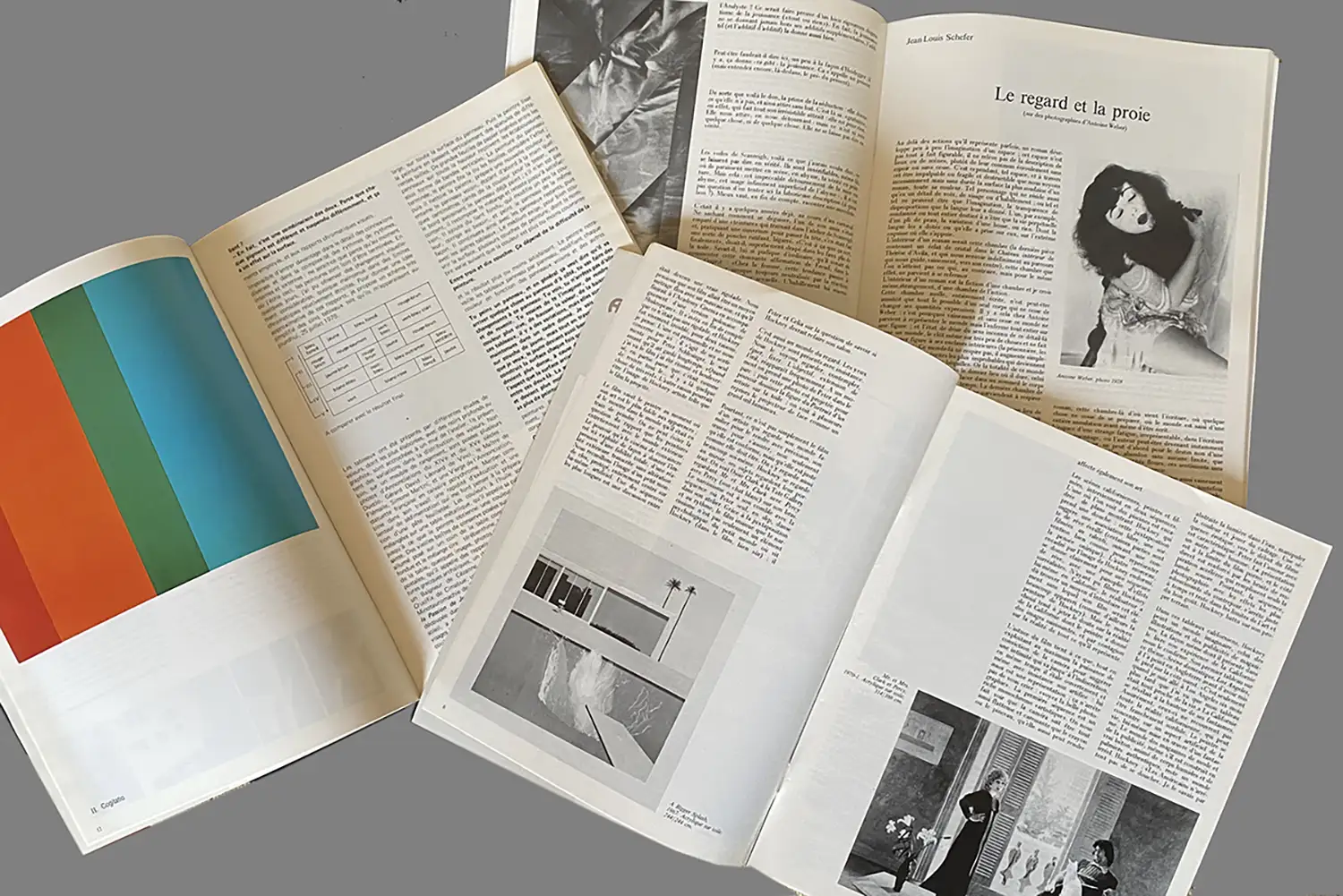
To be continued and concluded in a later article…